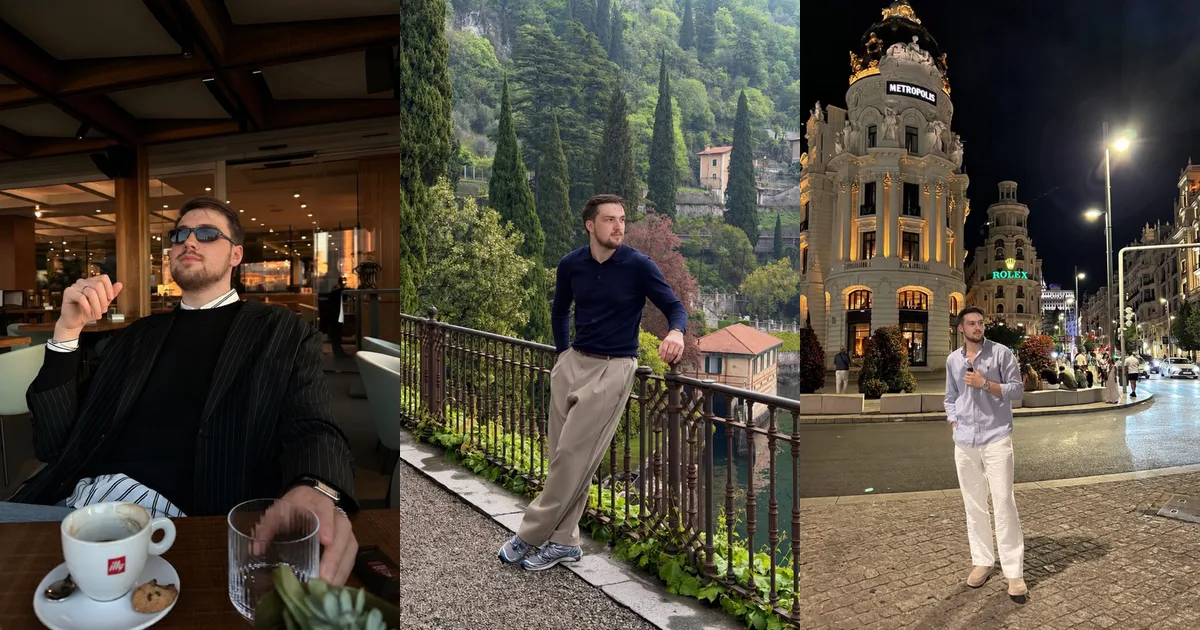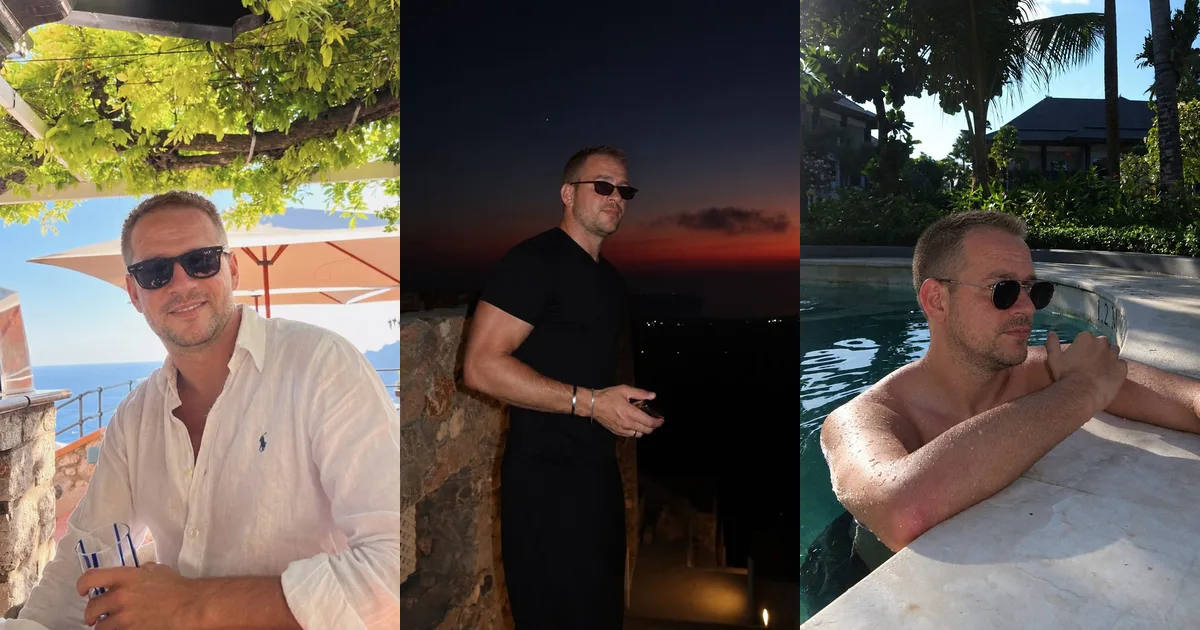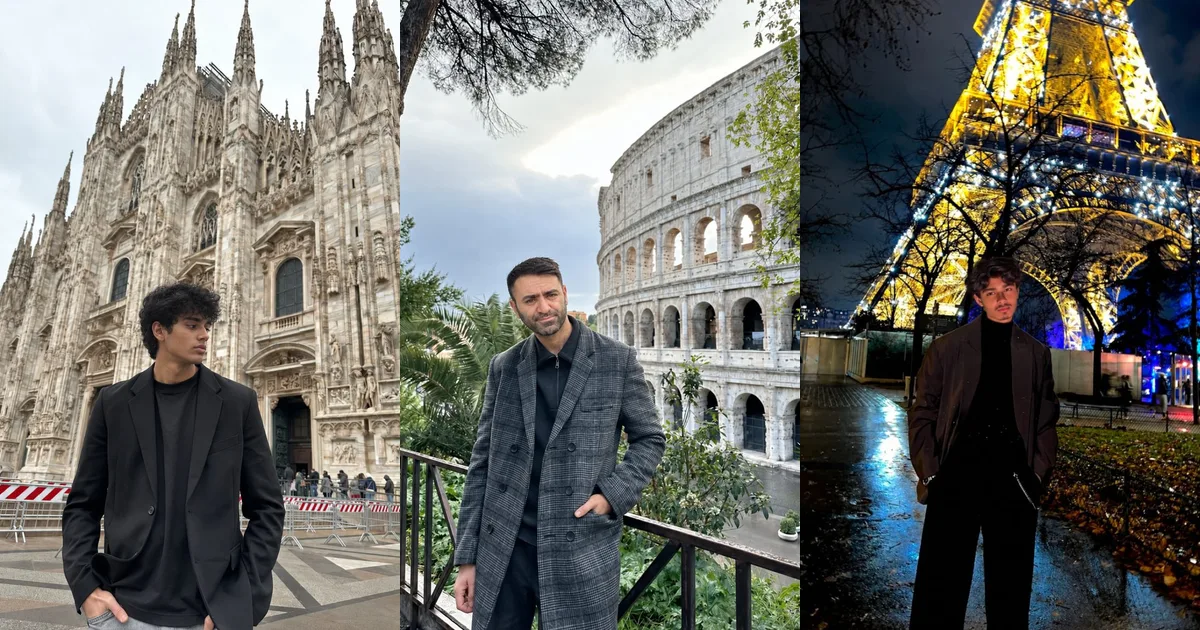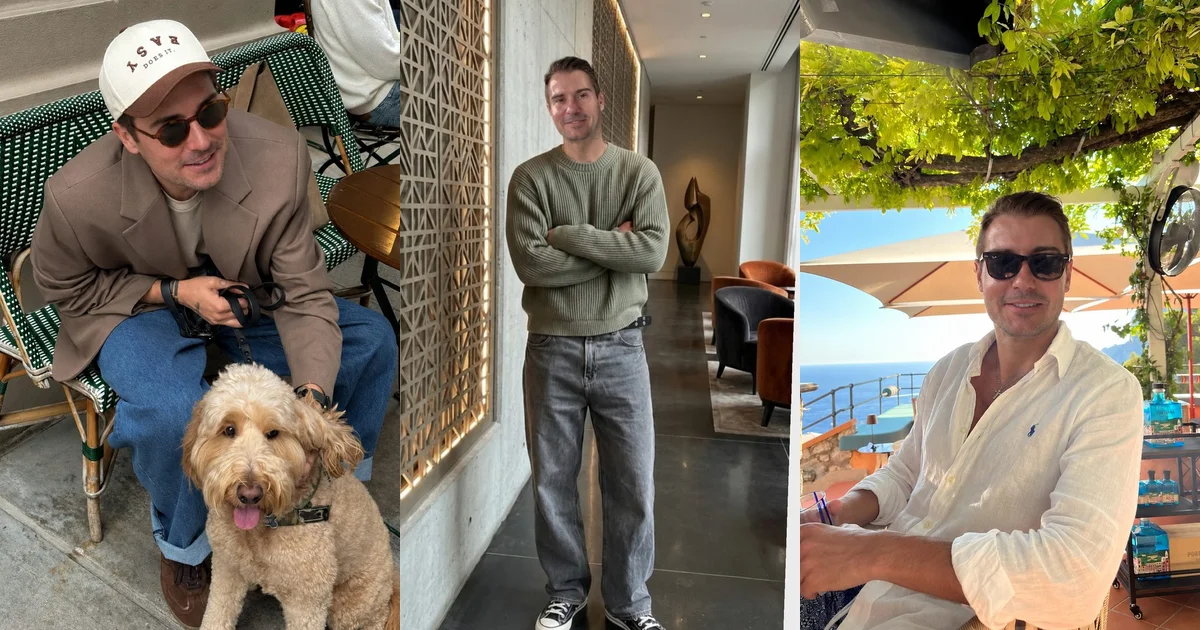
The best Bumble profile pictures are six recent, well-lit photos that each show something different about you. Lead with a clear, smiling shot of your face and upper body. Then add a full-length photo, an activity, a social photo, a dressed-up photo and one that sparks a conversation. Make your first three photos your three strongest lead candidates, because Bumble's Best Photo feature picks the most-liked of those three for the top spot.
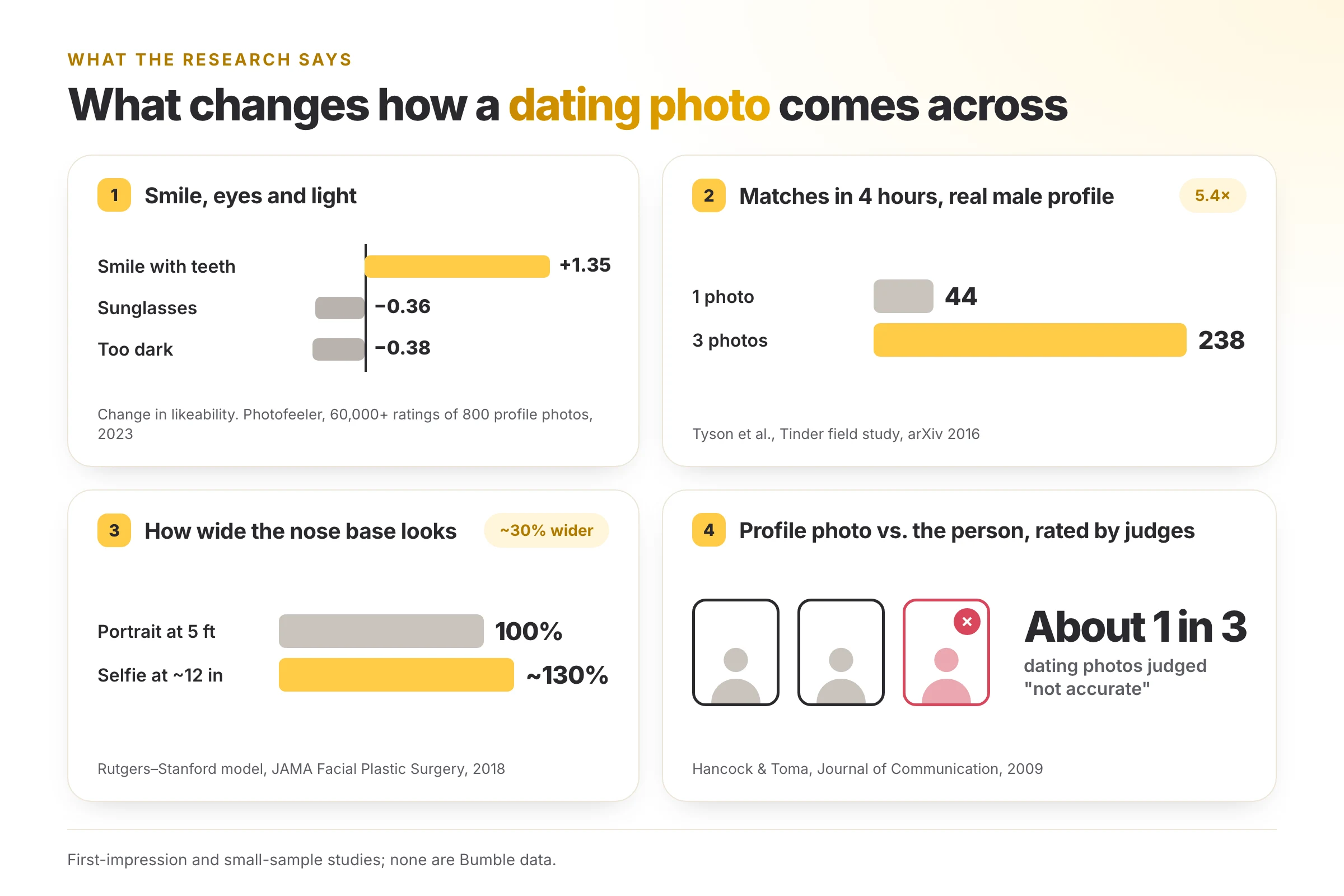
- Use all six slots. Bumble says three or more photos can raise your chance of matching. In a 2016 Tinder field study, one real man's profile went from 44 to 238 matches in four hours when it showed three photos instead of one.
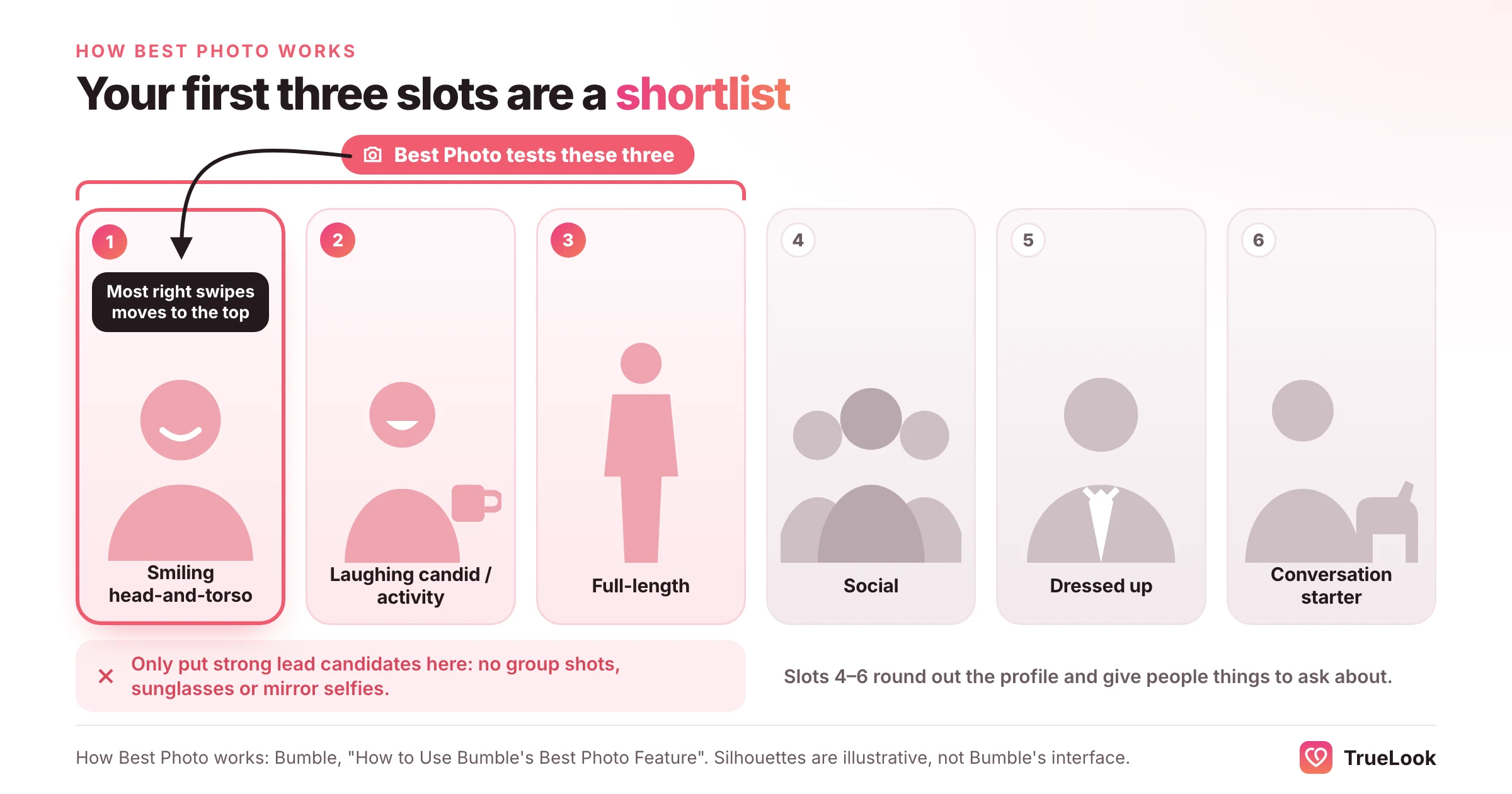
- Slots one to three are a test. Best Photo moves whichever of your first three photos gets the most right swipes to the top, so don't waste those slots on group shots or weak photos.
- Smile, and show your eyes. In Photofeeler's study of 800 profile photos, a smile with teeth gave the biggest boost to how likeable people looked, while sunglasses and dark photos lowered it.
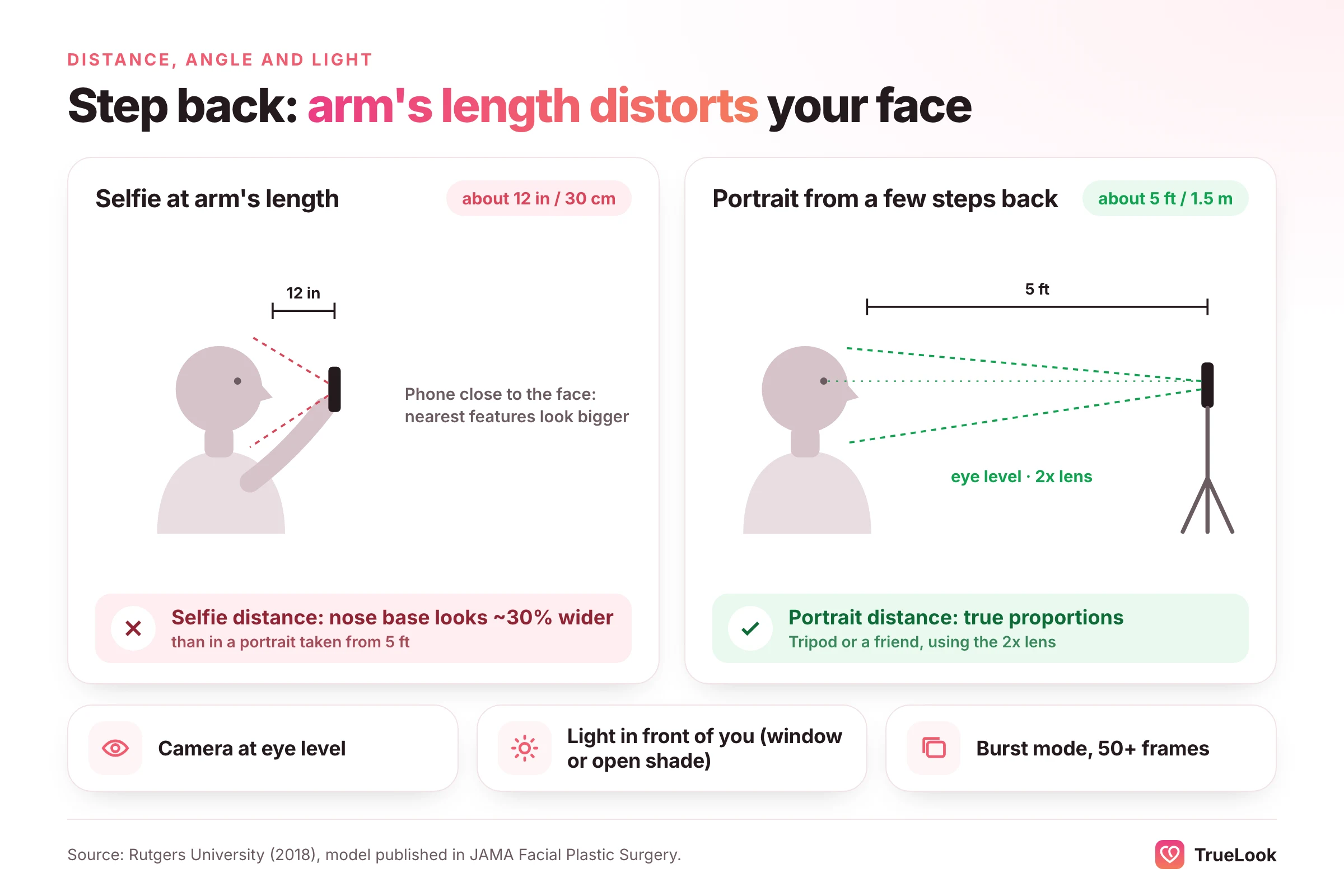
- Get the camera away from your face. A Rutgers and Stanford model found a selfie taken at about 12 inches makes the base of the nose look roughly 30% wider than a photo taken at 5 feet.
- Keep photos current and honest. Bumble suggests photos from the last year, ideally the last six months. Independent judges in a Cornell study rated about a third of dating photos as inaccurate.
- Know the rules. Bumble requires at least one solo photo with your full face visible. It removes pet photos with no person in them, and it has long banned indoor underwear and mirror-selfie shots.
What makes a good Bumble photo?
On Bumble, a photo has two jobs, not one. First it has to earn a right swipe. Then, because women send the first message in matches between men and women, it has to help someone decide to actually write. That second step is what makes Bumble different from Tinder, and it changes which photos work best.
Run every photo through four questions before it goes on your profile:
- Can they see you? Your face is in focus, your eyes are visible, and you aren't a small figure in a big landscape.
- Is it you, now? Same hair, same build, same style as the person who will show up for a drink.
- Is the light kind? Daylight from a window or open shade, not a ceiling bulb, a flash or a dim bar.
- Does it add something new? A different setting, outfit, activity or side of you that the other five photos don't already show.
Then apply one Bumble-specific test to the whole set, the first-message test: could a stranger look at your photos and think of something specific to say? "Is that the coast path near Porthcurno?" is a first message. "Hey" is what people send when the photos give them nothing.
What Bumble itself recommends
Bumble has published a lot of photo advice on its own blog. Pulled together, it's a sensible baseline, and it's useful to know exactly what the company has said before reading anyone else's rules.
| Bumble's advice | Where it says so |
|---|---|
| Use all six photo slots; using three or more photos can increase your chance of matching | How to Take the Best Bumble Profile Pics |
| Lead with a clear, recent, high-quality photo of your whole face, without sunglasses | 10 Ways to Make the Most of Your Photos on Bumble |
| Skip hats, sunglasses and filters in the first photo; choose a clean, well-lit background, not a bedroom or a car's driver's seat | How to Choose the Best First Photo on Bumble |
| Keep group and family photos for later slots, and limit photos with other people to one or two | Best first photo guide; photo tips |
| Photos from the last year are fine; the last six months is better | How to Take the Best Bumble Profile Pics |
| Pets are welcome if you're in the photo too | Photo tips; 10 Ways Your Photos Can Help You Get Better Matches |
| Show the things you love doing, and match your photos to what you're looking for | Photo tips |
| Don't crop out an ex or cover them with an emoji; use a solo photo instead | Photo tips |
| Turn on Best Photo and verify your profile | Photo tips; How to Use Bumble's Best Photo Feature |
One of those Bumble articles goes further than "three or more". It says profiles with four or more photos receive the most matches, but doesn't name the studies behind the claim. Either way, the direction is the same, and six varied photos beats any smaller number.
What the research says about dating photos
Bumble doesn't publish its own photo data in detail, but independent research on dating and profile photos is consistent enough to guide choices.
More photos earn more trust, especially for men
In a 2016 field study of Tinder by researchers at Queen Mary University of London, a real male volunteer's profile got 44 matches in four hours with one photo and 238 with three. Matches from women rose from 14 to 65. A female profile gained 37% when it went from one photo to three. The authors suggested women look for more information before trusting a male profile. On Bumble, where a woman then has to write first, that extra reassurance matters even more.
Smiles and visible eyes make you look more likeable
Photofeeler's 2023 study analysed more than 60,000 ratings of 800 profile photos. A smile showing teeth had the largest effect on how likeable someone looked. A laughing smile scored slightly higher on likeability still, though it lost the small boost a toothy smile gave to how competent and influential people seemed. Sunglasses cut likeability, and so did photos that were too dark. Hair, glare or shadow over the eyes made people look less competent. A slight squint, the relaxed narrowing of the eyes photographers call a "squinch", helped on all three measures.
A later Photofeeler analysis, published in 2026, found that in men's dating photos an open-mouth smile raised perceived trustworthiness by more than two and a half points on a ten-point scale against a non-smiling photo. The gain in attractiveness was less than half a point. For a profile where a woman has to decide whether she feels comfortable writing first, looking trustworthy is the point.
Framing matters: not too close, not too far
The same 2023 Photofeeler study found that face-only close-ups made people look slightly less likeable. Full-body shots lowered how competent and influential people seemed, and head-and-torso framing came out best overall. That's a good argument for making your lead photo a mid shot from the chest or waist up, and keeping the full-length photo for slot two or three.
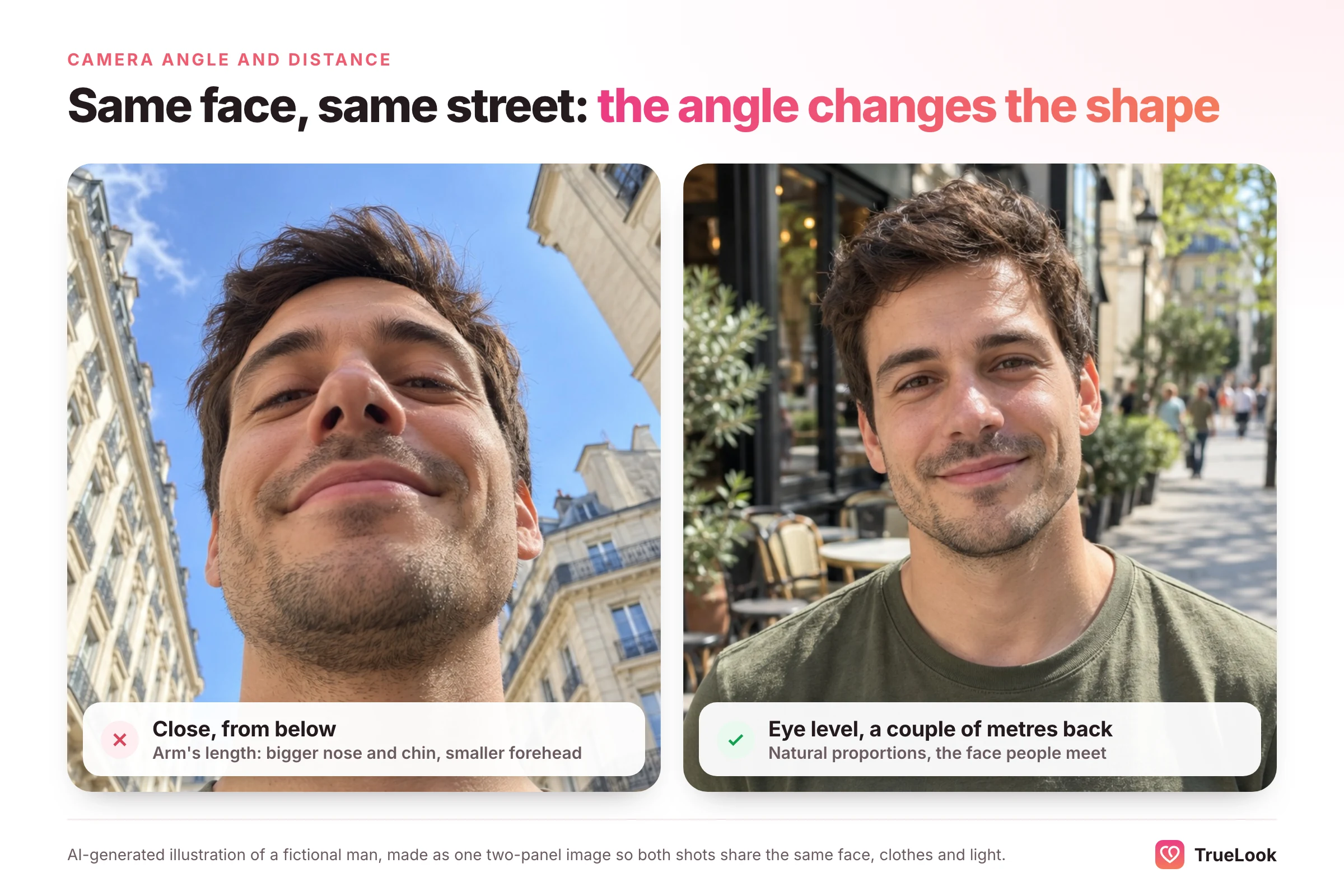
Arm's-length selfies distort your face
A model from Rutgers and Stanford, described in a 2018 Rutgers release and published in JAMA Facial Plastic Surgery, found that a selfie taken about 12 inches from the face makes the base of the nose look roughly 30% wider than a portrait taken from 5 feet. The nose tip looks about 7% wider. The fix is free: have someone else take the photo from a few steps back, or prop your phone up and use the timer.
Old or heavily edited photos backfire
In a 2009 Cornell study published in the Journal of Communication, Jeffrey Hancock and Catalina Toma had independent judges compare online daters' profile photos with how they looked in person. The judges rated about a third of the photos as not accurate. The daters themselves rated their own photos as fairly accurate. Women's photos were more likely to be older, retouched or professionally shot. Everyone wants to look their best, but a photo that oversells creates a let-down on the first date, and that's when it matters most.
The honest limits of this research
Photofeeler measures first impressions, not matches or dates. The Tinder study used a small number of test profiles in two cities. The Cornell sample was 54 people. None of it is Bumble data. Treat these findings as strong, consistent hints about how strangers read photos, not as a formula that guarantees any number of matches.
How Bumble's Best Photo feature works, and how to use it well
Best Photo is the one part of Bumble's photo ranking the company explains openly. According to Bumble, the feature looks at your first three photos, works out which gets the most right swipes, and moves it to the top of your profile. You switch it on from Edit profile, using the toggle below your photos, and you can switch it off at any time.
Three practical consequences follow:
- Your first three slots are a shortlist. Put three different, genuinely strong lead candidates there: for example, a smiling head-and-shoulders photo outdoors, a relaxed mid shot at a cafe, and a laughing candid. If one of the three is a group photo or a landscape, you've wasted a third of the test.
- It can only choose among what you give it. If all three photos are dim selfies, it will promote the least-bad dim selfie.
- It needs time. Give it at least a week of normal use before you judge which photo it settles on, then use what you learn. If the same photo keeps winning, build more photos in that style.
| Lead candidate | Good for Best Photo? | Why |
|---|---|---|
| Smiling head-and-torso shot, daylight, eye level | Yes | Clear face, warm expression, the framing that tests best |
| Laughing candid with your face visible | Yes | Shows warmth and personality; often wins on likeability |
| Mid shot doing something you enjoy, face visible | Yes | Adds a built-in conversation starter |
| Full-length photo | Sometimes | Useful, but the face is smaller; better in slot two or three as part of the set |
| Group photo | No | Viewers can't tell which person you are |
| Sunglasses or cap shading the eyes | No | Hides the features people judge warmth and trust from |
| Mirror or car selfie | No | Bumble's own guidance steers away from these backgrounds |
The six-photo Bumble lineup, slot by slot
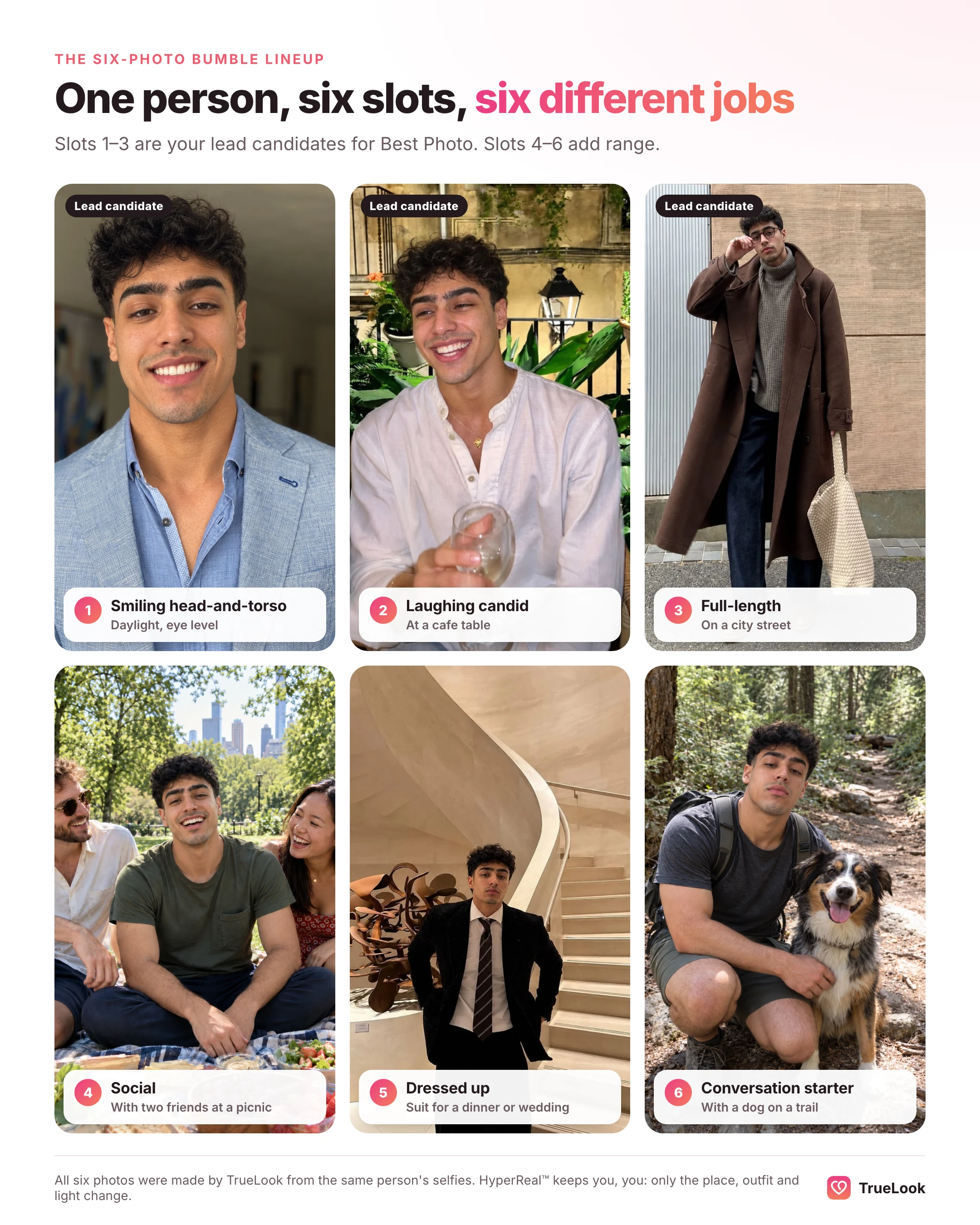
Here is a lineup that covers everything a stranger wants to know, in an order that works with Best Photo.
| Slot | Photo | What it tells people | How to get it right |
|---|---|---|---|
| 1 | Smiling head-and-torso shot | What you look like, and that you're friendly | Eye level, soft daylight, real smile, no sunglasses or hat |
| 2 | Laughing candid or activity shot | Your personality, and something to ask about | Face still visible; caught mid-moment rather than posed |
| 3 | Full-length photo | Your build and style, so nobody is guessing | Standing or walking, in clothes you'd wear on a date |
| 4 | Social photo | You have friends and a life | Two to four people, you obvious within a second |
| 5 | Dressed-up photo | You make an effort when it counts | Wedding, dinner, event; relaxed rather than stiff |
| 6 | Conversation starter | A story or interest | Pet (with you in it), travel, cooking, an instrument, a sport |
Slot 1: a smiling head-and-torso shot
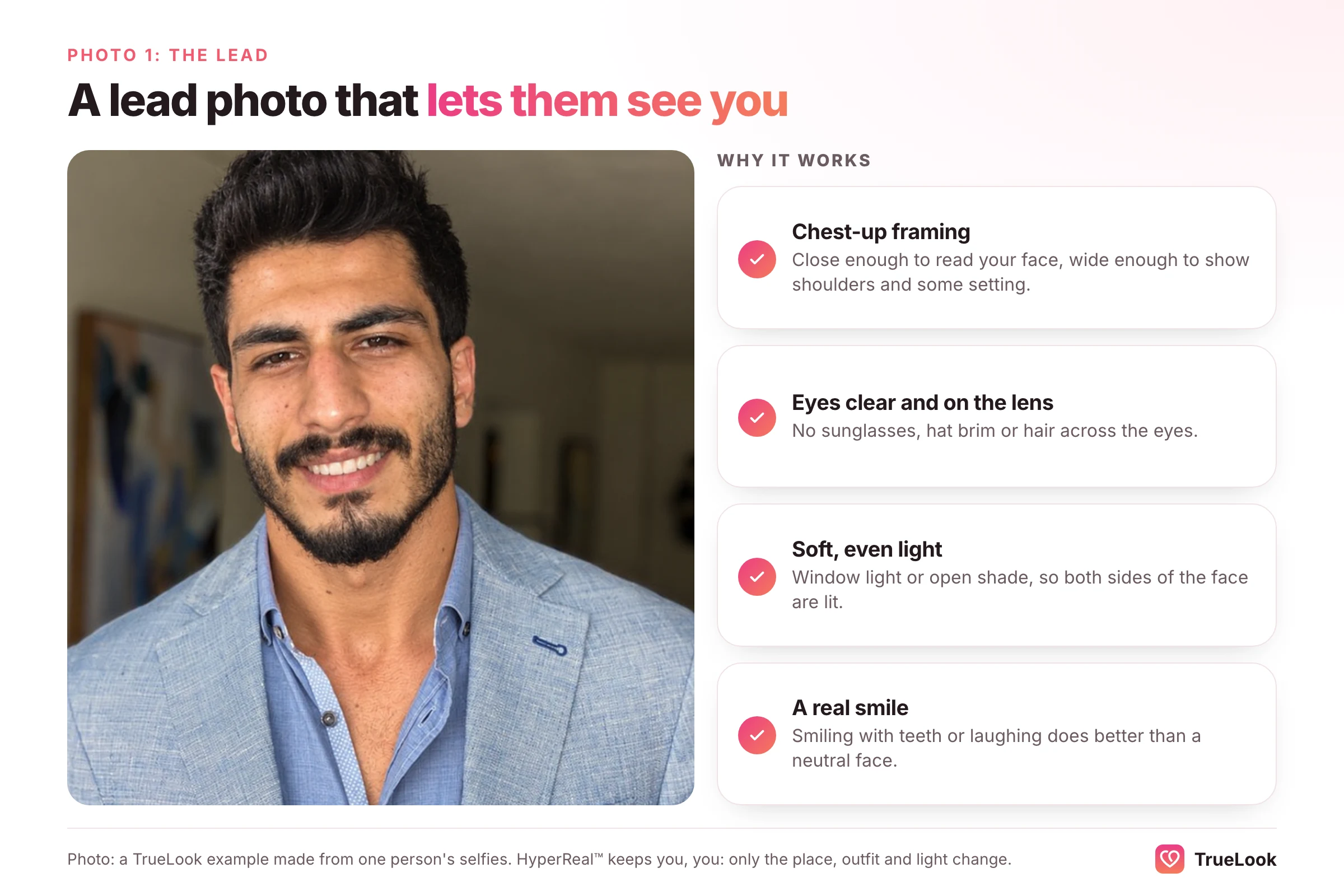
This is the photo most people decide on. Frame from roughly the chest up, at eye level, in soft light: by a window, in open shade, or in the hour before sunset. Smile properly. The research above is clear that a real smile is the single biggest lift you can give a photo. Keep the background simple, so the eye goes to your face. Some guides recommend a full-length photo here instead; the Photofeeler data suggests head-and-torso framing reads better, and Best Photo will tell you which works for you if you put both in your first three.
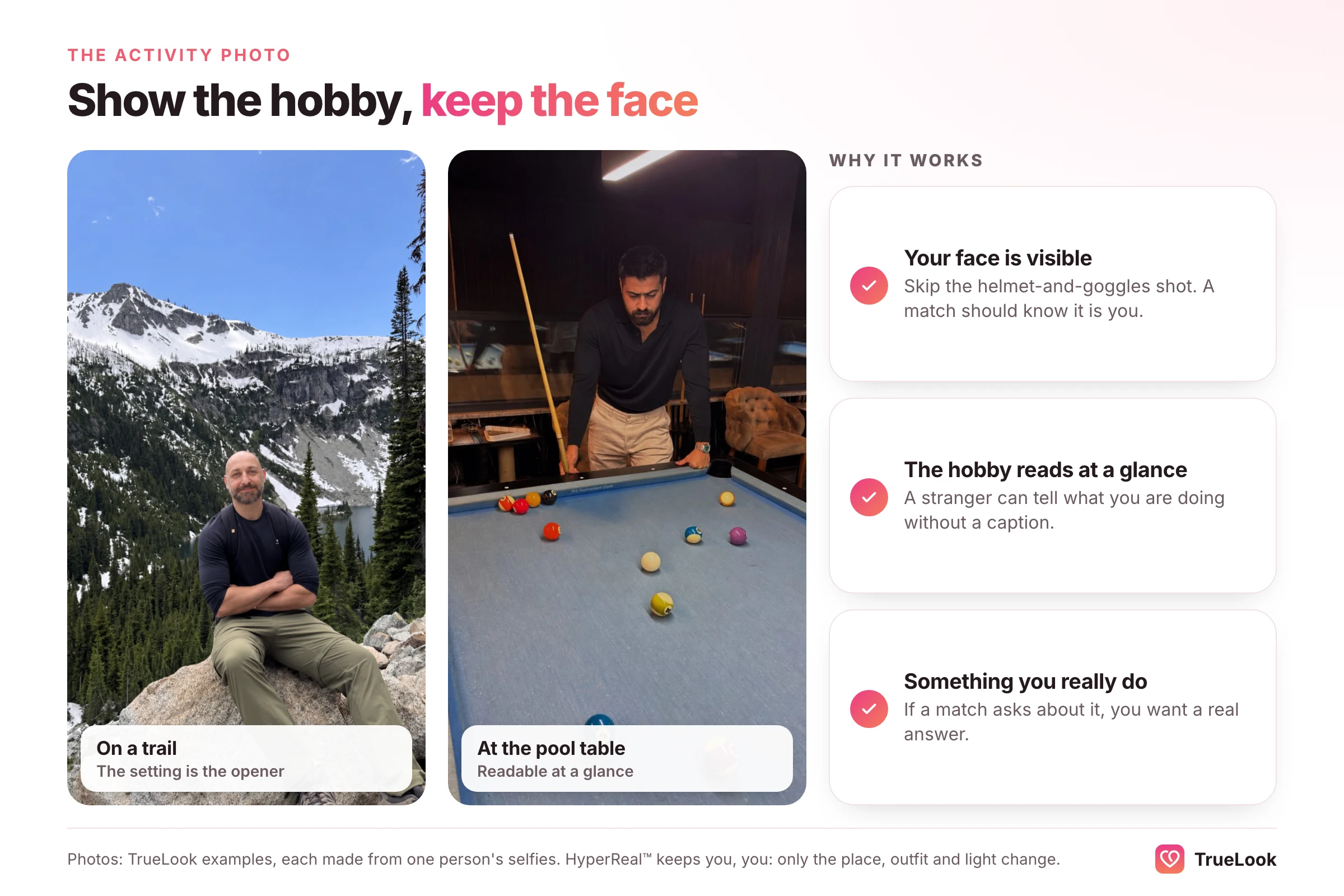
Slot 2: a laughing candid or an activity
Candid photos, where you're mid-laugh or mid-task rather than posing, show the version of you people meet in person. An activity shot does the same and hands your match an opener. Bumble's own advice is to post photos of the things you love, so they attract people who share them. Make sure your face is still recognisable: a climbing shot from behind is a nice photo but a weak dating photo.
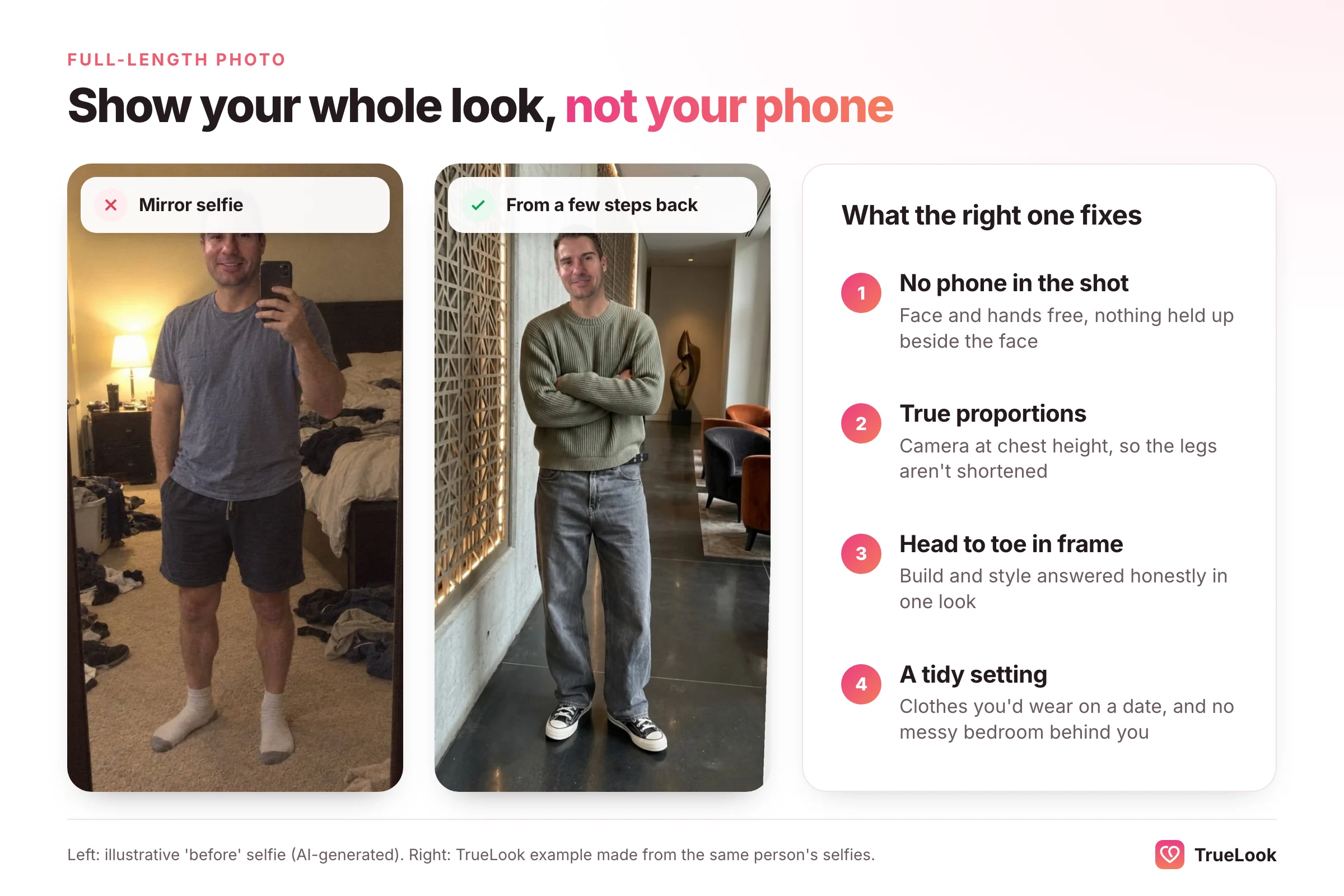
Slot 3: a full-length photo
People want to know your build and how you dress. A full-length photo answers that honestly, and a profile without one can make people wonder why. Standing or walking works better than sitting. Wear something you'd actually wear on a date, and have the photographer stand back and zoom slightly, rather than coming close with the wide lens.
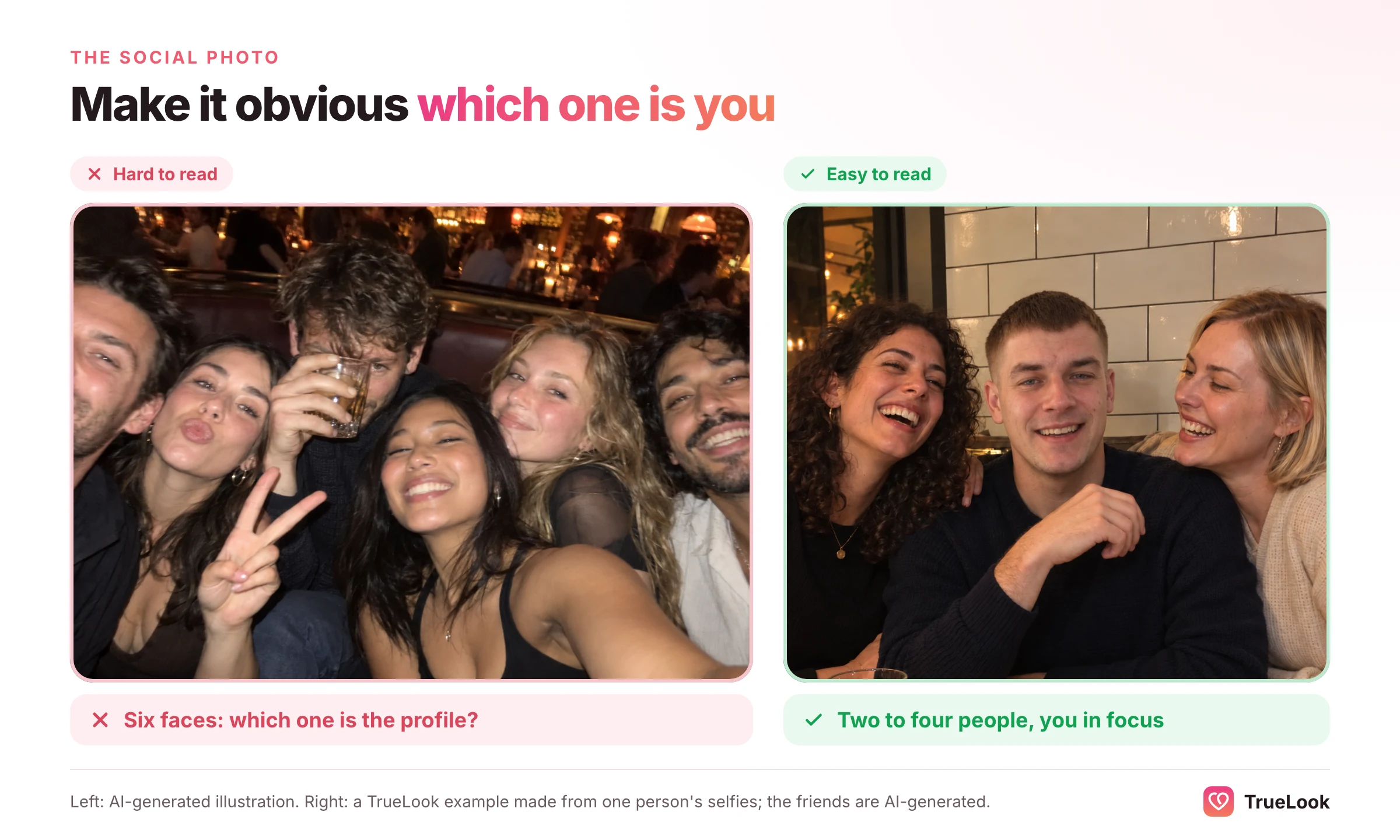
Slot 4: one social photo
One photo with friends or family shows you have people in your life. Keep it to two to four people, make sure you're easy to spot, and keep it out of the first three slots. Bumble's own guidance is to limit photos with other people to one or two and place them lower on your profile. It also asks that you have consent from anyone else in the picture.
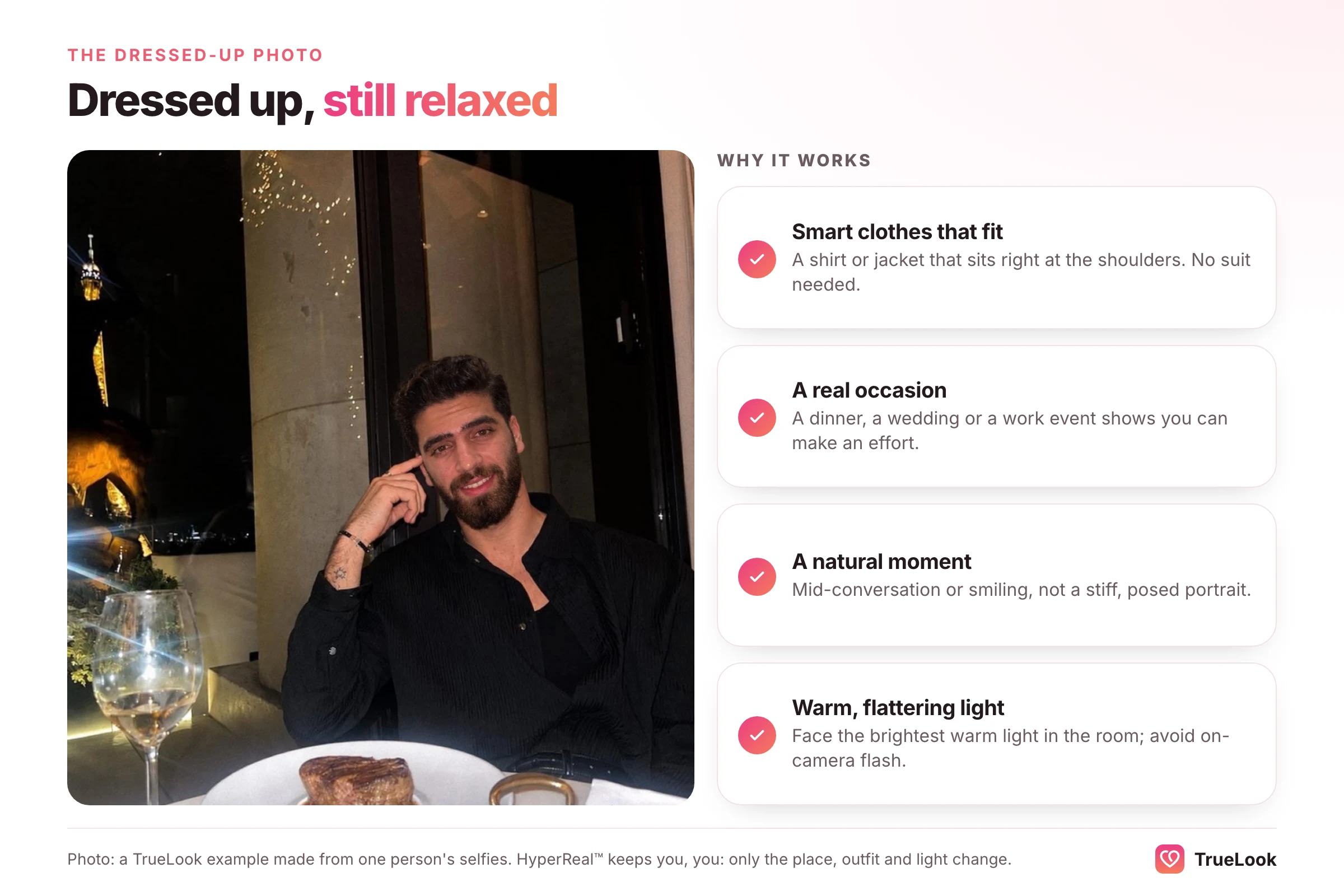
Slot 5: a dressed-up photo
A wedding, a nice dinner or a work event shows you can make an effort. Photofeeler found formal dress gave the biggest boost to how competent and influential people seemed. You don't need a suit; a well-fitting jacket, shirt or dress is enough. Choose a moment where you look relaxed, not a stiff, posed portrait.
Slot 6: a conversation starter
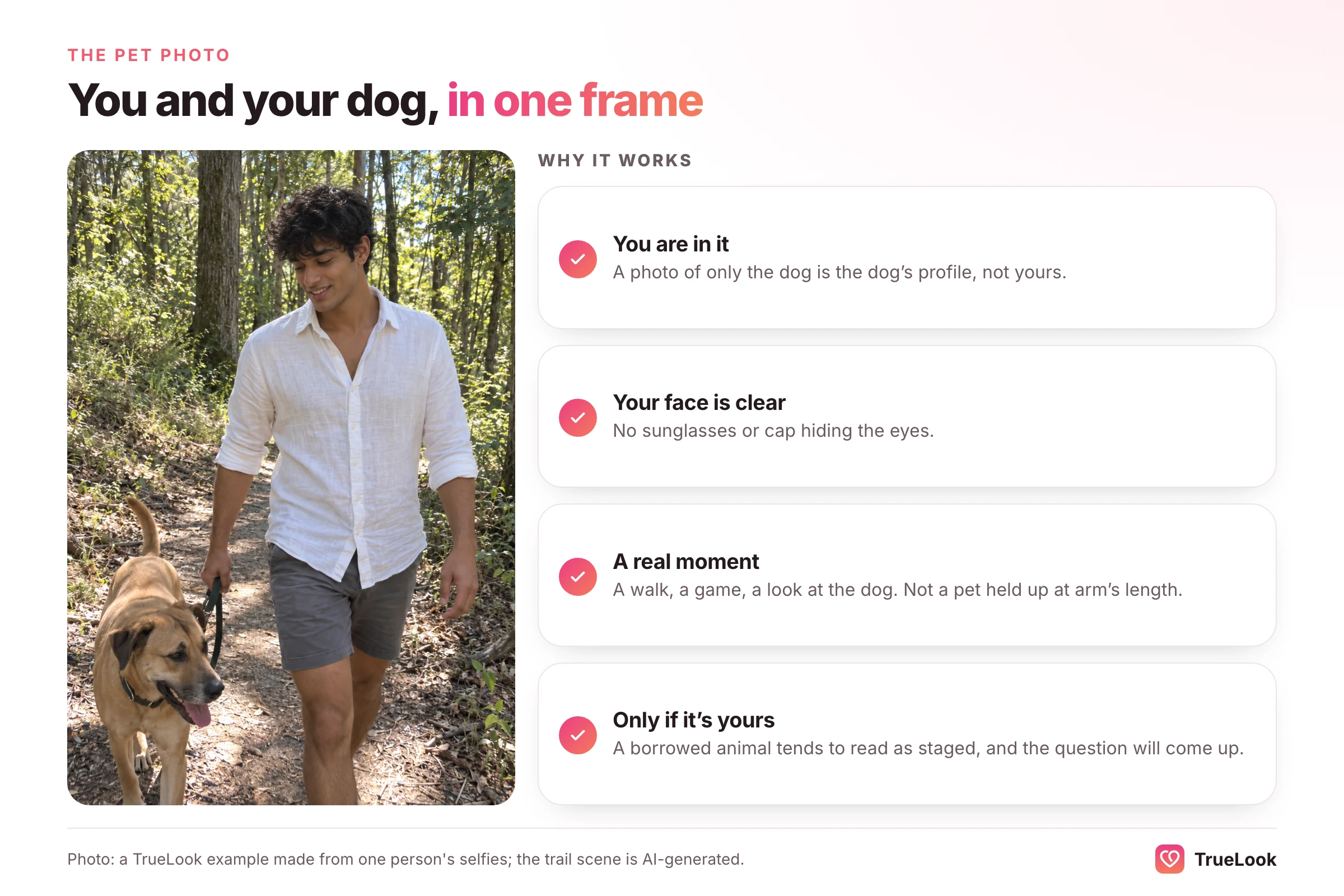
Your dog on a trail, the bread you've been learning to bake, the bike you rebuilt, a photo from a trip with a recognisable landmark. This is the photo most likely to become her first line. Bumble asks that pet photos include you; photos without a person in them can be removed.
Is 3 photos enough for Bumble?
Three is the minimum worth having, not the target. Bumble says three or more photos can raise your chance of matching, and one of its articles puts the sweet spot at four or more. The Tinder field study above showed a male profile getting several times more matches with three photos than with one. And three photos only just fills Best Photo's test pool.
Six gives you everything: three lead candidates, a full-length photo, a social photo and a conversation starter. If you only have three or four good photos today, use those rather than padding with weak ones, and add more as you get them. A weak photo doesn't just fail on its own. It can make a viewer doubt the good ones.
| Photos on profile | What happens | Verdict |
|---|---|---|
| 1–2 | Too little to trust; often reads as a fake or abandoned profile | Not enough |
| 3 | Fills Best Photo's test pool, but leaves gaps (build, social life, interests) | Bare minimum |
| 4–5 | Covers the essentials if each photo is different | Good |
| 6, all strong and varied | Full test pool plus every question answered | Best |
| 6, with two or three weak ones | Weak photos drag down the strong ones | Cut to your best four or five |
Best Bumble pictures for guys
For men, Bumble photos have to pass two decisions: the swipe, and then her choice to send the first message, or yours to answer her Opening Move. Warmth and trust matter more here than looking impressive. The most common problems are easy to spot.
- A profile of selfies. One is fine. Six suggest nobody is around to take your picture, and close-range selfies distort your face.
- Flexing. Shirtless gym or bathroom mirror shots were banned outright by Bumble in 2016 and still read as low-effort or casual. A photo of you actually doing a sport says "fit" more convincingly.
- Sunglasses and caps everywhere. One outdoor photo with sunglasses lower down is fine. Not in the first three.
- No activity or context. Five posed indoor photos tell her nothing about your life.
- Fish, cars and trophies. They can work as a sixth photo if it's genuinely you, but not as the theme of your profile.
| If your current photos are… | …then do this |
|---|---|
| Mostly selfies | Keep the best one; ask a friend for 20 minutes outdoors at eye level |
| Mostly group shots | Keep one; crop another only if it still looks natural, and don't crop out an ex |
| All serious expressions | Reshoot your lead photo smiling. It's the biggest single change you can make |
| Gym or shirtless shots | Swap for an activity photo with your shirt on |
| More than two years old | Replace them; Bumble suggests the last year, ideally six months |
| All indoors at night | Add at least two daylight photos, one of them full-length |
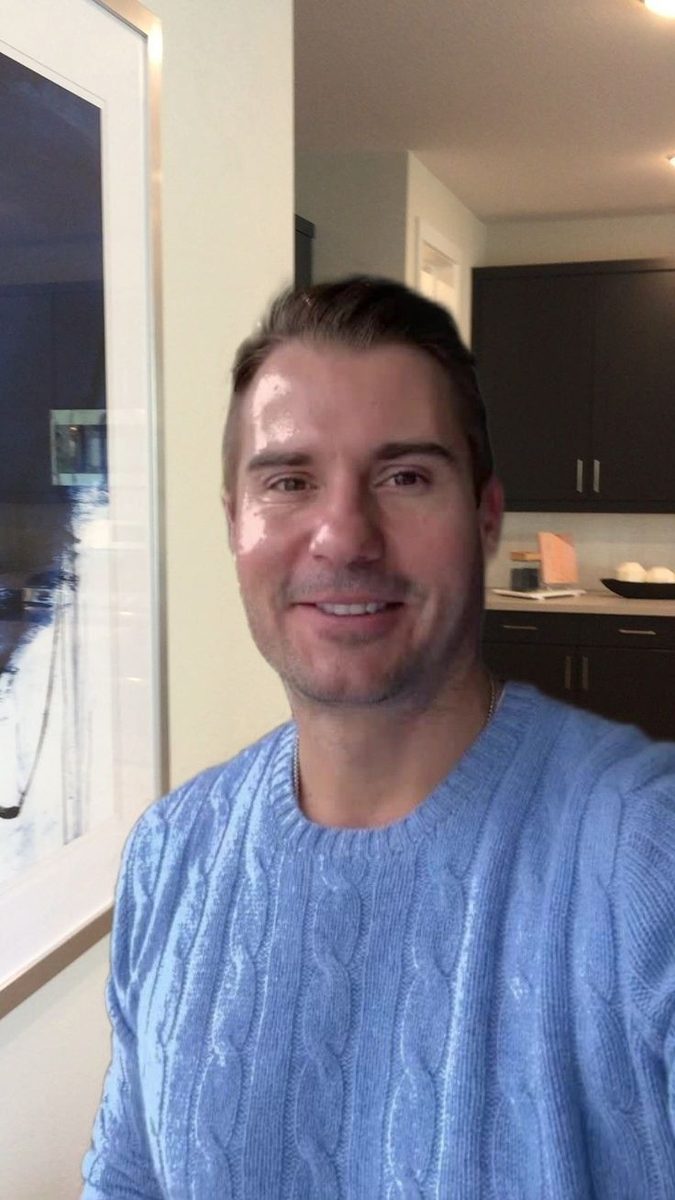
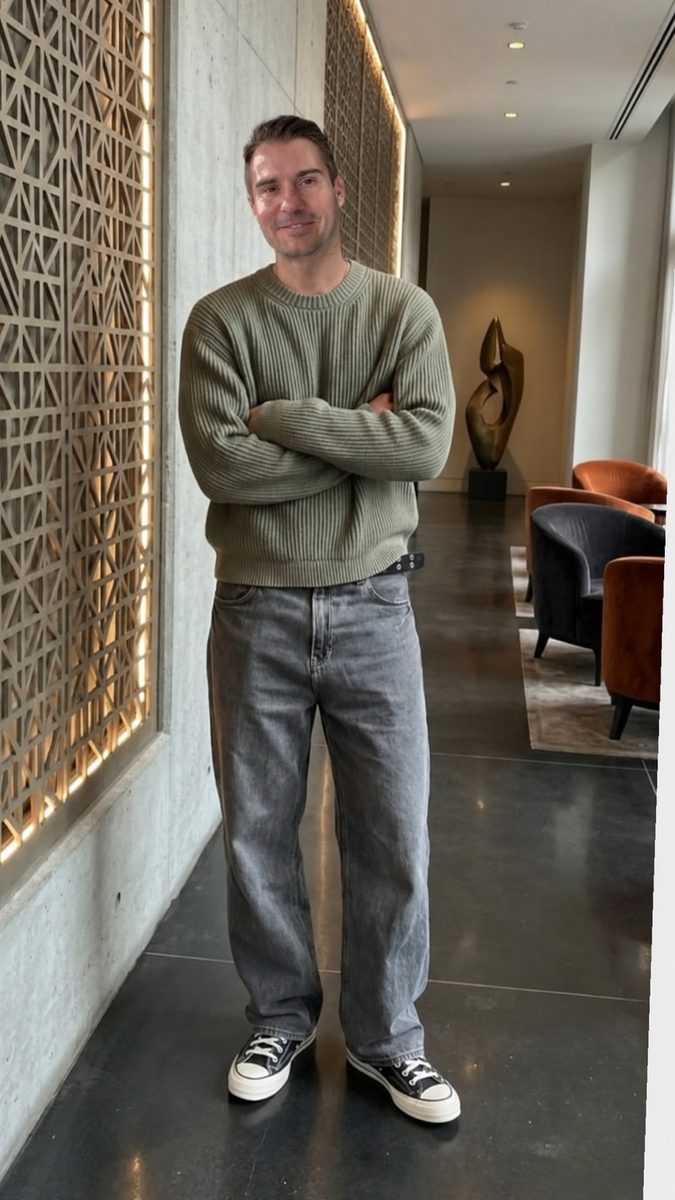
Here is what a change of light and setting does for the same face. The first photo is the man's own selfie; the second is a TrueLook example generated from his selfies.
For more on poses, outfits and backgrounds, our guide to the best dating profile photos for men goes deeper.
Best Bumble photos for women
Women on Bumble face a different problem. Volume is rarely the issue: in Pew Research Center's 2023 survey, 54% of women who had recently used dating apps said they had felt overwhelmed by the number of messages, against 25% of men. On Bumble you also make the first move, or set an Opening Move for him to answer. So your photos are less about getting more matches and more about attracting the right ones, and giving them something worth answering.
| Photo | Why it works on Bumble |
|---|---|
| Natural, smiling face shot with little or no filter | Builds trust and avoids a "she looked different" first date |
| Full-length photo | Answers an obvious question honestly; you control the photo rather than leaving it to guesswork |
| A photo of something you love doing | Bumble's advice: interests in your photos draw people who share them |
| One social photo, lower down | Shows your life without making him guess who you are |
| A photo that fits your intention | Bumble suggests lifestyle and hobby photos if you want something serious, nights out if you're keeping it casual |
A few more points that matter for women in particular:
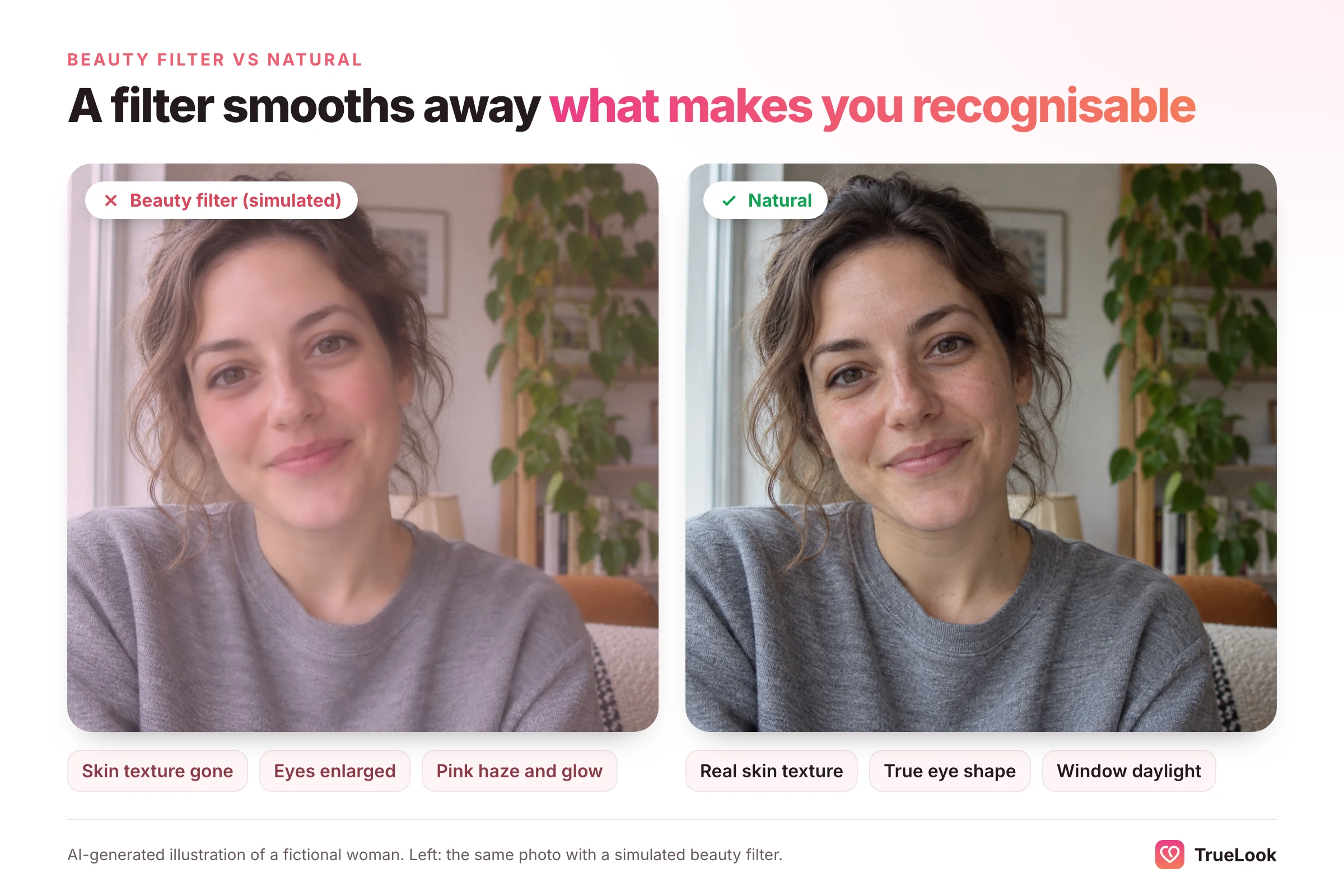
- Go easy on filters and retouching. The Cornell study found women's dating photos were more likely to be retouched or older, and judged less accurate. A natural photo protects the first date.
- Editorial isn't always approachable. A heavily styled, fashion-shoot look can read as hard to talk to. Mix one polished photo with relaxed ones.
- Think about privacy. Avoid photos that show your street, your house number, your workplace badge or your car's number plate. Share those details once you've met.
- Pair a photo with an Opening Move. A photo of your terrible first attempt at pottery plus the Opening Move "What's a hobby you're bad at but love anyway?" sets up an easy first exchange.
Bumble photo rules: what's allowed and what gets removed
Bumble's safety moderation guide says every uploaded photo is reviewed by both people and technology. These are the rules that most often catch people out:
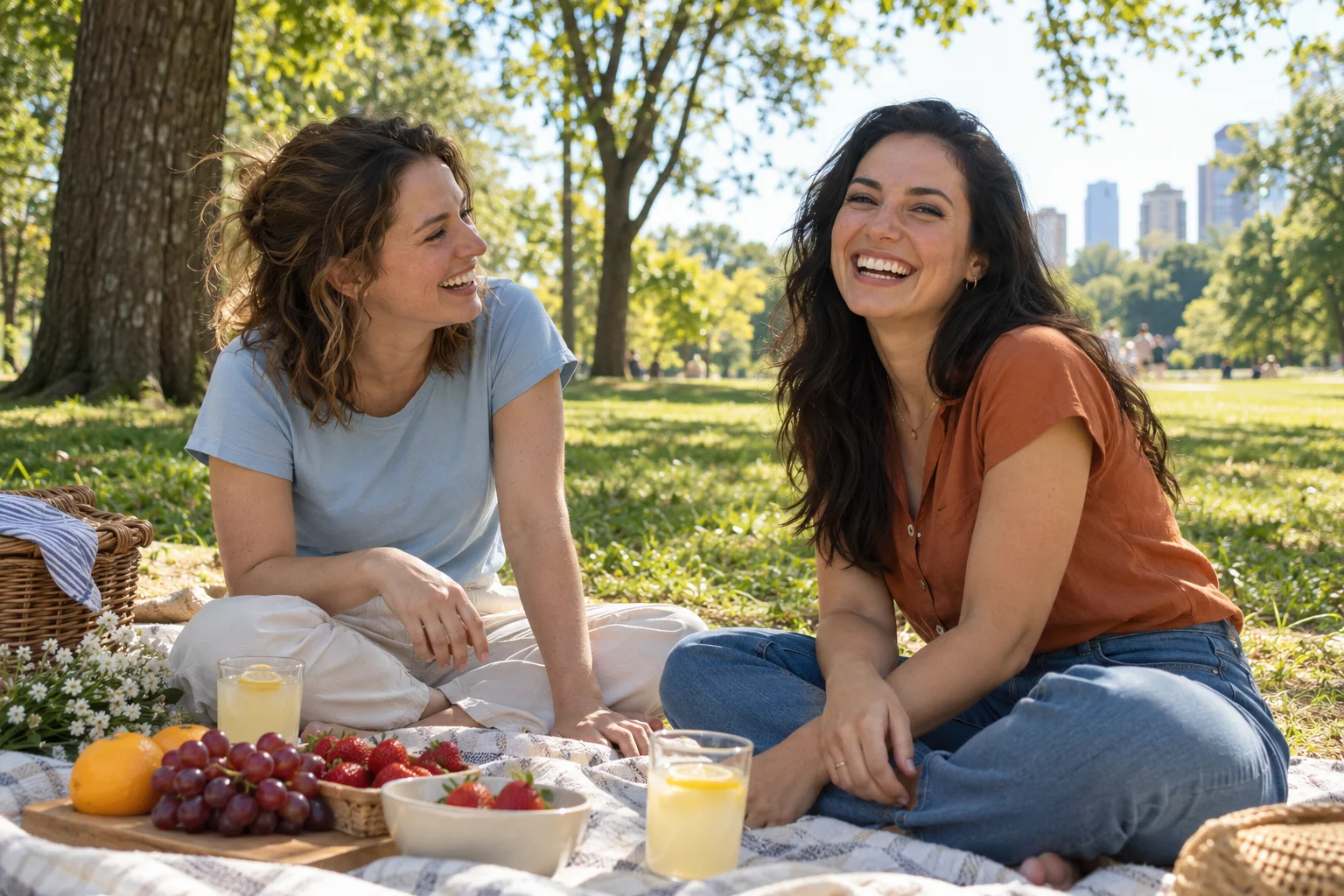
- At least one photo must show only you, with your full face clearly visible. That's in Bumble's Community Guidelines.
- No heavily distorted or unnatural effects, and no memes or text-only images. Also in the Community Guidelines.
- No photos of children on their own, or of unclothed children. Photos of you with your kids are a personal choice; many parents prefer to leave them off until they know someone.
- No nude, sexually explicit or sexually vulgar content.
- Pets need you in the photo. Bumble says pet photos without a person in them will be removed.
- Mirror selfies and indoor underwear or swimwear shots. In 2016, TechCrunch reported that Bumble banned these, along with photos where the face isn't visible and group photos without a solo shot. Bumble said mirror selfies were the most swiped-left photos on the app, and that 86% of reported profiles contained these kinds of photos. Swimwear at a beach or pool was still fine. The guidelines have been reworded since, but these photos still tend to perform badly.
Verification ties into this. Bumble's photo verification asks you to copy a random pose in a selfie, which is checked against your profile photos, and verified profiles get a blue check. Bumble's own advice for people with no matches includes verifying, so choose photos that clearly look like you today.
How to take great Bumble photos yourself
You don't need a photographer. You need decent light, the right distance and enough shots to choose from.
Light
- Best: open shade on a bright day, an overcast sky, or the hour before sunset.
- Indoors: face a large window, so the light falls on your face rather than behind you.
- Avoid: harsh midday sun overhead, a ceiling bulb, and phone flash, which flattens faces.
Angle and distance
- Keep the camera at or just above eye level. Low angles add a chin and show nostrils.
- Stand the photographer two to three metres away and use the phone's 2x or portrait lens. This avoids the close-range distortion the Rutgers model describes.
- Leave some space above your head and crop later rather than framing tightly.
Expression and movement
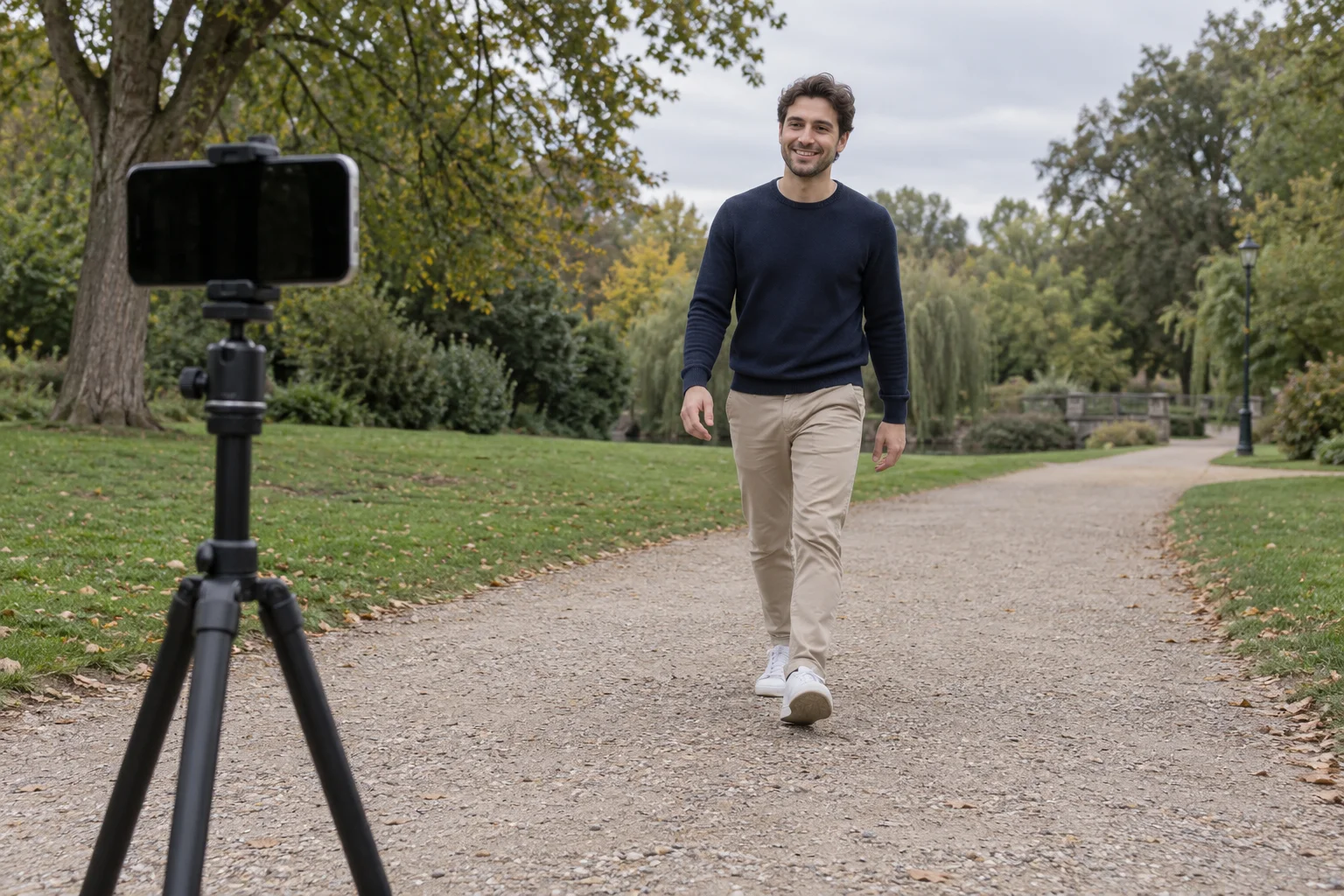
- Use burst mode while you walk, laugh at something real or talk to the photographer. Genuine expressions come between poses.
- Try the squinch: relax and slightly narrow your lower eyelids, which Photofeeler found helped ratings.
- Take at least 50 frames per setting. You need only one keeper.
A one-afternoon shoot plan
| Time | Location | Outfit | Photos to get |
|---|---|---|---|
| Start (about 2 hours before sunset) | A quiet street or park with open shade | Your best casual outfit | Lead candidates: smiling head-and-torso; laughing candid |
| +30 minutes | Same area, walking route | Same | Full-length walking shot; one at a cafe table |
| +60 minutes | Wherever your hobby happens: court, kitchen, studio, trail | Activity clothes | Activity shot with your face visible |
| Golden hour | A spot with a view or warm light | Dressed up: jacket, shirt or dress | Dressed-up mid shot; a second lead candidate |
| Evening | Dinner or drinks with friends | Same | One social photo, ideally taken by a friend |
Bumble photo mistakes and how to fix them
| Mistake | Why it costs you | Fix |
|---|---|---|
| Sunglasses or a hat in the lead photo | Hides your eyes; Photofeeler found sunglasses lower likeability | Eyes visible in your first three photos |
| Group photo in the first three slots | Wastes a Best Photo slot; viewers can't tell who you are | Move it to slot four or later |
| Close-range selfies | Distort features; look like nobody else is around | Timer or a friend, two to three metres away |
| Dark or night-time photos | Too-dark photos rated less likeable | Daylight or a window in front of you |
| Heavy filters or face editing | Bumble bars heavily distorted effects; first dates feel misleading | Natural colour, light edits only |
| Photos older than a year or two | About a third of dating photos were judged inaccurate in the Cornell study | Replace anything that no longer looks like you |
| Ex cropped out or covered with an emoji | Bumble specifically advises against it; it looks odd | Use a solo photo instead |
| Shirtless mirror or gym shot | Long banned by Bumble in its indoor form, and widely skipped | An activity photo with your shirt on |
| Six photos that look the same | No new information after the first | Vary setting, framing, outfit and activity |
| Pet photo without you | Bumble removes photos with no person in them | Get in the photo with your pet |
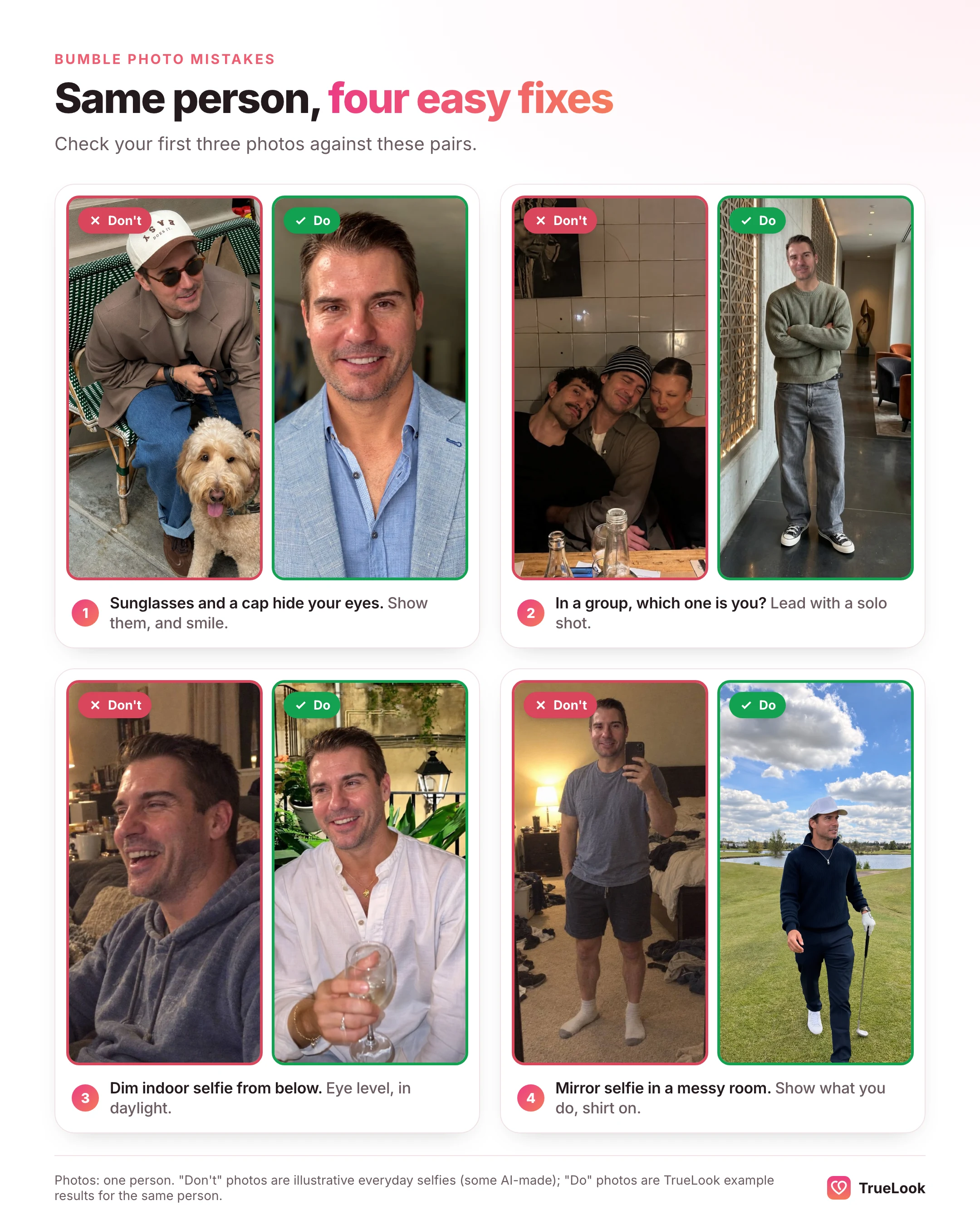
Make your photos and profile work together
Photos get the swipe, but on Bumble the words help get the first message. Each strong photo can set up a prompt answer or an Opening Move, and the pairings make a profile feel coherent. These are illustrative examples:
- Photo: you at a pub quiz with friends. Prompt: "My most irrational fear: being asked the sports round."
- Photo: you mid-climb. Opening Move: "Bouldering or top rope? Choose carefully."
- Photo: your slightly lopsided homemade pizza. Bio line: "Still chasing the perfect crust. Taste-testers welcome."
Bumble also offers more than 40 prompts (you can answer up to three), basic info and interest badges, and a bio. Filling them in gives people something to write about beyond your photos. If your photos are good and you're still not matching, our guide to fixing no matches on Bumble covers filters, swiping habits and the 24-hour match window.
Where AI photos fit
Many people read a guide like this and realise they don't have six good photos, and won't have time to shoot them soon. AI photo tools trained on your own selfies are one way to fill the gaps. TrueLook, for example, creates realistic AI photos for Bumble from four selfies, in about a minute per photo, so you can test new lead candidates with Best Photo without arranging a shoot.
The same rules apply whatever tool you use. The photos must look like you today, not an idealised version. Use them alongside at least one or two real photos where you can. And remember that verification and moderation decisions belong to Bumble. Our guide to whether AI photos are allowed on dating apps covers each app's rules, and our roundup of the best AI photo generators for Bumble compares the options.
If you're on more than one app, the principles carry over with small differences; see our guides to the best Hinge profile pictures and the best photos for Tinder.
Frequently asked questions
What photos work best on Bumble?
Recent, well-lit photos where your face is clear and you're smiling, arranged so each one shows something different: a head-and-torso lead photo, a candid or activity shot, a full-length photo, one social photo, a dressed-up photo and a conversation starter such as a pet or hobby.
How many photos should I have on Bumble?
Use all six slots if you have six strong, varied photos. Bumble says three or more photos can increase your chance of matching. Three also fills the pool that Best Photo tests, but leaves gaps. If some photos are weak, four or five strong ones beat six mixed ones.
Is 3 pictures enough for Bumble?
It's the minimum worth having, not the goal. Three photos fill Best Photo's test, but they rarely cover your face, your build, your social life and your interests all at once. Add more as soon as you have good ones.
How does Bumble's Best Photo feature work?
According to Bumble, Best Photo looks at your first three photos, finds the one that gets the most right swipes, and moves it to the top of your profile. You turn it on in Edit profile and can turn it off at any time. Put three strong lead candidates in those first three slots so it has real options.
What should my first Bumble photo be?
A solo photo from about the chest up, at eye level, in soft daylight, with a real smile and your eyes visible. Bumble advises skipping hats, sunglasses and filters in the first photo and choosing a clean background rather than a bedroom or a car.
Can I use group photos on Bumble?
Yes, but limit them to one or two, keep them out of the first slots, and make sure you're easy to spot. Bumble requires at least one photo that shows only you with your full face visible, and asks that you have consent from anyone else pictured.
Are shirtless or mirror selfies allowed on Bumble?
Bumble banned mirror selfies and indoor underwear or swimwear photos in 2016, saying mirror selfies were the most swiped-left photos on the app. Swimwear at a beach or pool was allowed. Rules are worded differently today, but these photos still tend to perform poorly, so use an activity photo instead.
How recent should my Bumble photos be?
Bumble suggests photos from the last year, and ideally the last six months. Anything that no longer looks like you, such as a different hairstyle, weight or beard, should go, even if you love the photo.
Sources
- "How to Take the Best Bumble Profile Pics", Bumble, The Buzz (undated, accessed 2026). https://bumble.com/the-buzz/best-bumble-profile-photo-tips
- "10 Ways to Make the Most of Your Photos on Bumble", Bumble, The Buzz (undated, accessed 2026). https://bumble.com/the-buzz/bumble-photo-tips
- "How to Choose the Best First Photo on Bumble", Bumble, The Buzz (undated, accessed 2026). https://bumble.com/the-buzz/best-first-photo-bumble
- "10 Ways Your Photos Can Help You Get Better Matches", Bumble, The Buzz (undated, accessed 2026). https://bumble.com/the-buzz/10-ways-profile-photos-get-better-matches
- "How to Use Bumble's Best Photo Feature", Bumble, The Buzz (undated, accessed 2026). https://bumble.com/the-buzz/how-to-use-bumble-best-photo-feature
- "A First Look at User Activity on Tinder", Tyson, Perta, Haddadi and Seto, Queen Mary University of London, arXiv (2016). https://arxiv.org/abs/1607.01952
- "New Research Study Breaks Down 'The Perfect Profile Photo'", Photofeeler (2023). https://blog.photofeeler.com/perfect-photo/
- "The Science of Smiling in Photos: How Different Expressions Impact First Impressions", Photofeeler (2026). https://blog.photofeeler.com/the-science-of-smiles/
- "Selfies Drive Self-Image and May Lead Many to Seek Plastic Surgery", Rutgers University (2018). https://www.rutgers.edu/news/selfies-drive-self-image-and-may-lead-many-seek-plastic-surgery
- "Putting Your Best Face Forward: The Accuracy of Online Dating Photographs", Hancock and Toma, Journal of Communication (2009). https://academic.oup.com/joc/article/59/2/367/4185141
- "From Looking for Love to Swiping the Field: Online Dating in the U.S.", Pew Research Center (2023). https://www.pewresearch.org/internet/2023/02/02/from-looking-for-love-to-swiping-the-field-online-dating-in-the-u-s/
- "Community Guidelines", Bumble (accessed 2026). https://bumble.com/en/guidelines
- "Haven't Made Any Matches on Bumble Yet? Here's What to Do", Bumble, The Buzz (undated, accessed 2026). https://bumble.com/the-buzz/no-matches-on-bumble
- "What to Know About Bumble's Safety Moderation", Bumble, The Buzz (undated, accessed 2026). https://bumble.com/the-buzz/bumble-safety-moderation
- "Bumble bans mirror selfies and other dumb photos from users' profiles", TechCrunch (2016). https://techcrunch.com/2016/10/07/bumble-bans-mirror-selfies-and-other-dumb-photos-from-users-profiles/
Get better dating photos from your own selfies
TrueLook’s HyperReal™ method turns 4 selfies into hyperrealistic photos of you for Tinder, Hinge and Bumble.
AI Bumble photos made from your selfies
Written by the TrueLook Team
TrueLook makes hyperrealistic dating photos from your own selfies. Our articles cover dating profile photos, the apps and how to get noticed.