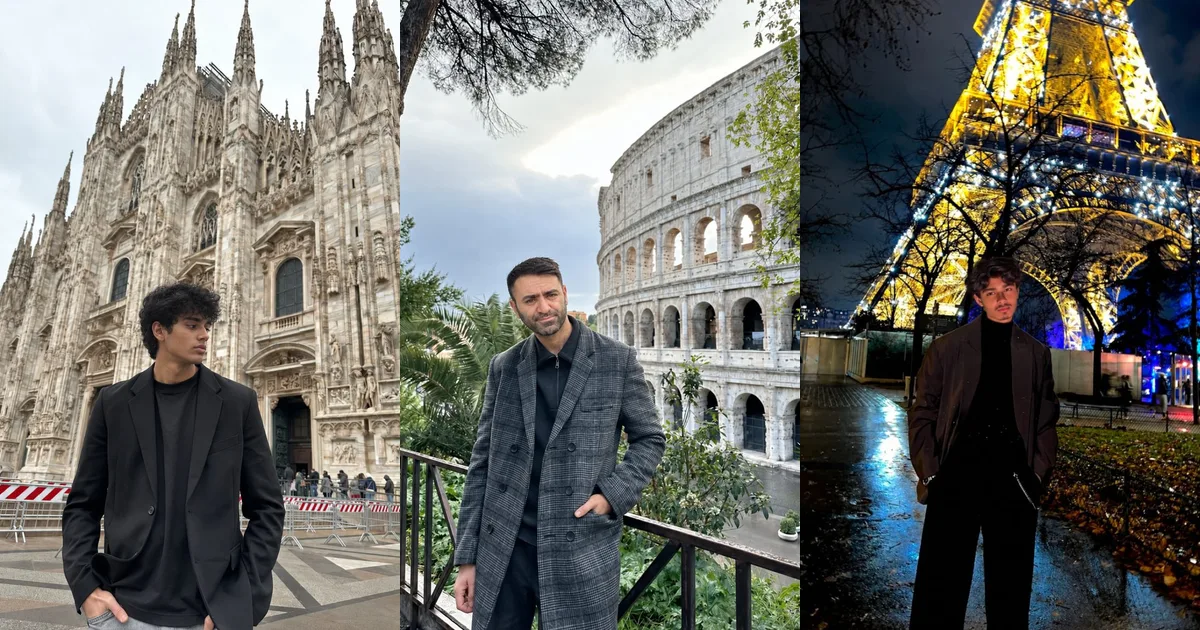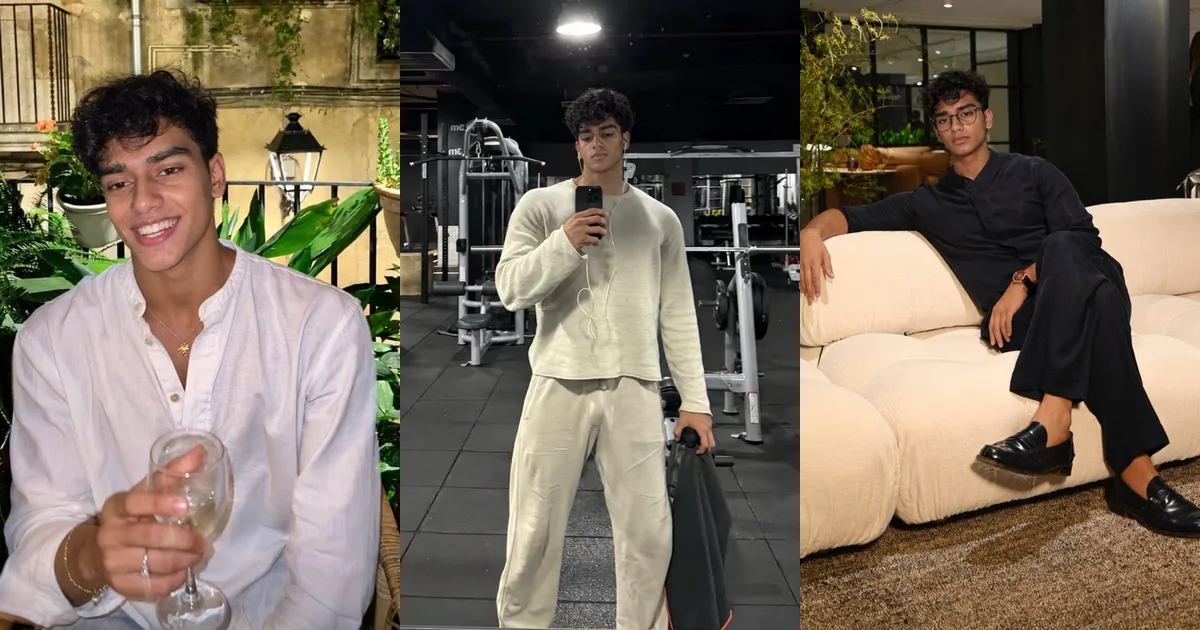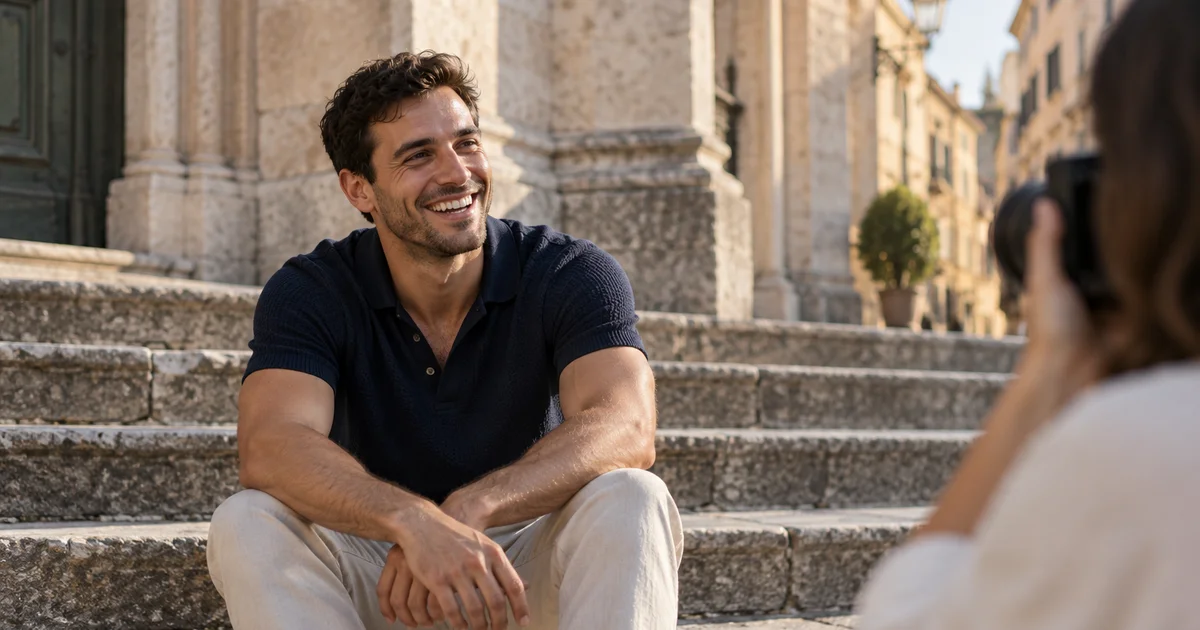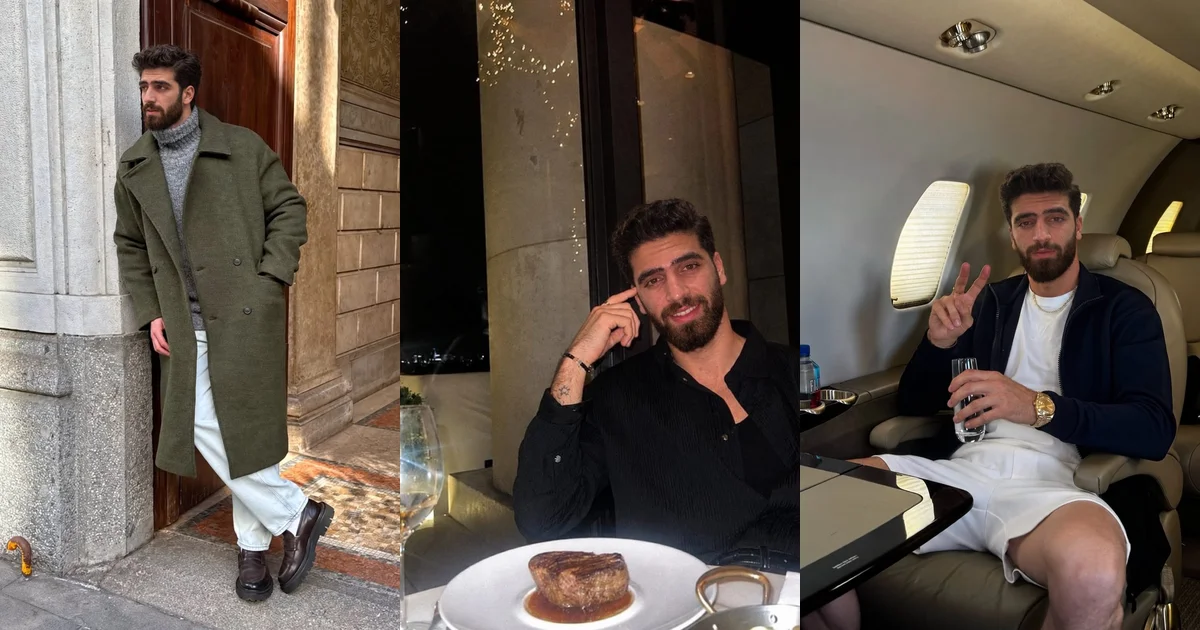
The best dating profile pictures for guys are six to eight recent photos that each do a different job. Open with a clear, well-lit shot of your face. Follow it with a head-to-toe photo, something you actually do, one dressed-up look, a single photo with a friend, and a candid laugh, a trip or your own pet. Show your eyes, wear clothes that fit, let someone else hold the camera, and never lead with a group shot or a mirror selfie.
- People form judgments about a face in as little as a tenth of a second, according to a 2006 study in Psychological Science, so your first photo has to be readable at a glance.
- Give every photo one job: face, build, activity, effort, social life, personality. Repeats waste slots, and Tinder's own Photo Tips tool now flags near-identical selfies.
- In a field test with 3,000 dating-app users, people were more likely to pick profiles showing open, expansive poses than closed ones (PNAS, 2016).
- A smile that shows teeth and a real laugh produced the biggest likability gains in Photofeeler's analysis of 800 profile photos. Sunglasses lowered it.
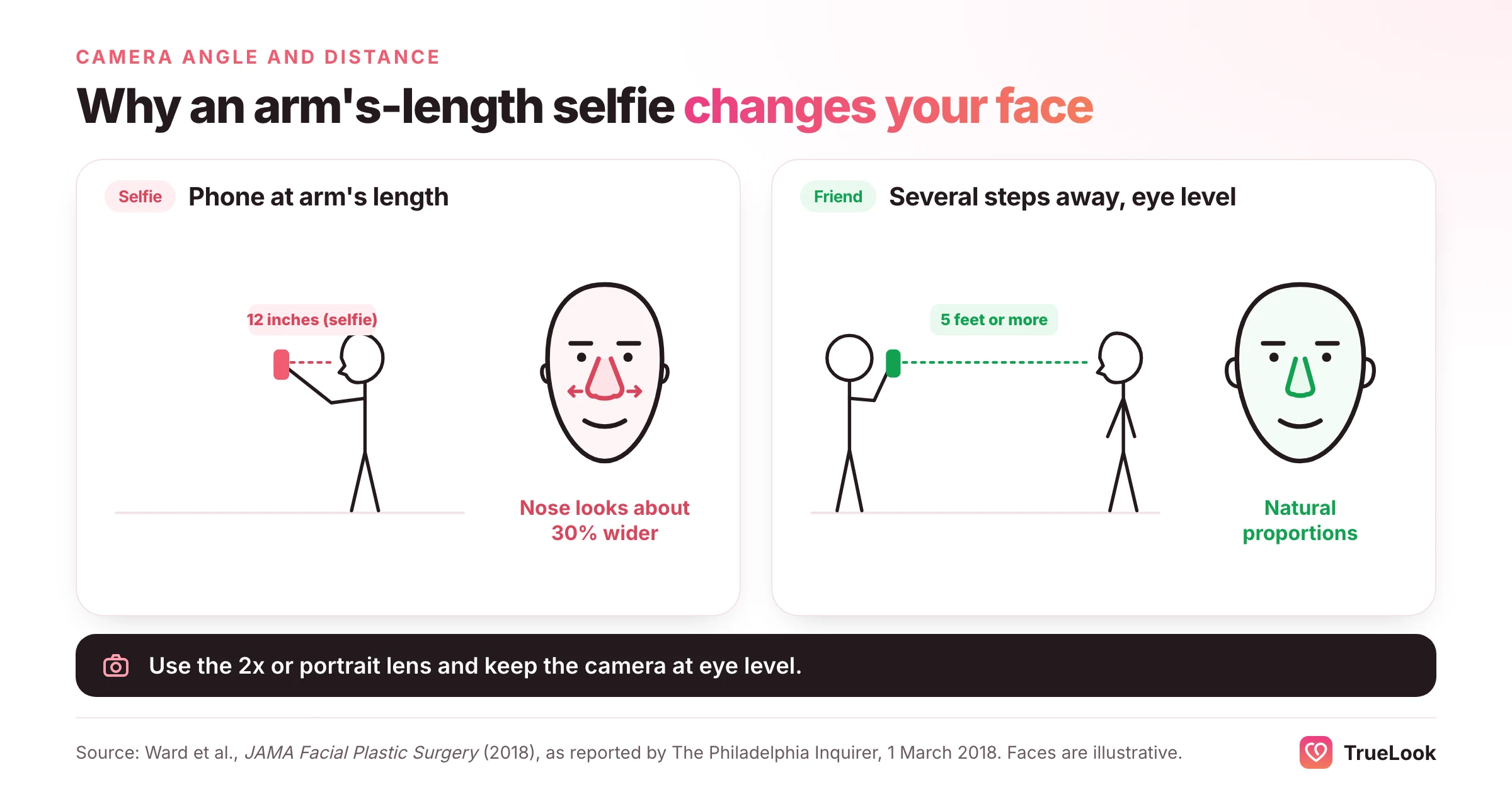
- Arm's-length selfies distort your face: at 12 inches the nose looks about 30% wider than in a photo taken from 5 feet away, as reporting on a 2018 Rutgers study explained.
- Hinge asks for four to six photos, Bumble allows six. Six strong, varied photos beat a longer set with repeats.
- If your camera roll is empty, one weekend with a friend in soft evening light covers almost every slot. A photographer or an AI tool built from your own face can fill what's left.
Why photos decide most of your results
On a swipe app, your photos are read before anything else, and often instead of anything else. In a classic experiment, psychologists Janine Willis and Alexander Todorov showed people faces for as little as 100 milliseconds. The judgments they formed about attractiveness, likability, trustworthiness and competence in that flash closely matched the judgments others made with unlimited time. More time mostly made people more confident, not more accurate. Their paper, published in Psychological Science in 2006, is a good reminder that a dating photo gets roughly one glance to make its case.
Daters say the same thing about themselves. In a September 2022 survey of 997 Americans by Passport Photo Online, 80% of men and 85% of women agreed that pictures are the most important part of a profile. The sample leaned heavily male and was run by a photo company, so treat the exact figures loosely, but the direction matches every other source in this guide.
For men, the stakes are visible in the numbers. Pew Research Center's 2023 summary of online dating in the US found that 64% of men who had used a dating platform in the past year felt insecure about how few messages they got. Among women, 54% felt overwhelmed by how many they received. When one side is flooded and the other is waiting, small differences in how quickly a profile communicates who you are carry a lot of weight.
The good news is that most of what makes a photo work has nothing to do with your bone structure. It comes down to light, framing, expression, variety and honesty. Those are skills, and the rest of this guide breaks them down.
The eight-job lineup: what each photo has to prove
The most useful way to build a men's dating profile is to stop asking "which photos do I look good in?" and start asking "what does a stranger need to know, and which photo tells them?" We call this the eight-job lineup. Each job answers one unspoken question. Most weak profiles answer two of them several times over and leave the rest blank.
| Job | The question it answers | Must-have | Common failure |
|---|---|---|---|
| 1. Clear face | Who is this, exactly? | Eyes visible, soft light, chest-up framing | Sunglasses, cap shadow, arm's-length selfie |
| 2. Full length | What does he look like overall? | Head to shoes, fitted clothes | Skipped entirely, or shot from far away and blurry |
| 3. Activity | What does he do with his time? | Face visible while doing the thing | Helmet, goggles or a back-of-head shot |
| 4. Social | Does he have people around him? | One or two friends, you easy to spot | Five similar guys, or used as photo one |
| 5. Dressed up | Does he make an effort when it counts? | A jacket or a sharp shirt that fits | A suit two sizes too big, harsh flash |
| 6. Candid laugh | Is he fun to be around? | A real reaction, not a pose | A forced grin at the lens |
| 7. Pet (optional) | Does he care for anything? | Your own animal, real interaction | A friend's puppy, or the dog alone |
| 8. Place or travel | Does he have stories? | An interesting setting, face still clear | A tiny figure in front of a landmark |
Six of these is a complete profile. Seven or eight works where the app allows it, but only if every extra photo adds information. Here is how to get each one right.
Job 1: the clear face shot
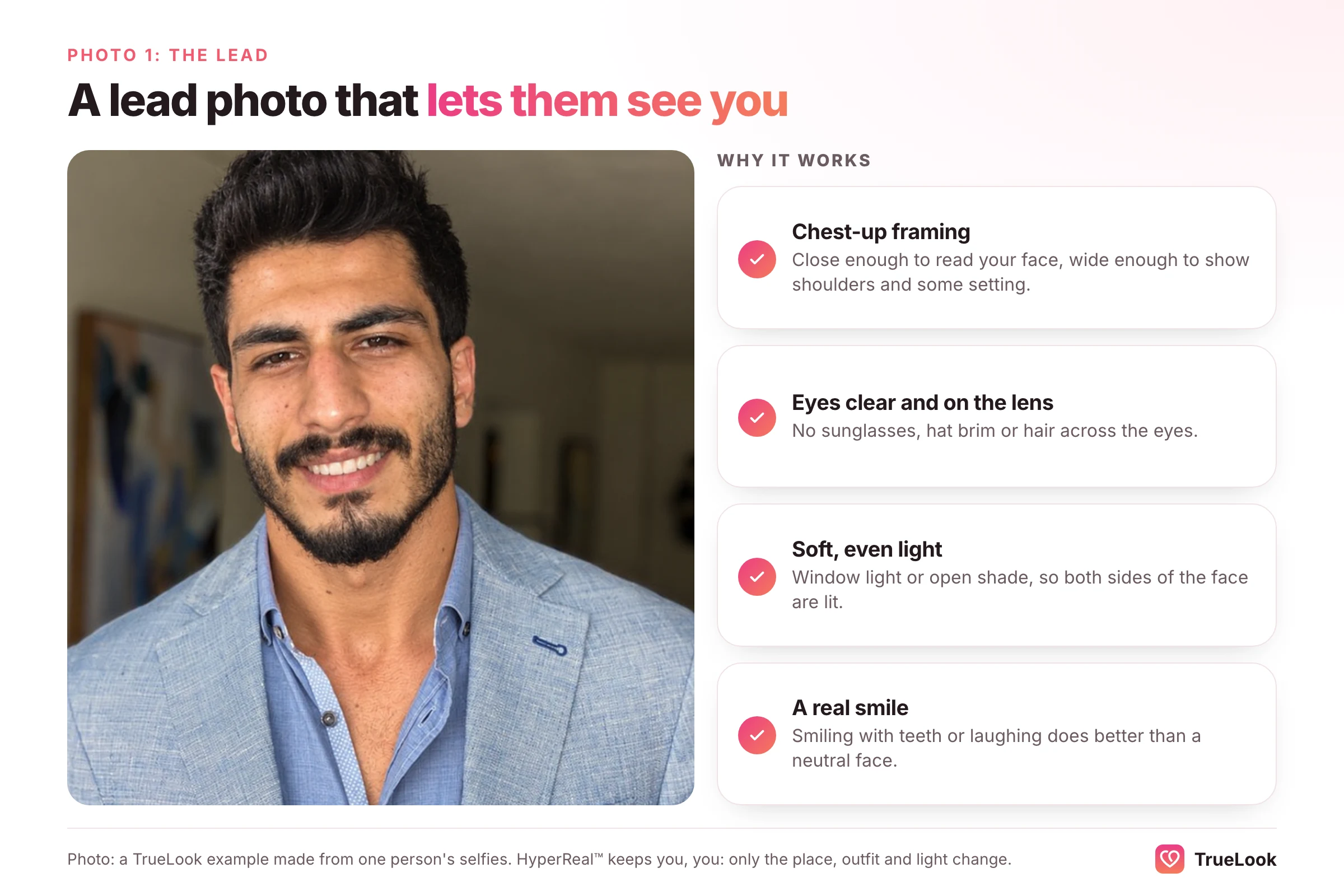
This is the photo that decides whether anyone sees the rest, so it should be the least ambiguous picture you own. Frame yourself from mid-chest up. Face a window or stand in open shade outdoors, so light falls evenly across both sides of your face. Look at the lens or just beside it. Keep hats, sunglasses and heavy shadows for later slots.
Photofeeler's research is useful on framing here. In its analysis of more than 60,000 ratings across 800 profile photos, head-and-shoulders and head-to-waist framing beat face-only close-ups, which cost a little likability. Hair, glare or shadow over the eyes lowered perceived competence and influence. Your opener should feel like meeting someone across a table, not peering at them through a keyhole.
Job 2: the full-length photo
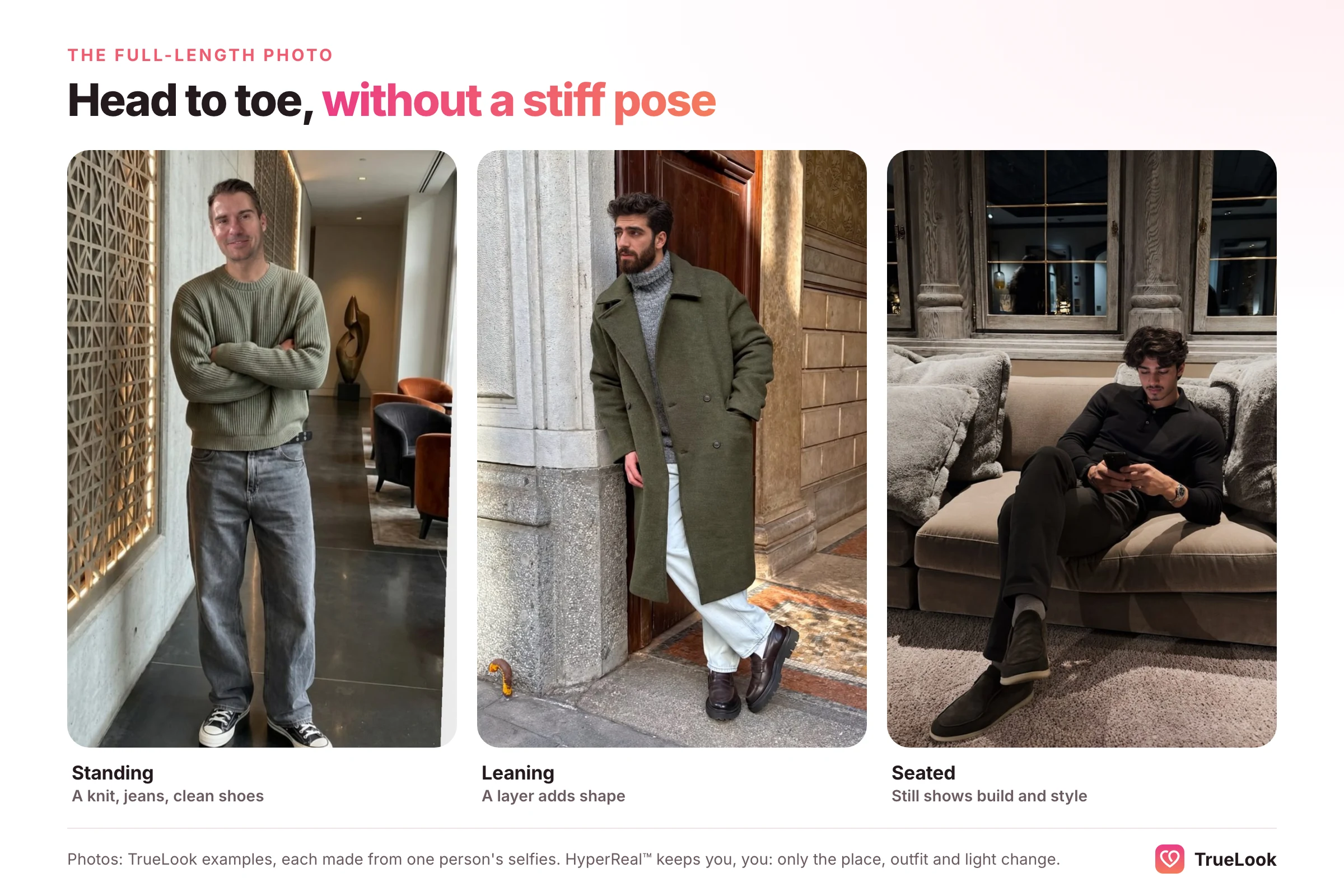
Plenty of men leave this out, usually because they feel self-conscious about their build. That tends to backfire. A profile with only face shots invites people to fill the gap with guesses, and a first date is a bad place to correct them. A head-to-toe photo answers the question honestly and filters for people who like what they see.
One honest caveat: in Photofeeler's data, full-body shots scored slightly lower on perceived competence and influence than tighter framing. That is a reason not to make it your opener, not a reason to skip it. Put it second. Ask a friend to stand about eight to ten feet away and shoot from chest height while you walk toward them, lean on a railing or sit casually. Clothes that fit matter more here than in any other slot.
Job 3: the activity photo
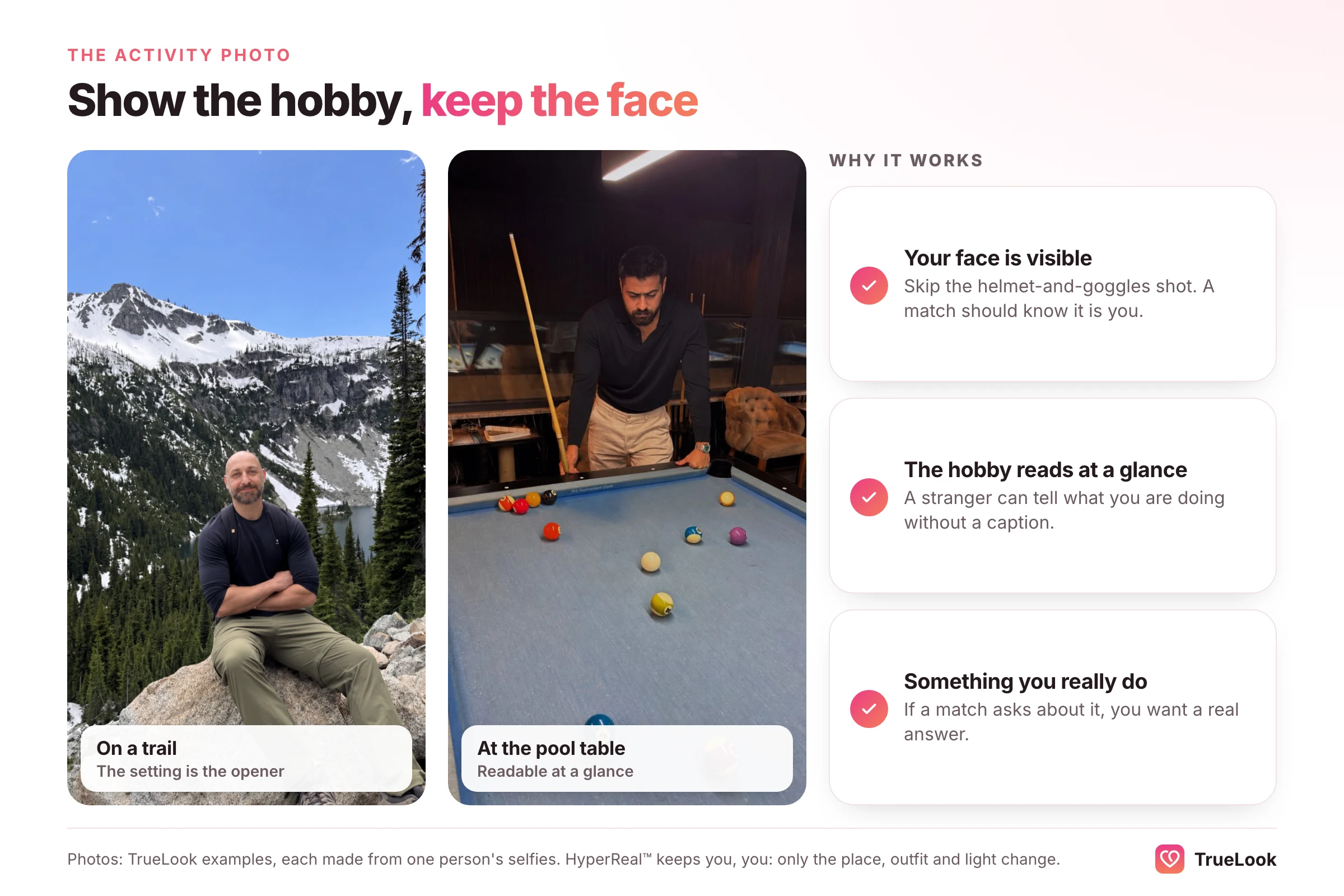
An activity photo is the easiest message anyone will ever send you. "Is that Red Rocks?" or "What are you cooking?" beats "hey" every time. It also helps the right people find you: a climber who likes climbers, a cook who likes cooks.
Tinder clearly agrees. Its Photo Tips feature, which reviews a profile's photos as a set, can suggest adding a hobby shot or swapping a similar selfie for one. Coverage of Hinge's own photo data, reported by Elite Daily in 2017, found that sports photos made men 45% more likely to catch a woman's attention.
Two rules keep an activity photo working. First, your face has to be visible, so skip the shot where a helmet and goggles cover everything. Second, it should be something you genuinely do. If a match asks about it, you want to have a real answer.
Job 4: one social photo
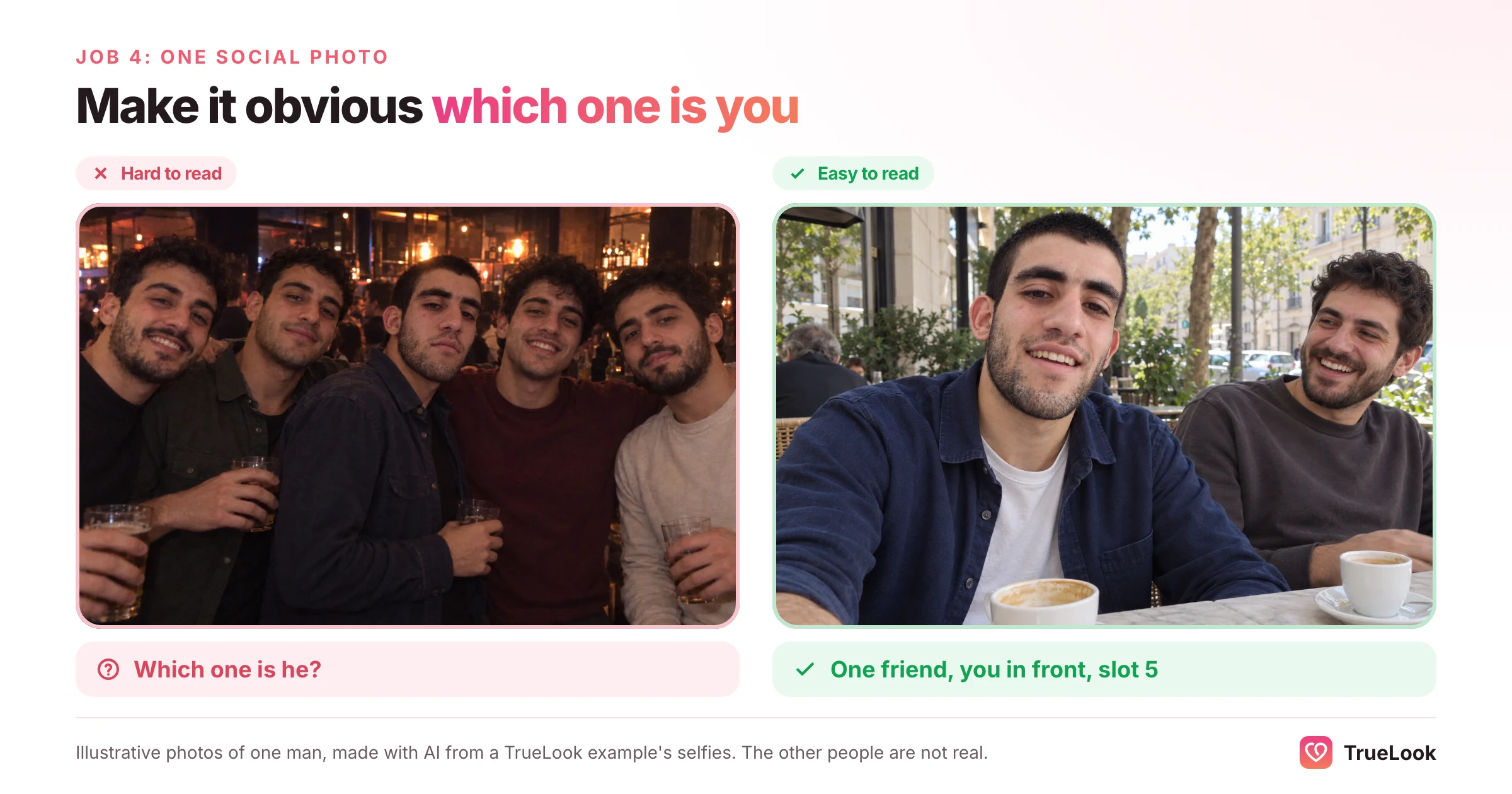
One photo with a friend or two signals that you have a life and people in it. Add a second or third group shot and viewers have to work out who the profile is for, a puzzle many of them won't bother solving. In the Passport Photo Online survey, group shots appeared on the list of most-disliked photo mistakes for both men and women.
Keep it to one, make sure you're easy to identify (center of the frame, closest to the camera, or the only one looking at the lens), and never use it as your first or second photo. If the only good photo of you is a group shot, crop it only if the result is still sharp. A pixelated crop with a stranger's shoulder at the edge does more harm than good.
Job 5: the dressed-up photo
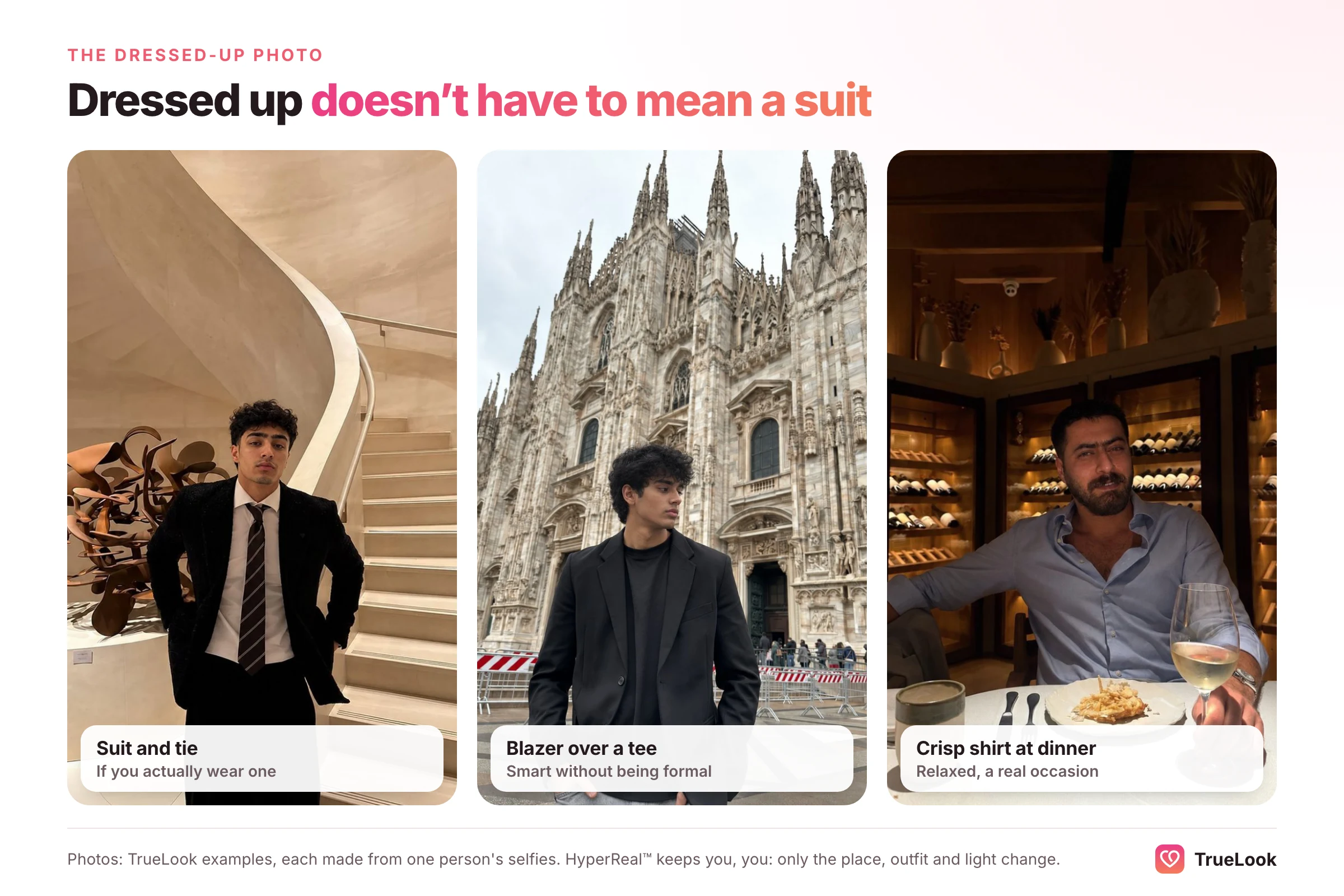
This slot shows range. A blazer at a wedding, a crisp shirt at dinner, a well-cut coat on a city street: one smarter look tells people you can show up properly when the occasion asks for it. Photofeeler measured formal dress as one of the strongest single effects in its dataset, raising perceived competence by 0.94 and influence by 1.29 on its rating scale.
Dressed up doesn't have to mean a suit. For most men, a fitted blazer over a plain t-shirt or an open-collar shirt does the job and looks more natural on a dating app than a corporate portrait.
Job 6: the candid laugh
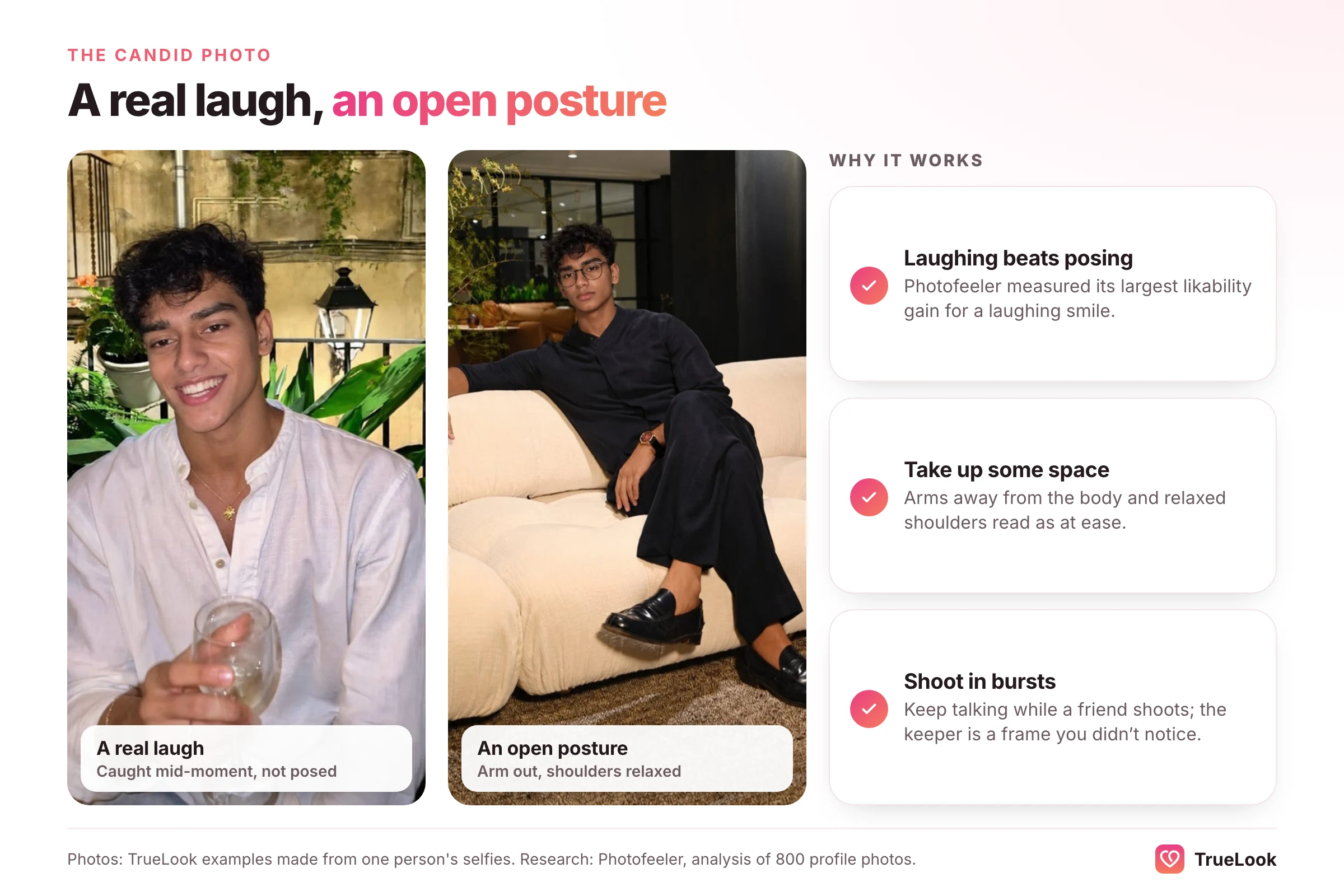
A candid laugh is what turns a set of pictures into a person rather than a portfolio. In Photofeeler's analysis, a laughing smile produced the largest likability gain it measured, ahead of a regular smile with teeth. The 2017 coverage of Hinge's data also found candid photos 15% more likely to get a like than posed ones.
You can't really pose a laugh, but you can create the conditions for one. Have the friend holding the camera keep talking, tell a bad joke or ask you about something you love, and shoot in bursts. The keeper is almost always a frame you didn't know was being taken.
Job 7: the pet photo, only if it's yours
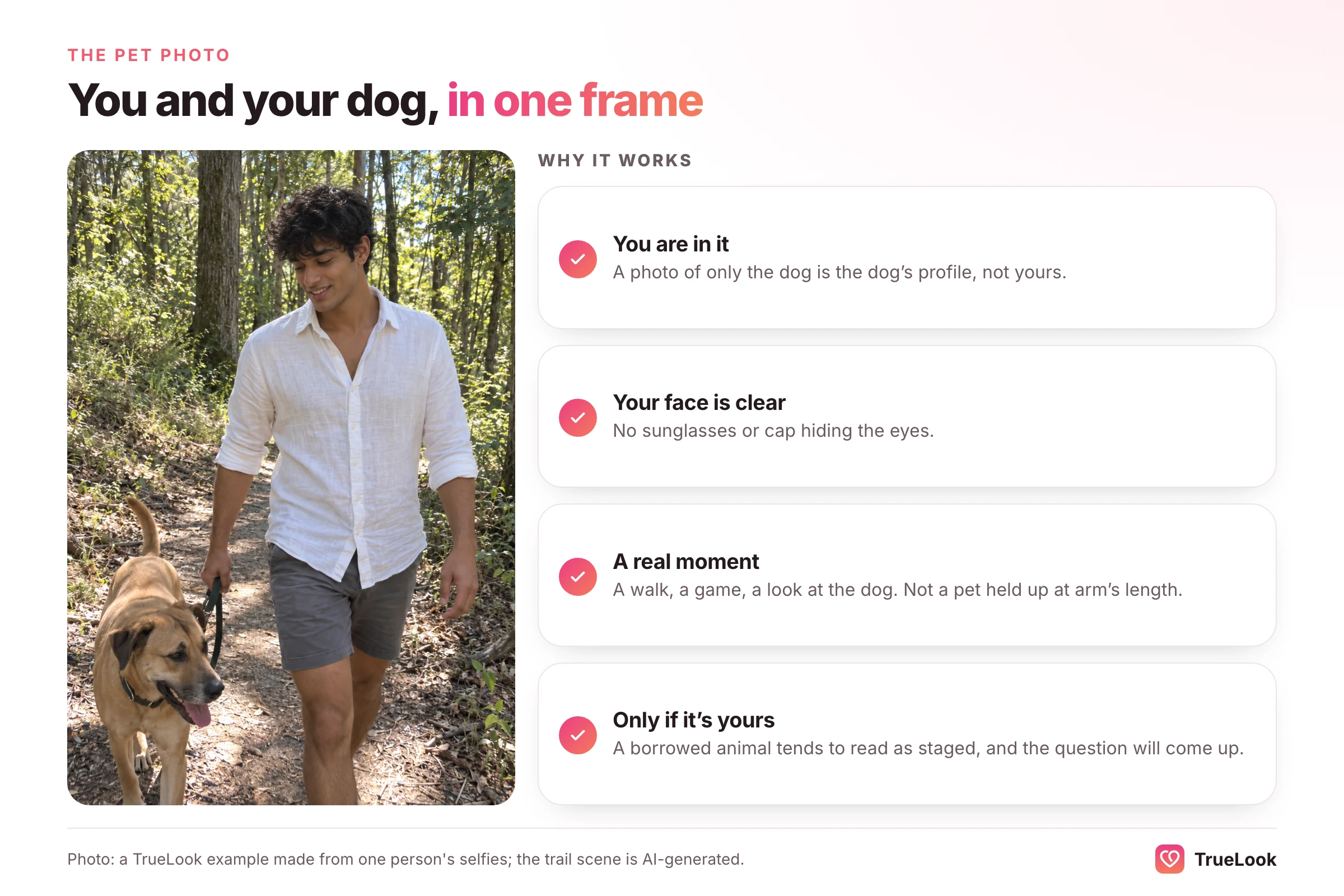
A photo with your own dog or cat suggests warmth and responsibility, and many people respond to it. In the Passport Photo Online survey, about two-thirds of respondents said they view dogs in profile photos positively. The same survey also found that 15% of men admitted borrowing a pet for a photo, which is exactly why a borrowed animal tends to read as staged. If you don't have a pet, leave this slot for something else. If you do, make sure you're in the frame together. A photo of only the dog is the dog's profile, not yours.
Job 8: the place or travel photo
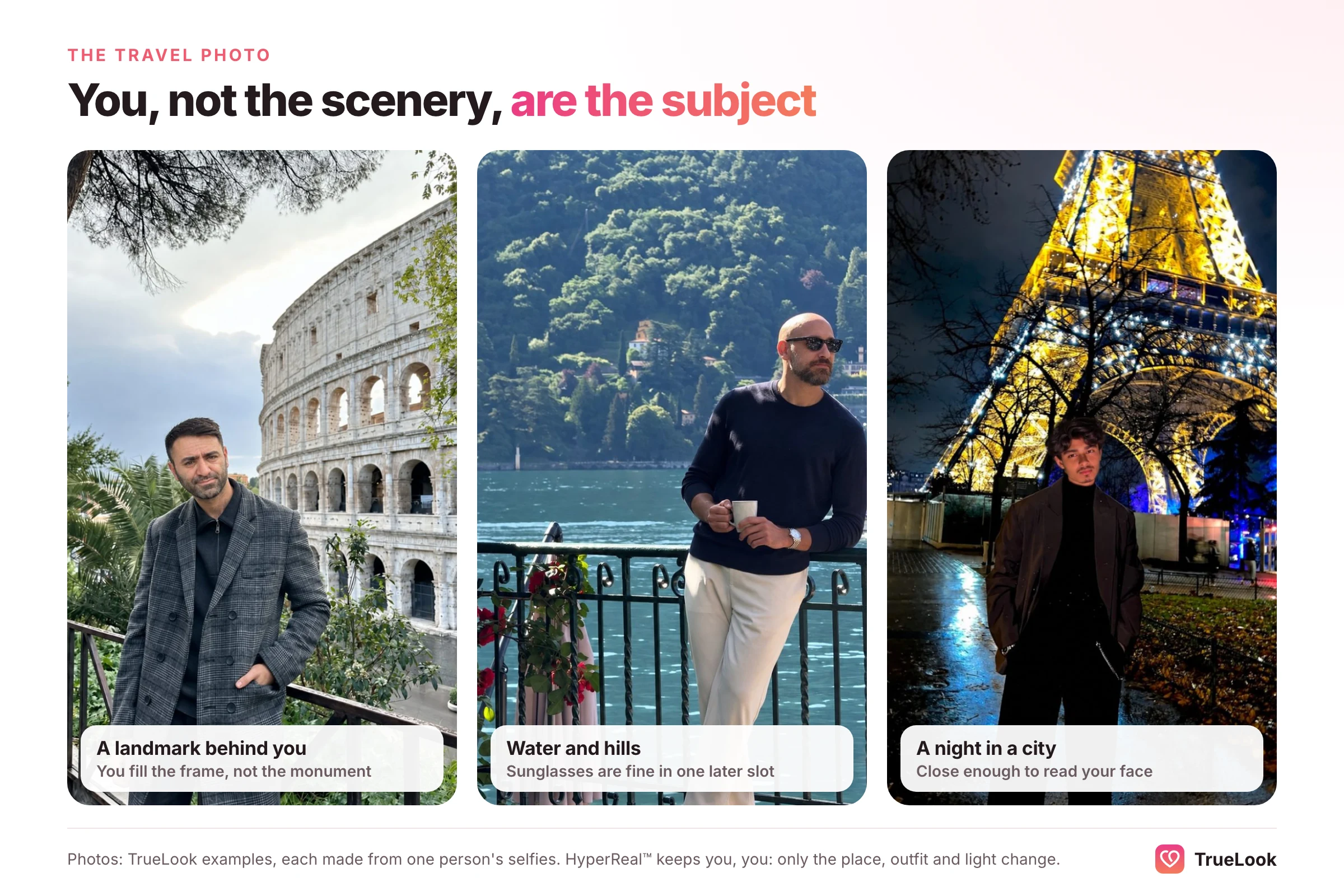
A photo somewhere interesting hints that you have stories worth hearing. It doesn't need to be a famous landmark. A mountain trail, a market in another city or a beach at dusk all work. The rule is that you, not the scenery, are the subject. If you're a tiny figure in front of a monument, crop tighter or choose another frame.
Travel photos are also the one slot where sunglasses are acceptable, since bright outdoor light is the context. Just don't let it become the pattern: Photofeeler found sunglasses lowered likability, and Bumble's own profile photo guide advises keeping your face uncovered.
The right photo order for Tinder, Hinge and Bumble
Order matters almost as much as selection. The first photo is a gate, the second and third decide whether someone keeps tapping, and the last few add depth for people who are already interested. This sequence works on every major app:
| Slot | Photo | Why it sits here |
|---|---|---|
| 1 | Clear face shot | Instant recognition; nothing to decode |
| 2 | Full length | Completes the picture of what you look like |
| 3 | Activity | Gives people an opening line |
| 4 | Dressed up | Adds range and effort |
| 5 | One social photo | Social proof, placed where it can't cause confusion |
| 6 | Candid laugh, pet or travel | Personality and warmth to finish |
| 7 to 8 | More candid, travel or activity (where the app allows) | Only if each one shows something new |
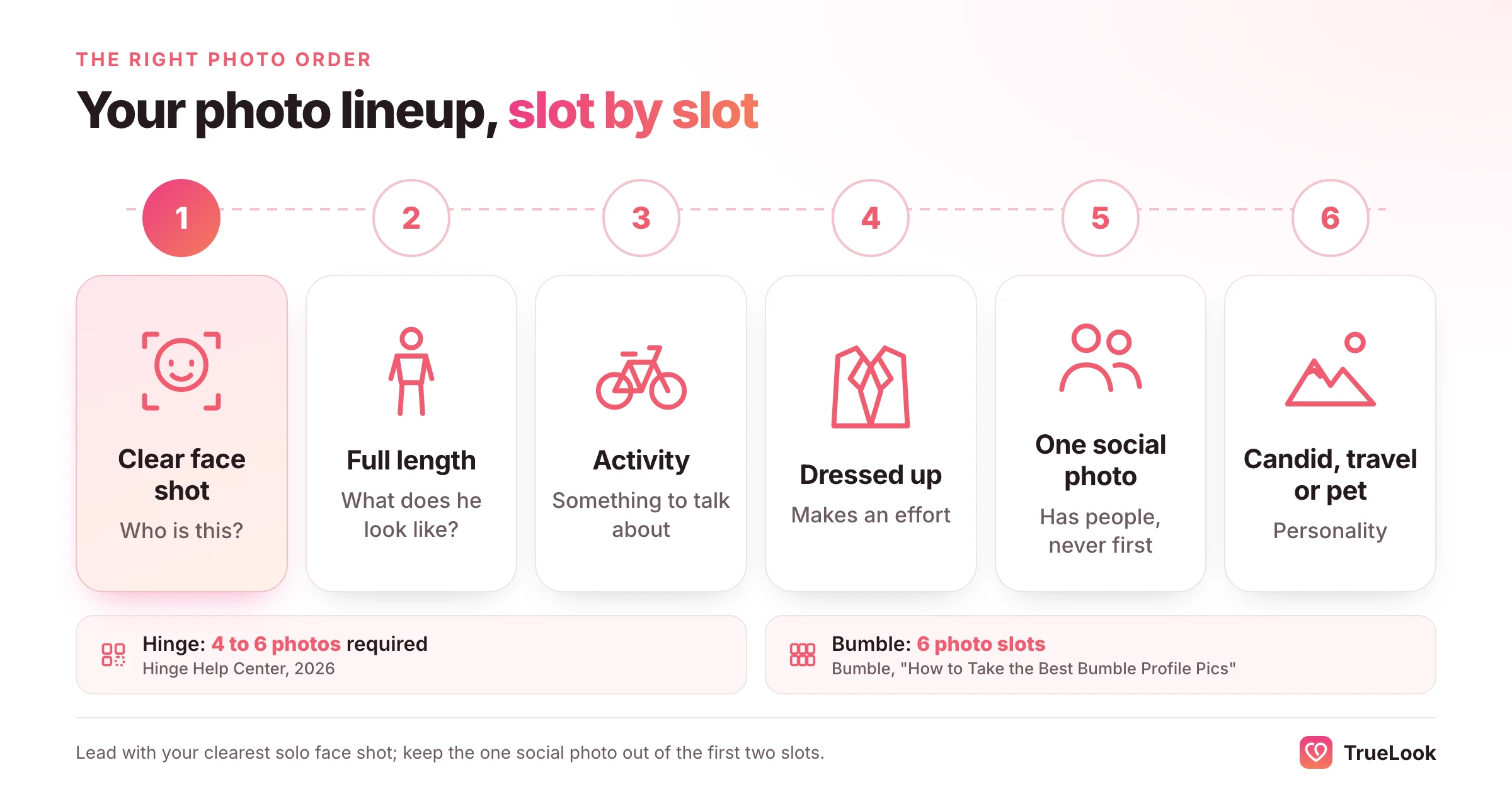
Each app frames photos a little differently, and that changes how you use the lineup.
| App | Photo rules and tools | What it means for your lineup |
|---|---|---|
| Hinge | Members need between four and six photos, depending on local rules, and three answered prompts, as set out in Hinge's help centre. People can like or comment on a single photo. | Use all six. Pick photos with details people can comment on, and pair each with a prompt that adds something new. |
| Bumble | Six photo slots. Bumble says its own data suggests using at least three photos can increase your chance of matching, and its guidelines require at least one photo where your face is clearly identifiable. | Fill all six. Lead with a solo face shot and keep group photos late. |
| Tinder | Smart Photos rotates your first photo and reorders your set based on swipes; in Tinder's 2016 testing, members saw up to a 12% increase in matches. Photo Tips reviews the set for variety and similar shots. | Six varied photos minimum. Try Smart Photos once your set is solid, then check which photo it settles on first. |
Photo limits and features change from time to time, so check each app's photo screen before you plan a shoot. For app-specific depth, see our guides to the best photos for Tinder, Hinge profile pictures and Bumble profile pictures.
Should guys smile in dating photos? What the research says
Few questions in men's dating advice get argued about more. The confusion traces back to a widely shared 2010 OkCupid blog post that suggested men did better when they didn't smile and looked away from the camera. That claim still circulates, so it's worth looking at what happened next.
In 2017, Photofeeler tried to reproduce the finding with a comparable sample of 7,140 photos. As it explains in its write-up of the replication, smiling versus not smiling made no statistically significant difference on its own. The one combination that did hurt was no smile and no eye contact together. Photofeeler also pointed out that OkCupid's original "flirty face without eye contact" group for men may have contained only a handful of photos. Photofeeler sells photo testing, so it has a commercial interest, but its point about tiny subgroups is a fair one.
Photofeeler's separate study of 800 photos measured the effect of specific expressions:
| Change in the photo | Effect on likability | Effect on competence and influence |
|---|---|---|
| Smile showing teeth | +1.35 | Small gains (+0.33 and +0.22) |
| Laughing | +1.49 (largest measured) | Gains disappear |
| Closed-mouth smile | About half the teeth-smile gain | No significant effect |
| Slight squint ("squinch") | +0.22 | +0.33 and +0.37 |
| Sunglasses | -0.36 | Not reported |
| Hair, glare or shadow over eyes | No significant effect | -0.29 and -0.31 |
Source: Photofeeler, "The perfect profile photo" study, last updated 2023. Figures are average changes on Photofeeler's own rating scale.
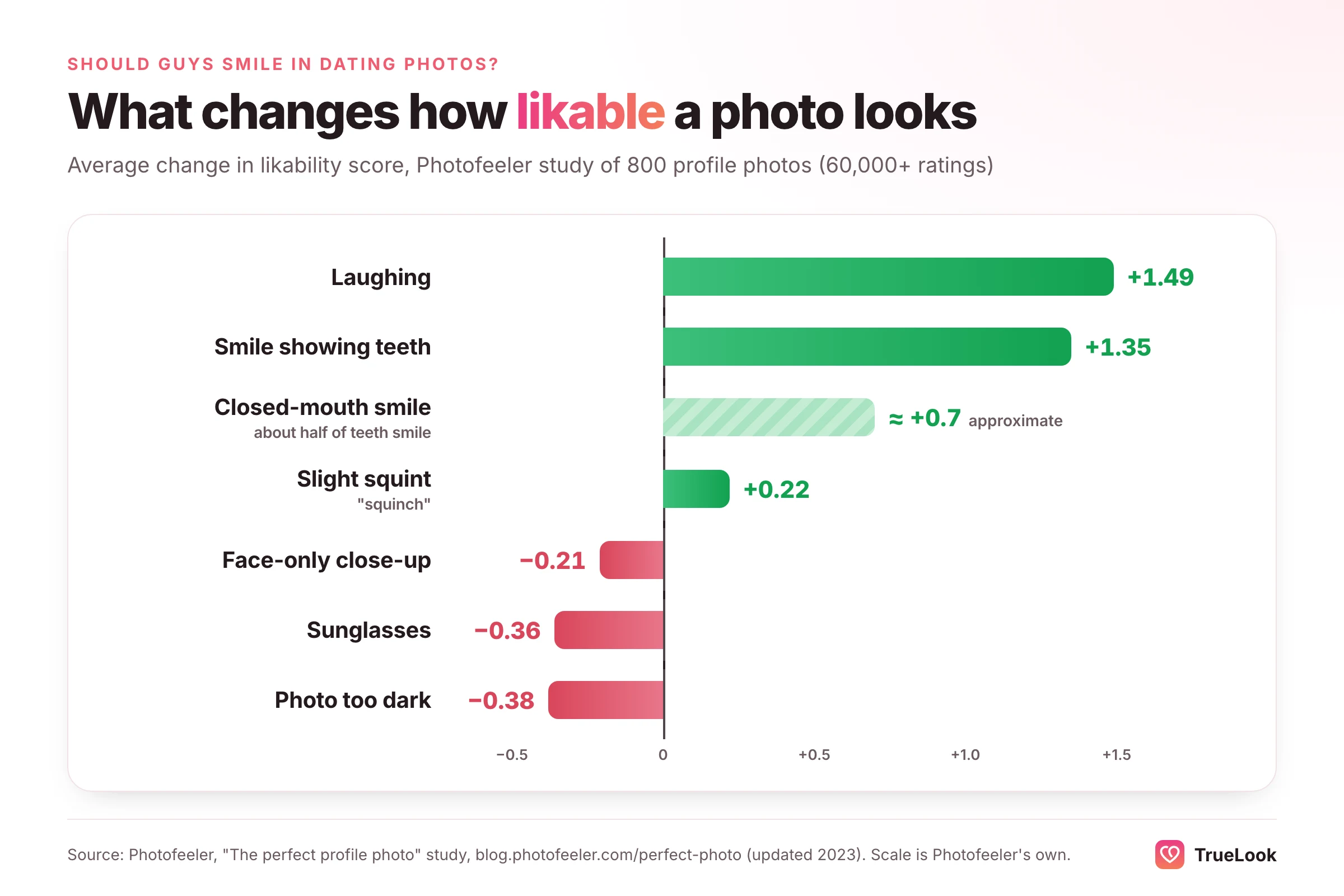
Hinge's data adds another angle. The 2017 Elite Daily coverage reported that men looking straight at the camera were 102% more likely to be liked. Put together, the evidence points to a practical rule:
- Your opener: eye contact with the lens and a relaxed, real smile, teeth optional but usually better.
- Your candid: a laugh, looking wherever the moment took you.
- One serious photo is fine. A calm, confident look in your dressed-up or travel shot adds range, as long as your eyes are visible.
- Avoid the combination that tested worst: no smile and no eye contact in your main photo.
The honest limit: these studies rate photos in isolation, often by strangers on a research site, not by people deciding whether to date you. They tell you what tends to read well, not what will work for every face. That's why testing your own set (covered below) matters.
Poses that work for men, and why
The single best-supported pose advice in dating research is to take up a little space. In a 2016 paper in the Proceedings of the National Academy of Sciences, Tanya Vacharkulksemsuk and colleagues first coded videos from speed-dating events and found that expansive posture was the strongest nonverbal predictor of attraction. They then ran a field experiment with 3,000 people on a GPS-based dating app, showing identical profiles with either open or closed poses. People were significantly more likely to choose the open ones.
Open doesn't mean puffed up. It means shoulders relaxed and down, arms away from your torso, weight shifted onto one leg, and your body angled slightly rather than square to the camera. Here is what that looks like in practice.
| Instead of | Try | Why it reads better |
|---|---|---|
| Arms crossed over your chest | One hand in a pocket, the other holding a coffee or resting on a railing | Opens the torso and gives your hands a job |
| Standing square to the lens | Shoulders turned 20 to 30 degrees away, face back toward the camera | Slimmer, more natural silhouette |
| Hands clamped to your sides | Arms resting wide on a bar, bench back or wall | The expansive posture the PNAS study tested |
| Chin tucked down | Chin slightly forward and down, as if leaning in to listen | Defines the jawline; Photofeeler measured small gains from a defined jaw |
| Frozen "say cheese" grin | Look away, then back at the lens as your friend says something funny | Catches a real expression on the way to a smile |
Why the camera angle and distance matter more than you think
Arm's-length selfies don't only look careless; they physically change your face. A 2018 paper in JAMA Facial Plastic Surgery by Brittany Ward, Boris Paskhover and colleagues modelled how camera distance distorts facial features. As The Philadelphia Inquirer reported, a photo from 12 inches away makes the nose look about 30% wider than one taken from 5 feet. The closer the lens, the more your center features swell and your ears recede.
The fix is simple. Have someone else shoot from five feet or more, and use the phone's 2x or portrait lens if it has one, which lets them stand further back for the same framing. Keep the lens at your eye level or slightly above. A low angle exaggerates the chin and nostrils, which is why "weird angles" topped the list of worst photo mistakes among women in the Passport Photo Online survey (45.7% named it).
Light, framing and editing: the technical basics
Good light does more for a dating photo than an expensive camera. Phone cameras are excellent in soft light and struggle in harsh or dim light, so plan around the light, not the location.
| Situation | What to do |
|---|---|
| Hour before sunset or after sunrise | Shoot. This "golden hour" light is warm, soft and forgiving, as Adobe's guide to golden hour photography explains. Face the light or have it slightly to one side. |
| Bright midday sun | Move into open shade: under a tree, beside a building, under an awning. Direct overhead sun creates squinting and dark eye sockets. |
| Overcast day | Ideal for full-length and activity shots. Clouds act like a huge softbox. |
| Indoors | Stand facing a large window, a few feet back from it. Turn off mixed overhead lights. |
| Night out or event | Find the brightest warm light source and face it. Avoid on-camera flash when you can. |
Framing follows from the eight jobs. Openers work best from mid-chest up, with some space above your head. Full-length shots need your shoes in the frame. For activity and travel photos, you should take up at least a third of the frame so your face is still readable on a phone screen.
Keep editing light. Photofeeler found that photos that were too dark cost likability and that heavily saturated photos lowered every score it measured. In the Passport Photo Online survey, 71% of men and 77% of women supported banning severely retouched photos, while most respondents were relaxed about light fixes such as teeth whitening. So adjust brightness, straighten and crop, then stop. No skin smoothing, no face slimming and no strong color filters.
What men should wear in dating photos
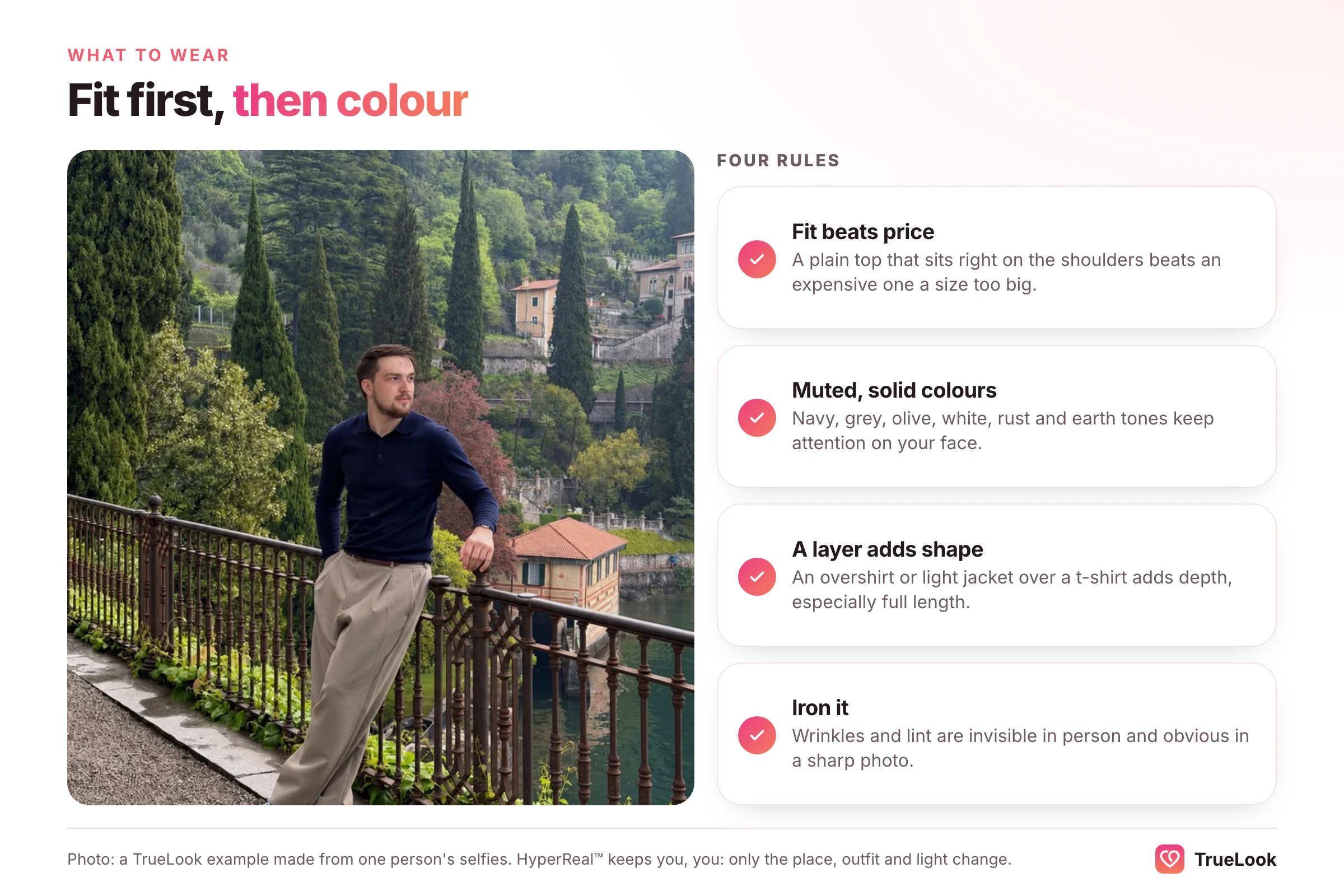
Fit beats price. A plain t-shirt that sits right on your shoulders looks better than an expensive shirt a size too big. Once fit is handled, think about each slot separately, and swap outfits between them so the set doesn't look like it was all shot on the same afternoon.
| Slot | Wear | Avoid |
|---|---|---|
| Clear face shot | A plain crew-neck tee, a henley or a shirt worn open at the collar, in a color that contrasts gently with your skin | Big logos, busy prints near the face, hats that shade your eyes |
| Full length | Fitted jeans or chinos, a jacket or overshirt to add shape, clean shoes | Baggy gym wear, shorts that hit mid-shin |
| Activity | Whatever the activity really calls for, clean and well-worn | Brand-new gear with tags that looks staged |
| Dressed up | A blazer that fits at the shoulders, a crisp shirt, or a suit if you actually wear one | Loose suits, loud ties, sleeves past your knuckles |
| Candid or travel | What you'd normally wear that day, with a layer if it's cool | The same jacket in every photo |
Muted, solid colors photograph cleanly: navy, grey, olive, white, rust and earth tones. They keep attention on your face and look good in natural light. Layering, such as an overshirt or light jacket over a t-shirt, adds depth and structure, especially in full-length shots.
A few details that show up on camera more than in the mirror:
- Grooming: get a haircut about a week before your shoot so it has settled, and tidy your beard line the day before.
- Glasses: if you wear them daily, wear them in some photos so people recognize you. Angle your head slightly down to cut lens glare, which hides your eyes.
- Hats: one photo at most, and never in the opener.
- Wrinkles and lint: they're invisible at a glance in person and obvious in a sharp photo. Iron the shirt.
No good photos? A two-day plan to build your lineup
If your camera roll is all screenshots and group photos, a phone, a patient friend and one weekend are enough to build a full set. Treat it as a short project with a plan rather than an afternoon of hoping.
Before the weekend
- Check the forecast and sunset time. You'll shoot in the hour before sunset on Saturday, or on an overcast afternoon.
- Pick three locations within a short walk: a quiet street with interesting walls, a café or bar with window light, and somewhere green.
- Lay out three outfits: everyday casual, one layer up (overshirt or jacket), and dressed up.
- Write a shot list using the table below so neither of you has to think on the day.
Saturday: the core shots
- Wipe the rear lens. Turn on the grid. Use the 2x or portrait lens if your phone has one.
- Start on the quiet street in casual clothes. Shoot your clear face shot and full-length photo. Walk toward the camera, lean on a wall, look away and back.
- Change into the layered outfit at the café. Shoot by the window: seated, holding a cup, talking to your friend.
- Change into the dressed-up outfit as the light turns golden. Shoot standing and walking.
- Keep talking the whole time. Take 30 or more frames per setup. Laughs happen between "proper" shots.
Sunday: activity, then edit
- Do something you really do: a run, a climb, a pickup game, cooking for friends, playing guitar. Have your friend shoot in burst mode.
- Back home, sort every frame into the eight jobs. Delete anything blurry, anything where your eyes are hidden and any near-duplicates.
- Pick one winner per job. Ask the friend, or someone of the gender you're hoping to date, to choose between your top two in each slot.
- Edit lightly: brightness, straighten, crop. Then upload in the order from the table above.
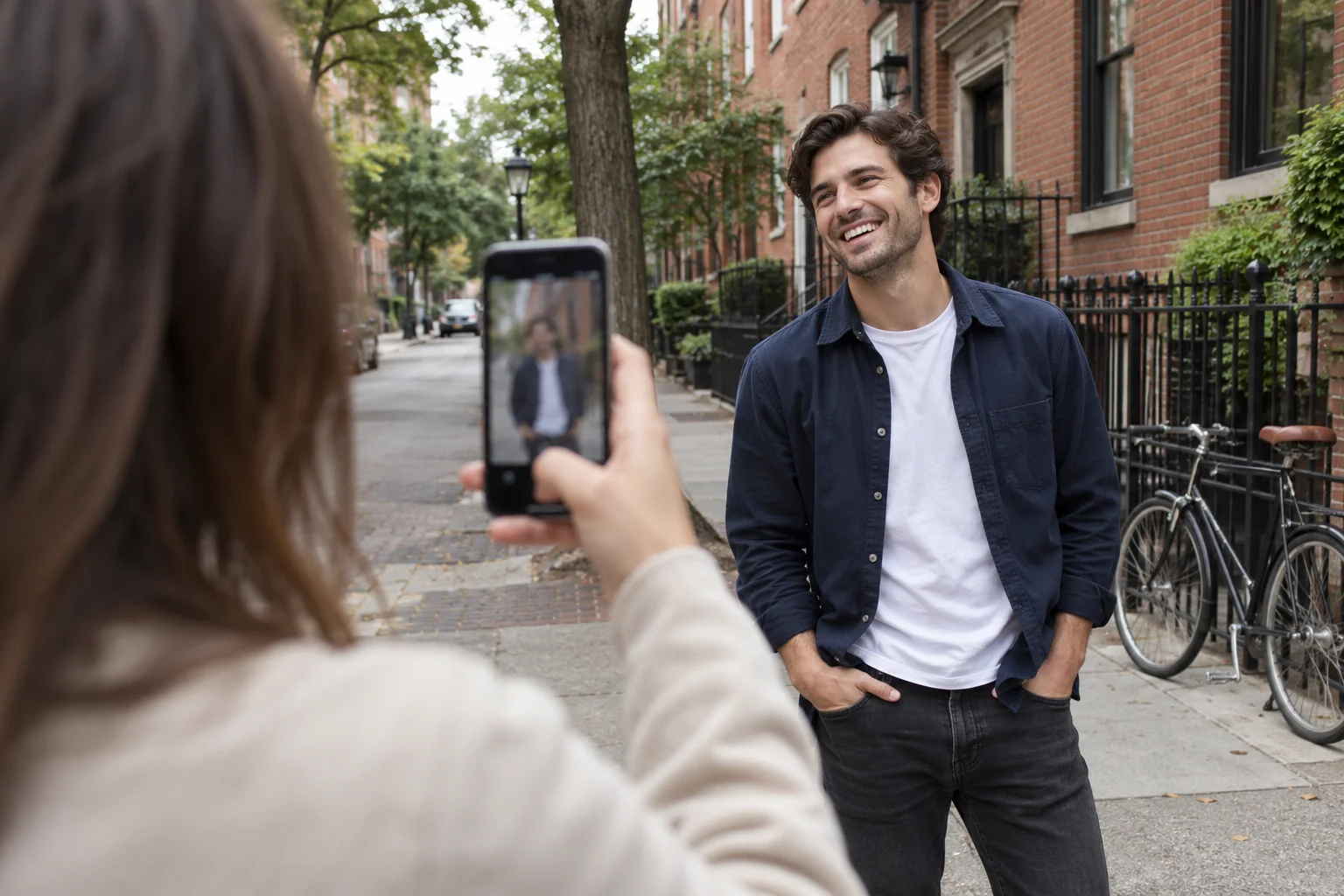
| Shot list item | Location | Outfit | Light |
|---|---|---|---|
| Clear face shot (3 variations) | Quiet street or by a window | Casual | Open shade or window light |
| Full length, walking and leaning | Quiet street | Casual | Open shade or overcast |
| Seated candid with drink | Café | Layered | Window light |
| Dressed up, standing and walking | Street or rooftop | Dressed up | Golden hour |
| Activity | Wherever you do it | Activity clothes | Daylight |
| Social | Any of the above, with one friend | Any | Any soft light |
DIY, photographer or AI: which route fits you
Not everyone has a willing friend, a free weekend or decent weather. There are three realistic ways to get the photos you're missing, and each has real trade-offs.
| Route | Cost | Time | Strengths | Limits |
|---|---|---|---|---|
| DIY with a friend | Free | One weekend plus editing | Fully authentic, real places and moments | Depends on the friend's patience, the weather and your comfort on camera |
| Professional photographer | A session fee that varies widely by city and package | Booking, a shoot of an hour or more, then delivery | Expert light and direction, consistent quality | Costs the most; the photos can look polished rather than candid if the photographer usually shoots headshots |
| AI built from your own face | Usually a one-time pack; some tools charge a subscription | Minutes, from selfies you already have | Fills specific gaps (full length, dressed up, activity) without a shoot | Only as good as your selfies; every result must be checked for likeness and accuracy |
Many men use a mix: real photos for the opener and the activity, and help for the slots they can't easily shoot. In the Passport Photo Online survey, the most common benefits reported by those who'd paid a photographer were more matches (49%) and more likes (48%), though 23% said it made no difference. Our comparison of a dating profile photographer vs AI goes deeper into when each makes sense.
If you go the AI route, use a tool that works from your own face rather than inventing a new one. TrueLook, for example, uses four of your selfies to create AI dating photos for men in the scenes and outfits you choose, at about a minute per photo, and never uses your photos for AI training. Whichever tool you use, keep only results that look like you on a good day: same face shape, hairline, build and skin. Each app sets its own rules about photos, which we cover in are AI photos allowed on dating apps.
Common mistakes, and the fix for each
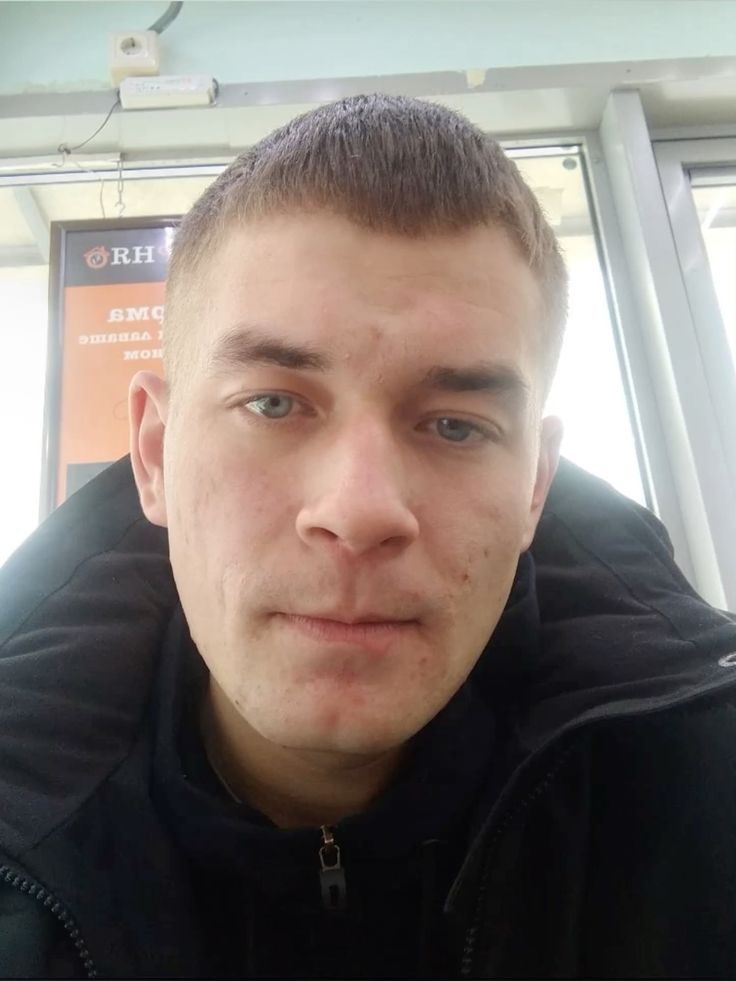
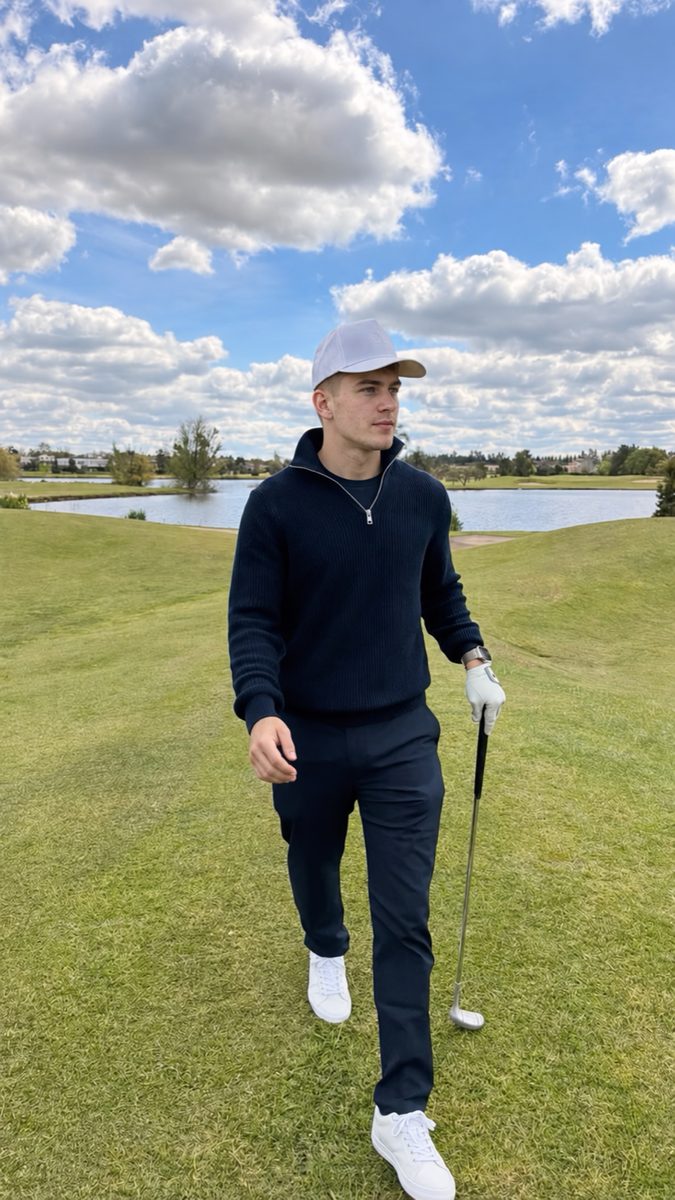
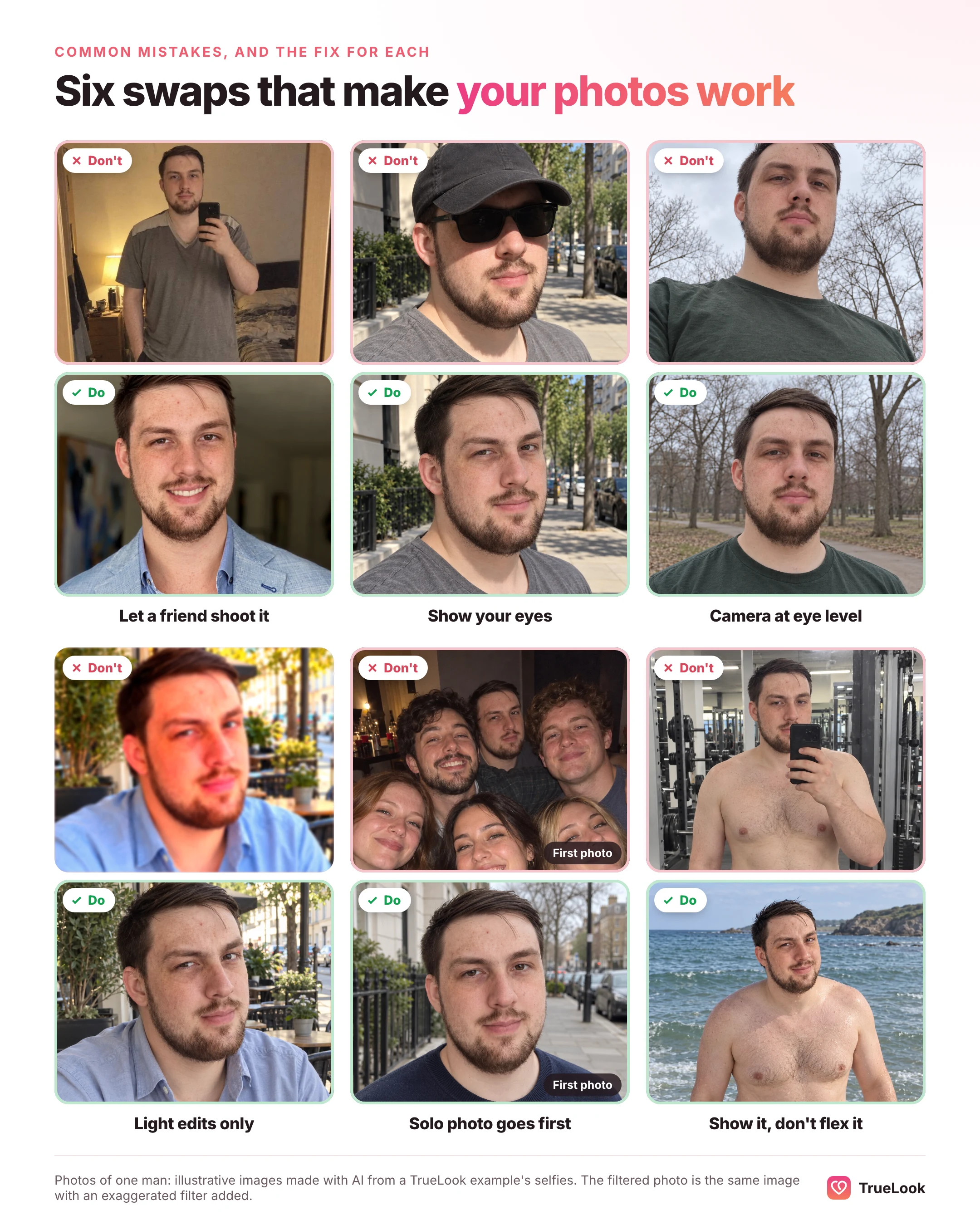
Most profiles don't fail because of one terrible photo. They fail through small doubts that add up: is that him, is that recent, why can't I see his eyes? Here are the most common problems and what to do instead.
| Mistake | Why it hurts | Fix |
|---|---|---|
| Selfie as the opener | Close-range distortion; in the 2017 Hinge coverage, selfies drew 40% fewer likes than other photos | Have someone else shoot from five feet or more |
| Bathroom or car selfie anywhere | The same coverage found bathroom selfies 90% less likely to get any likes | Delete it. There's no slot for this photo |
| Group photo first | People can't tell which person you are | Solo face shot first; one social photo in slot five |
| Sunglasses or a cap in most photos | Hides your eyes; Photofeeler measured a likability drop for sunglasses | One outdoor photo with them, the rest without |
| Photos older than a year | Hair, weight and beard change; 89% of Passport Photo Online respondents said they'd met someone who looked nothing like their photos | Use photos from the last 12 months, ideally six, as Bumble advises |
| An ex cropped out | The stray arm or half-face is always noticed | Retake or replace it |
| Heavy filters or smoothing | Looks edited and makes the first meeting harder | Light corrections only |
| Five near-identical photos | Wastes slots; Tinder's Photo Tips specifically flags similar shots | One photo per job |
| Shirtless gym mirror shot as opener | Reads as one-dimensional and close to a selfie | If fitness matters, show yourself actually training or at the beach later in the set |
| Holding a fish, a gun or a stack of cash | Cliches that many people swipe past on sight | Show the hobby with your face and a real setting, without the trophy |
If your matches are still low after fixing these, the problem may not be the photos alone. Our guide to getting no matches on Tinder walks through the other causes.
Example dating profiles for men, annotated
The profiles below are illustrative composites, not real accounts. They show how the eight-job lineup adapts to different lives and personalities. Use them as templates for thinking, not scripts to copy.
Example profile: Marco, 34, software engineer who cooks
Before: five photos, four of them selfies at his desk or in the car, one group photo from a wedding where he's third from the left. After:
| Slot | Photo | What it does |
|---|---|---|
| 1 | Chest-up by a café window, slight smile, plain grey t-shirt | Instant recognition |
| 2 | Full length walking along a canal path in chinos and an overshirt | Honest build, relaxed style |
| 3 | At his stove, mid-stir, laughing at something off camera | Activity plus a candid laugh in one |
| 4 | Navy blazer at the same wedding, cropped to just him and his sister | Dressed up, with warmth |
| 5 | With two friends at a food market, Marco in front | Social proof |
| 6 | Hiking in Portugal, face clear, view behind | Travel and a story |
Why it works: the cooking photo carries two jobs at once and gives matches an obvious question ("what are you making?"). The wedding photo is reused smartly, cropped to someone clearly not a romantic partner, and the group shot sits in slot five.
Example profile: Daniel, 42, divorced dad
Before: his opener was a photo with his two kids, and three of his six photos were at least four years old. After:
| Slot | Photo | What it does |
|---|---|---|
| 1 | Recent outdoor headshot in open shade, glasses on, real smile | Current and recognizable |
| 2 | Full length on a weekend walk in a field jacket | Shows him as he is now |
| 3 | Coaching kids' football from the sideline, his face toward camera, children in the background and not identifiable | Involved parent without making the profile about the kids |
| 4 | Suit at a work dinner | Effort and range |
| 5 | Laughing with a friend at a barbecue | Social and candid in one |
| 6 | With his own Labrador on the beach | Warmth and an easy conversation starter |
Why it works: he now leads with himself, and every photo is from the last year. Keeping children's faces out of a dating profile is also a sensible privacy choice. For more on dating at this stage, see our guide to the best dating apps for over 40.
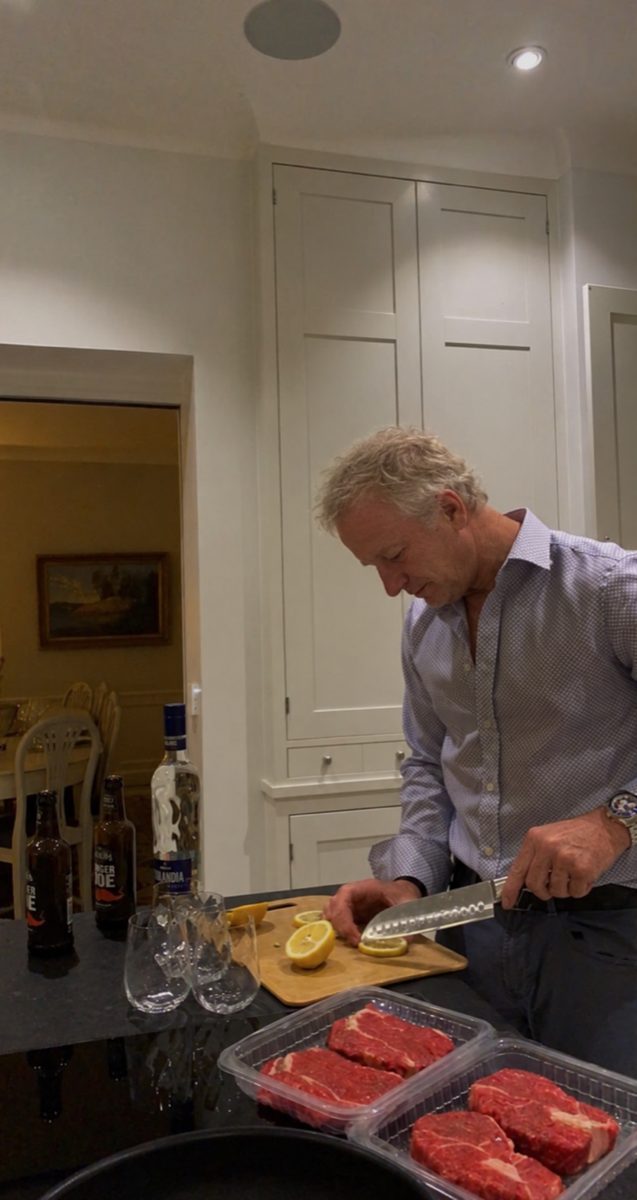
Example profile: Sam, 28, quiet and into board games
Before: six serious photos, no smiles, two in dim bars. Sam worried a "fun" profile would misrepresent him. After:
| Slot | Photo | What it does |
|---|---|---|
| 1 | Calm headshot by a window, small closed-mouth smile, eye contact | Honest to his personality, still warm |
| 2 | Full length in a park in a knit sweater | Build and style |
| 3 | At a game night, mid-move, grinning at a friend's reaction | Activity and a real expression |
| 4 | Button-up shirt at a small gig | Low-key dressed up |
| 5 | With his cat on the sofa | Pet, softness |
| 6 | Laughing in a bookshop | Candid |
Why it works: Sam doesn't fake loudness. The research on smiling suggests a closed-mouth smile still helps, and the eye contact avoids the combination Photofeeler found hurt most. The niche hobby gives like-minded people an easy way in. On Hinge, pairing photos like these with good prompts matters even more; see our Hinge prompts for guys.
How to test and refresh your photos
Even good advice can't tell you which of your two best openers works better for your face. Testing can. Tinder's own research shows how hard people find this: in a July 2024 announcement of its Photo Selector tool, Tinder said 52% of singles it surveyed found choosing a profile picture hard, and that 18-to-24-year-olds spent an average of 33 minutes picking one.
A simple testing routine:
- Set a baseline. Note your likes or matches per week for two weeks without changing anything.
- Change one thing at a time. Swap only the opener, or only the order. If you change everything, you won't know what helped.
- Give each version a week or two. Day-to-day numbers swing with time of day, weather and how active you are.
- Use the tools you have. On Tinder, Smart Photos will reorder your set for you. A rating site such as Photofeeler gives anonymous feedback on single photos.
- Refresh every six to twelve months, and immediately after a big change in hair, beard, glasses or weight.
What photos can't fix
Better photos raise the number of people who stop on your profile. They don't change who's nearby, how active you are, or what happens once you start talking. A strong lineup paired with a blank bio, one-word openers or slow replies will still underperform. Photos also can't make you someone else, and they shouldn't try. The goal is the most accurate version of you on a good day, because that's who has to show up to the date.
Think of your photos as the invitation and your prompts, bio and messages as the conversation. Get both right and the rest becomes much easier.
Frequently asked questions
What are the best dating profile pictures for guys?
A clear chest-up photo of your face, a full-length shot, a photo of an activity you really do, one dressed-up look, one photo with a friend, and a candid laugh, travel or pet photo. Each should show your face clearly, in soft light, and each should tell a viewer something the others don't.
What is the best male profile picture to use first?
A solo photo from mid-chest up, taken by someone else from at least five feet away, in soft daylight, with your eyes visible and a relaxed smile. No sunglasses, no hat shadow, no group and no mirror. It should be recent enough that a match would recognize you instantly.
How many photos should a guy have on a dating profile?
Six is the sweet spot. Hinge requires four to six depending on local rules, and Bumble allows six and reports that at least three photos can improve your chance of matching. On apps with more slots, add photos only if each one shows something new.
Should guys smile in dating profile pictures?
Usually, yes. Photofeeler found a smile with teeth and a real laugh produced the biggest likability gains, and its replication found no support for the old claim that men do better without smiling. The pattern that tested worst was no smile combined with no eye contact. One serious photo later in your set is fine.
What should a guy wear in dating photos?
Well-fitting clothes in calm, solid shades like navy, grey, olive and white, changing outfits from one photo to the next. Add one dressed-up look, layer an overshirt or jacket for full-length shots, and avoid large logos or busy prints near your face.
Is a shirtless photo a good idea?
Not as your opener, and not as a gym mirror selfie. If fitness or the outdoors is a real part of your life, a photo of you swimming, surfing or at the beach can work later in your lineup, as long as the rest of your profile shows other sides of you.
How old can my dating photos be?
Aim for photos from the last year, and ideally the last six months, which is what Bumble recommends. If your hair, beard, glasses or weight have changed noticeably since a photo was taken, replace it even if it's recent.
Are AI photos okay for a men's dating profile?
Photos made from your own face can fill gaps in your lineup if they look exactly like you and you'd be recognized in person. Each app sets its own rules and runs its own checks, so keep only accurate results and include recent real photos too.
Sources
- First impressions: making up your mind after a 100-ms exposure to a face, Willis and Todorov, Psychological Science (2006). https://pubmed.ncbi.nlm.nih.gov/16866745/
- Dominant, open nonverbal displays are attractive at zero-acquaintance, Vacharkulksemsuk et al., Proceedings of the National Academy of Sciences (2016). https://pubmed.ncbi.nlm.nih.gov/27035937/
- Nasal Distortion in Short-Distance Photographs: The Selfie Effect, Ward et al., JAMA Facial Plastic Surgery (2018). https://pubmed.ncbi.nlm.nih.gov/29494735/
- Do selfies make your nose look big? Rutgers study says yes, The Philadelphia Inquirer (2018). https://www.inquirer.com/philly/health/selfie-make-nose-look-bigger-rutgers-study-20180301.html
- Key findings about online dating in the U.S., Pew Research Center (2023). https://www.pewresearch.org/short-reads/2023/02/02/key-findings-about-online-dating-in-the-u-s/
- The perfect profile photo study, Photofeeler (updated 2023). https://blog.photofeeler.com/perfect-photo/
- OkCupid is Wrong About Men's Dating Photos, and We Replicated Their Study to Prove It, Photofeeler (updated 2020). https://blog.photofeeler.com/okcupid-is-wrong-about-smiling-eye-contact-mens-dating-profile-photos/
- How Dating Profile Photos Affect Your Decision to Swipe Left or Right [2022 Study], Passport Photo Online (2022). https://passport-photo.online/blog/dating-profile-photos/
- These Are The Types Of Pictures That Ruin Your Chances On Dating Apps, Science Says, Elite Daily (2017). https://www.elitedaily.com/dating/successful-profile-picture-dating-apps/1864092
- How do I edit my profile?, Hinge Help Center (updated 2026). https://help.hinge.co/hc/en-us/articles/360011053094-how-do-i-edit-my-profile
- How to Take the Best Bumble Profile Pics, Bumble (2024). https://bumble.com/the-buzz/best-bumble-profile-photo-tips
- Photo Tips, Tinder Help Center (updated 2026). https://www.help.tinder.com/hc/en-us/articles/48425605518861-Photo-Tips
- Introducing Smart Photos: For the Most Swipeworthy You, Tinder Newsroom (2016). https://www.tinderpressroom.com/introducing-smart-photos-for-the-most-swipeworthy-you
- Tinder Unveils 'Photo Selector' AI: Feature to Make Choosing Profile Pictures Easier, Tinder Newsroom India (2024). https://in.tinderpressroom.com/2024-07-17-Photo-Selector-AI
- When is golden hour & how to do golden hour photography, Adobe. https://www.adobe.com/creativecloud/photography/discover/golden-hour.html
Get better dating photos from your own selfies
TrueLook’s HyperReal™ method turns 4 selfies into hyperrealistic photos of you for Tinder, Hinge and Bumble.
AI dating photos for men
Written by the TrueLook Team
TrueLook makes hyperrealistic dating photos from your own selfies. Our articles cover dating profile photos, the apps and how to get noticed.