No matches on Tinder almost always traces back to one of seven causes: a first photo that loses the swipe, a photo set that raises doubts, a bio that gives people nothing, settings that shrink your audience, a swiping pattern that works against you, low or badly timed activity, or a problem with the account itself. Each cause leaves a different trace, so a fifteen-minute check of your like count, settings and photos usually tells you which one you are dealing with.
This article is the diagnosis: how to work out what is actually wrong before you change anything. Once you know the cause, our companion guide on how to get more matches on Tinder is the step-by-step playbook for raising your numbers.
- A slow start is normal for men on Tinder. In a 2016 measurement study, male test profiles matched with 0.6% of the people they liked, against 10.5% for female profiles.
- Weeks of zero likes in a populated area is not normal. It points to a visibility problem (settings, a hidden profile) or a first photo that is failing.
- Tinder says it retired its old Elo score in 2019. What it does confirm: it favours people who are active, especially at the same time, and it weighs likes, nopes, distance and photo similarity.
- Tinder hides profiles where it cannot detect a clear face photo, and hidden profiles cannot send Likes. Check this before assuming a "shadowban".
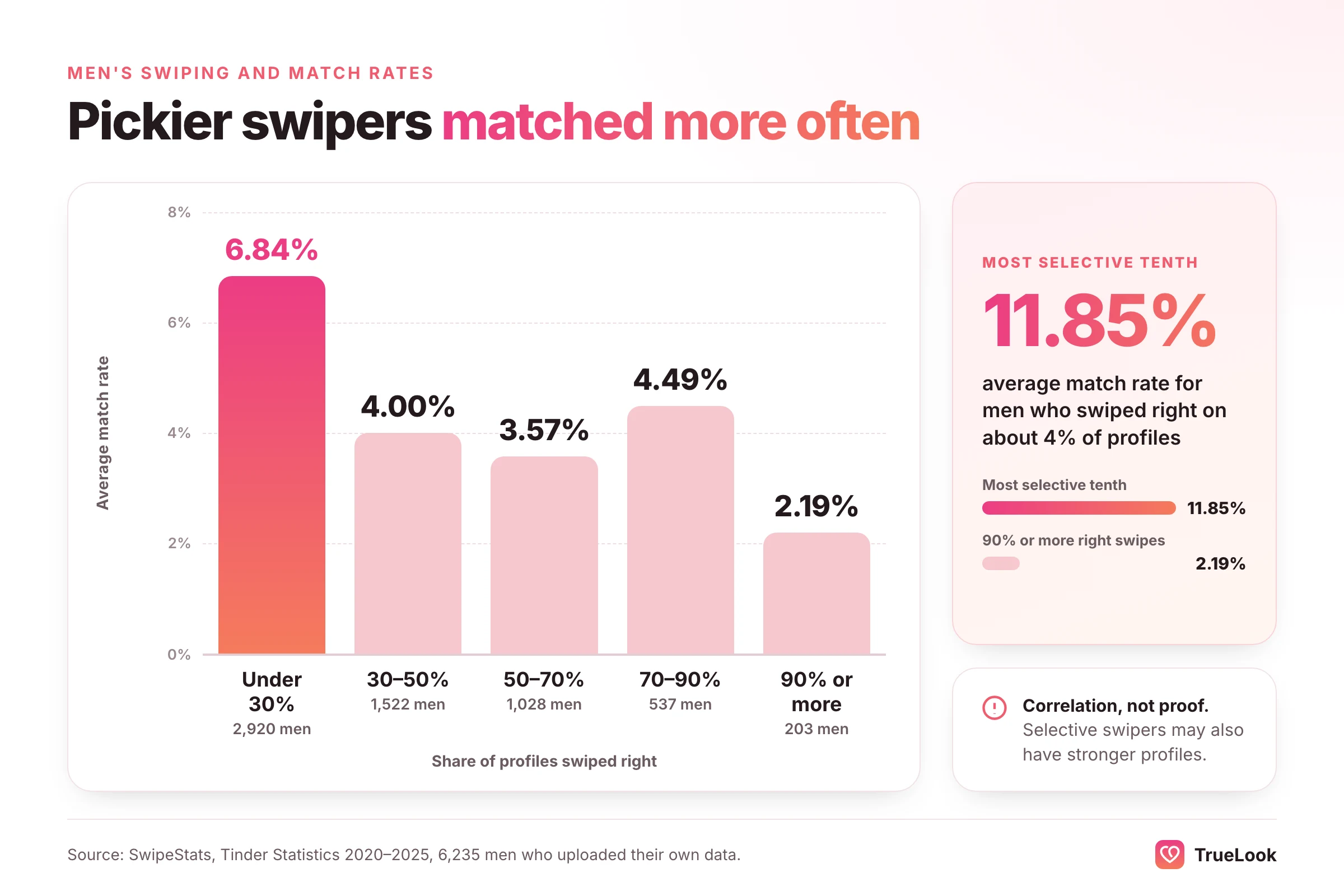
- Selectivity correlates with better results. In a self-selected dataset of about 6,200 men, those who swiped right on under 30% of profiles averaged a 6.84% match rate, versus 2.19% for those who liked 90% or more.
- You are a poor judge of your own photos. A 2017 study found photos picked by strangers made better impressions than the ones people picked for themselves.
- Change one thing at a time and give it several days, watching likes before matches, so you learn what actually worked.
First, calibrate: what "normal" looks like on Tinder
Before you diagnose a problem, it helps to know what an unbroken profile looks like, because many people who think their account is faulty are seeing ordinary Tinder maths. The app is lopsided, and the numbers are blunt.
The most cited academic measurement is a 2016 study by Gareth Tyson and colleagues, "A First Look at User Activity on Tinder", which collected around 230,000 male and 250,000 female profiles and ran test accounts. Their male profiles matched with just 0.6% of the users they liked, while female profiles matched with 10.5%. Only 7% of matches with the male profiles went on to send a message, compared with 21% for the female ones. The authors described a feedback loop: men like more profiles to compensate for low match rates, which pushes women to become even more selective.
More recent data points the same way. SwipeStats, a service where people upload their own Tinder data exports, reports on 7,079 profiles uploaded between 2020 and 2025. The median man in that set matched with 2.04% of the people he liked; the median woman matched with 41.27%. The dataset is self-selected and 88% male, so treat it as indicative rather than representative, but the gap is too large to be an artefact.
Surveys capture how this feels. In Pew Research Center's 2023 key findings on online dating, 64% of men who had recently used a dating app said they had felt insecure about the lack of messages they received, while 54% of women said they had felt overwhelmed by the number of messages. Pew's earlier 2019 survey found 57% of men felt they did not get enough messages, against 24% of women.
| Measure | Men | Women | Source |
|---|---|---|---|
| Share of liked profiles that matched (test accounts) | 0.6% | 10.5% | Tyson et al., 2016 |
| Median match rate (self-uploaded data, 2020 to 2025) | 2.04% | 41.27% | SwipeStats |
| Felt insecure about too few messages (recent US users) | 64% | About 40% | Pew Research Center, 2023 |
| Felt they did not get enough messages (past five years) | 57% | 24% | Pew Research Center, 2019 survey |
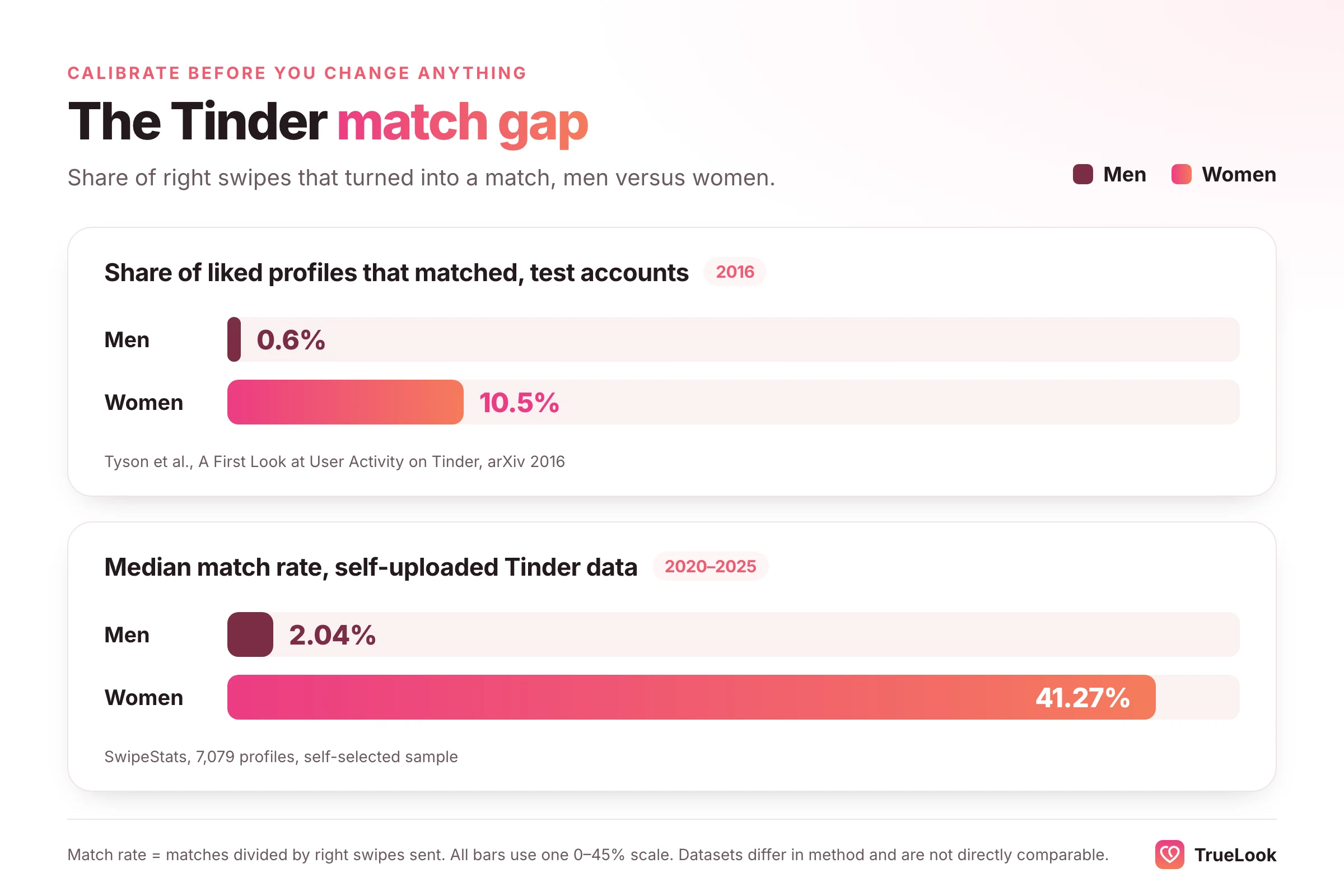
What this means for you: at a 2% match rate, a man who sends 50 likes in a week should expect roughly one match. Getting one or two matches a week is not a broken account. Getting zero likes for three weeks in a city of a million people is a different signal, and that is what the rest of this guide is for.
The pool is also shrinking
Fewer people on the app means fewer chances for everyone. Match Group's second-quarter 2026 shareholder letter reported that Tinder's monthly active users fell 7% year on year, although the decline was narrowing. If your matches dropped gradually over a year or two without anything else changing, part of that may simply be a smaller local pool, especially outside big cities.
Read the symptoms before you change anything
"No matches" covers several different situations, and each points somewhere else. Your free account usually shows a count of how many people have liked you, even if you cannot see who. That number is your most useful instrument, because likes respond to changes faster than matches do.
| What you see | What it usually means | Check first |
|---|---|---|
| Zero likes and zero matches for two weeks or more, in a populated area | Nobody is seeing you, or nearly everyone who sees you is swiping left | Hidden profile, Discovery toggle, location, then the first photo |
| Likes arrive, but you rarely match | The people who like you and the people you like are different groups | Your swiping pattern and age range |
| A burst of matches in week one, then almost nothing | Early attention faded and the profile does not hold up on its own | Photo set and bio |
| Matches, but conversations never start | Your profile gives people nothing to reply to, or openers are generic | Bio, prompts, first messages |
| Matches suddenly vanished from your list | Unmatches, deleted accounts, or a display glitch | Log out and back in, update the app |
| "No one new around you" or a blank card stack in a busy area | Filters too narrow, location wrong, or the app failing to load | Discovery settings, location permission, reinstall |
| A message saying your profile is hidden, under review or restricted | An account-level issue, not a quality issue | Face photo requirement, Appeals Center |
Write down which row fits before you read on. Most people skip this step, change four things at once, and never learn which one mattered.
How Tinder decides who sees you: confirmed facts and folklore
Much of the advice about zero matches rests on claims about a secret ranking. Tinder does not publish its formula, but it has said more than people assume. In its explainer "Powering Tinder: The Method Behind Our Matching", first published in 2019 and updated in 2022, the company says:
- Elo is gone. Tinder calls Elo, the chess-style desirability score it used in its early years, "old news" and outdated. Engadget reported the change in March 2019.
- Activity matters most. Tinder prioritises potential matches who are active, and active at the same time as you.
- Likes and nopes shape recommendations. Your swipes tell the system what you like, and the profiles you are shown shift accordingly.
- Distance counts. Tinder considers how far a potential match is from your current location.
- Photos are compared. It uses anonymised visual cues, showing your profile to people who have liked similar-looking photos.
- Profile details count. Interests and lifestyle details you add are factored in.
That is a long way from the "hidden score that buries you in 48 hours" story you will find in many guides. Here is how the common claims stack up.
| Claim you will read | What is actually known |
|---|---|
| "Your Elo score decides everything." | Tinder says it no longer relies on Elo. It describes a system based on activity, swipes, distance, photos and profile details. |
| "Men in the bottom 80% compete for 20% of women." | This comes from an anonymous 2015 blog post based on 27 survey responses. SwipeStats' own review of the claim calls it a meme rather than a measurement, while agreeing that matches skew towards top profiles. |
| "New accounts get a boost." | Widely reported by users, never documented by Tinder. Treat any precise number of hours as guesswork. |
| "You are shadowbanned." | Tinder documents hidden profiles (no detectable face photo), Discovery being switched off, and formal actions such as warnings, suspensions and bans with an appeal route. It does not describe a silent penalty. |
| "Delete and recreate your account to reset." | Not a documented fix. You lose your matches and messages, and it cannot cure a photo problem. |
| "Swiping right on everyone hurts you." | Tinder does not say so directly, but self-reported data shows indiscriminate swipers match at lower rates (see cause 5 below). |
The practical upshot: the levers you control are the ones Tinder names. Be active, look like someone people want to swipe right on, make sure you are visible, and send likes that have a realistic chance of being returned.
The seven causes of no matches on Tinder
The causes below are ordered roughly by how often they explain a dry spell and how cheap they are to rule out. For each one you will find the symptoms, the reason it happens, a quick test, and the fix.
1. Your first photo is losing the swipe
Symptoms: few or no likes, even though your settings are fine and you are active.
Why it happens: most swipes are decided on the first picture. People form impressions of a face extraordinarily fast: in a study published in Psychological Science in 2006, Janine Willis and Alexander Todorov found that judgments of attractiveness, trustworthiness and likeability made after seeing a face for one tenth of a second closely matched judgments made with no time limit. Extra viewing time mostly made people more confident, not different in their verdict. Your first photo is effectively your whole pitch to a large share of the people who see it.
Small technical flaws move those impressions a lot. Photofeeler, which crowdsources ratings of profile photos, published paired examples where only one thing changed. Cropping a man's dating photo closer so his face was clearer raised his attractiveness rating from 5.1 to 6.6 out of 10. Swapping harsh shadows for diffused light raised a woman's trustworthiness rating from 5.3 to 8.4. These are single illustrations, not a controlled trial, but they show how much light and framing can matter independently of looks.
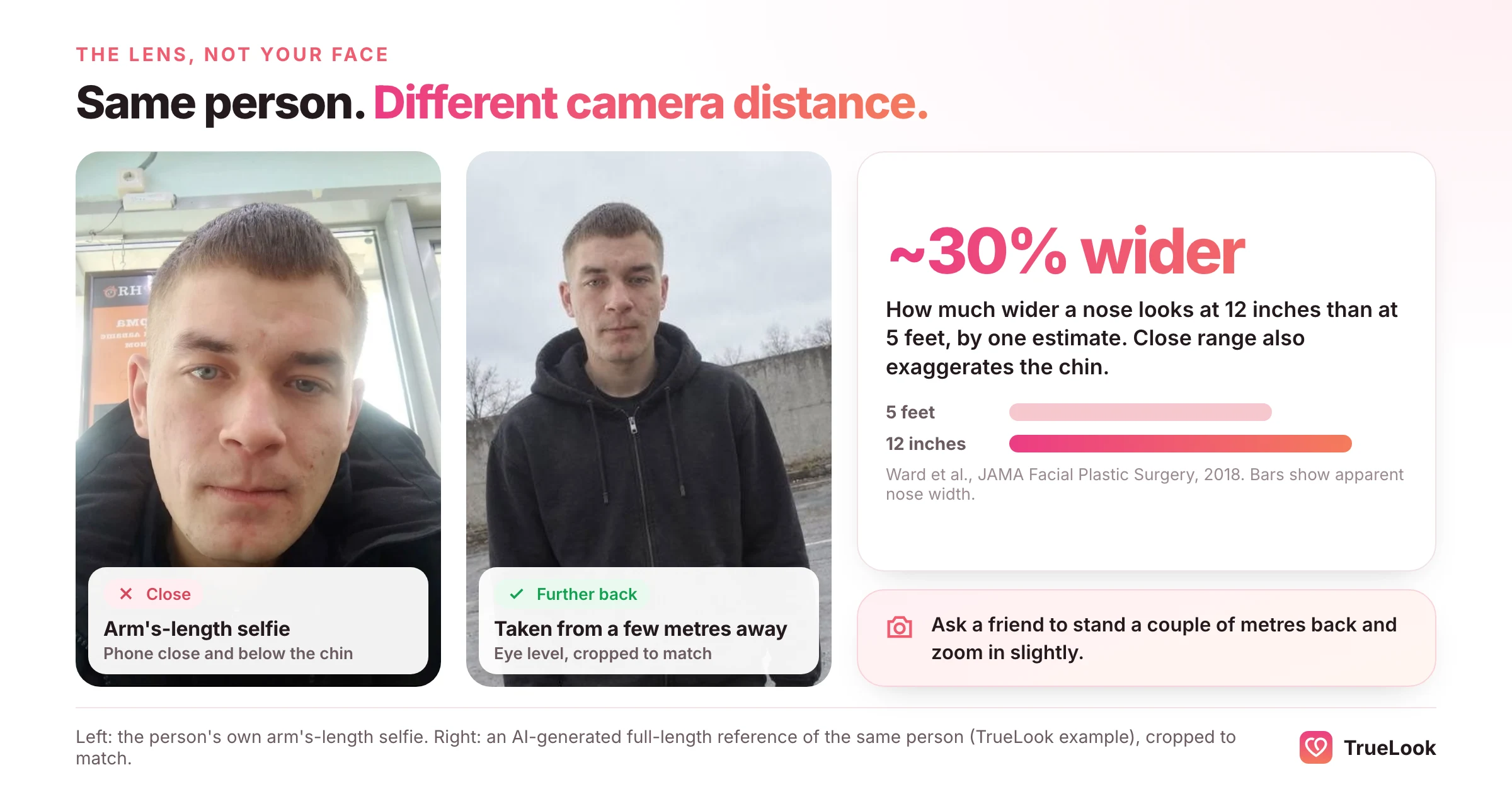
Arm's-length selfies have a specific problem. A 2018 paper in JAMA Facial Plastic Surgery, "Nasal Distortion in Short-Distance Photographs: The Selfie Effect", modelled how lens distance changes facial proportions; as the Philadelphia Inquirer reported, a selfie taken from about 12 inches makes the nose look roughly 30% wider than a photo taken from five feet. The face you see in your selfie genuinely is not the face people see in person.
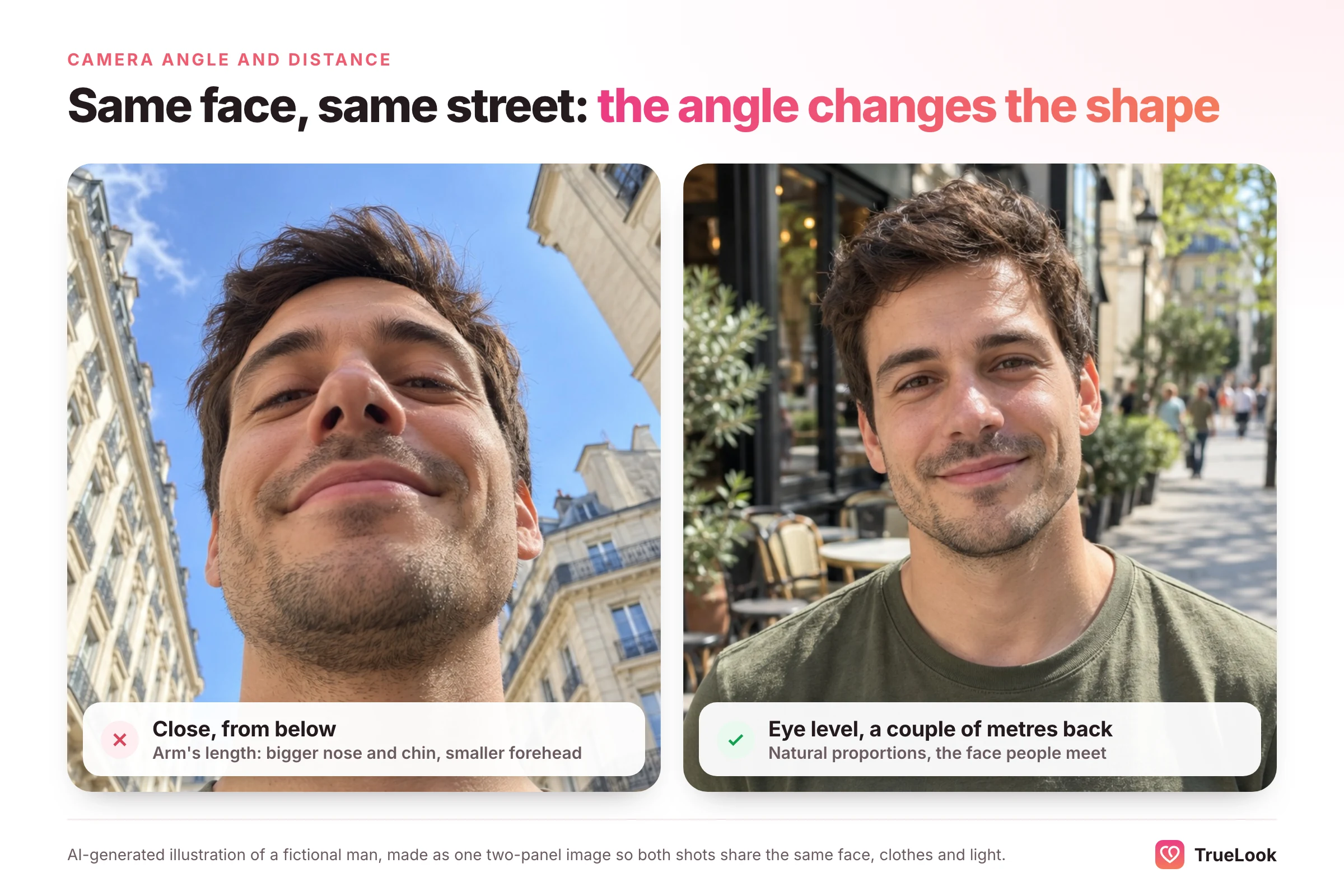
Quick test: look at your first photo on your phone at arm's length for one second. Can you see your eyes and expression clearly? Is it obviously a solo photo of you? Is the light coming from in front of you rather than overhead or behind?
Fix: replace it with a chest-up portrait in soft daylight, taken by someone else or with a timer from a couple of metres away, eyes visible and a relaxed expression. Our guide to the best photos for Tinder breaks down how to shoot it.
2. The rest of your set raises doubts
Symptoms: some likes, but fewer than you would expect from your opener, or a drop after you added new photos.
Why it happens: people who pause on your first photo flick through the rest, looking for reassurance. The number and variety of photos matter: in the Tyson study's experiment with male test profiles, a profile with one picture collected 44 matches over four hours, while the same setup with three pictures collected 238. Doubts creep in when every photo is from one afternoon, when there is no full-body shot, when your appearance changes drastically between photos, or when most pictures are group shots where a stranger has to guess which person you are.
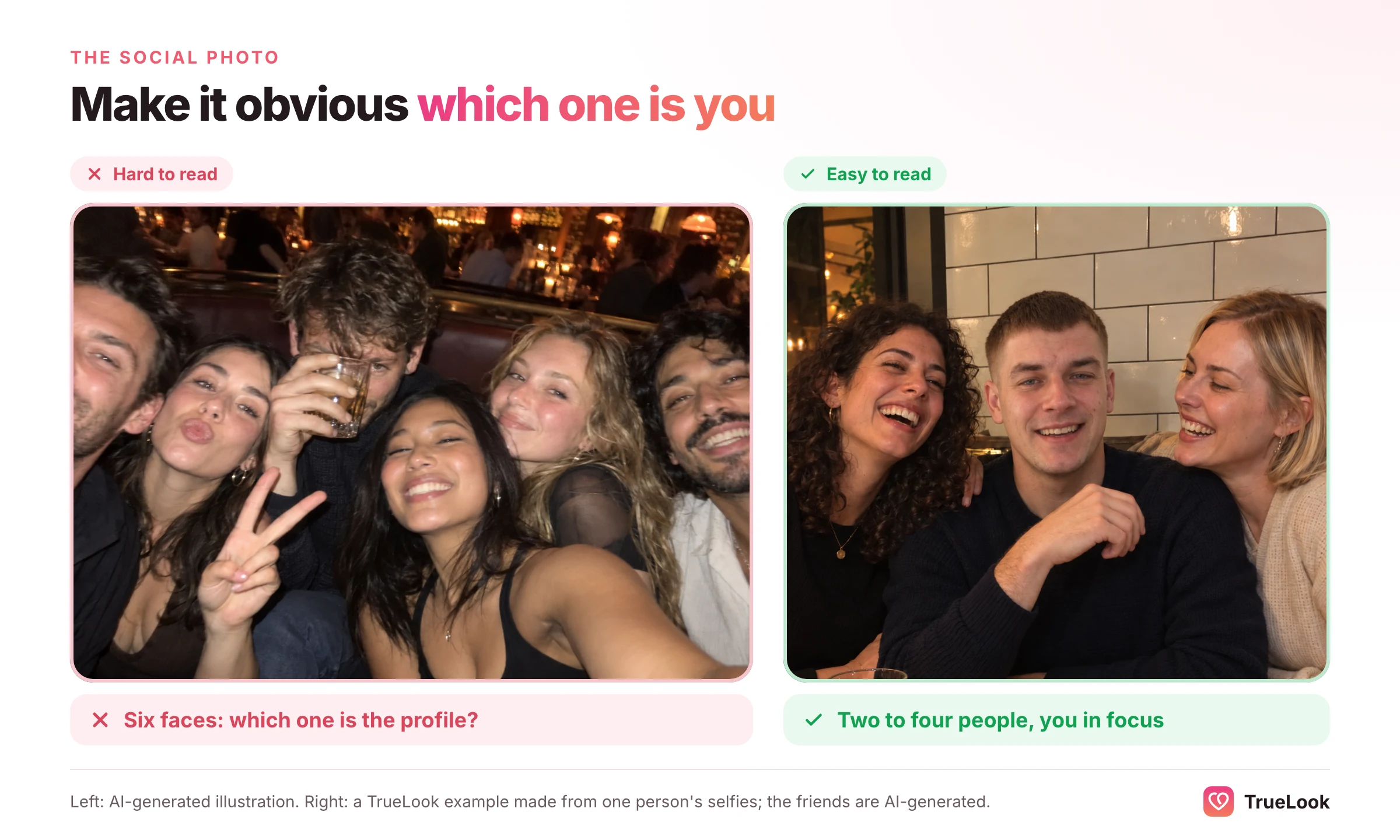
There is a second, less obvious trap: you are probably choosing the wrong photos. In a 2017 study in Cognitive Research: Principles and Implications, "Choosing face: The curse of self in profile image selection", 610 participants picked profile pictures of themselves and of strangers. Images chosen by strangers created more favourable impressions than the images people chose for themselves. The photo you love because you remember a great day may not be the one that sells you to someone who was not there.
Quick test: scroll your set as a stranger would. Different days, places and outfits? At least one full-body photo? Are you easy to identify in every image? Then ask two friends, ideally including someone of the gender you want to match with, to rank your photos without your input.
Fix: aim for five or six photos that each show something different: a portrait, a full-body shot, an activity, one social photo, and something that invites a question. Swap one or two at a time so you can see which change moved your likes.
3. Your bio gives people nothing
Symptoms: likes from people who barely glance at your profile, few likes from the people you most want, and matches that never turn into conversations.
Why it happens: for people who are on the fence after your photos, the bio is the tie-breaker. The Tyson study found that adding a bio to male test profiles raised their average matches from women roughly fourfold, from 16 to 69. In the SwipeStats data, men with short bios of 1 to 50 characters had a higher average match rate (6.87%) than men with empty bios (5.34%) or long ones of 151 to 300 characters (3.97%). Both are correlations from specific datasets, but they agree: something beats nothing, and short beats long.
Quick test: read your bio aloud. Does it contain one specific, true detail a stranger could ask you about? Or is it a list of adjectives and phrases that could belong to anyone?
Fix: two or three lines, one concrete detail, one easy hook. The playbook has before-and-after bio rewrites you can adapt.
4. Your settings are shrinking your audience
Symptoms: very few new profiles to swipe on, "no one new around you" messages, or zero likes despite a solid profile.
Why it happens: Tinder shows you to people whose filters you fit and only shows you people who fit yours. According to Tinder's help article on Discovery settings, you control orientation, age and distance there, and toggles under each slider decide whether Tinder may show you people slightly outside your ranges when you run out. Several settings can quietly shut you off:
- Enable Discovery switched off. When it is off, Tinder says your profile is not shown to anyone new, though people you had already liked can still match with you. It is easy to leave this off after taking a break.
- A very small radius, especially in a smaller town.
- A narrow age range, which limits who you see and, through other people's filters, who sees you.
- Dealbreaker toggles turned on for age and distance, which stop Tinder from stretching your ranges when the pool runs dry.
- Location. If the app has stale location data, for example after a move or a trip using Passport, you may be showing up somewhere you do not live.
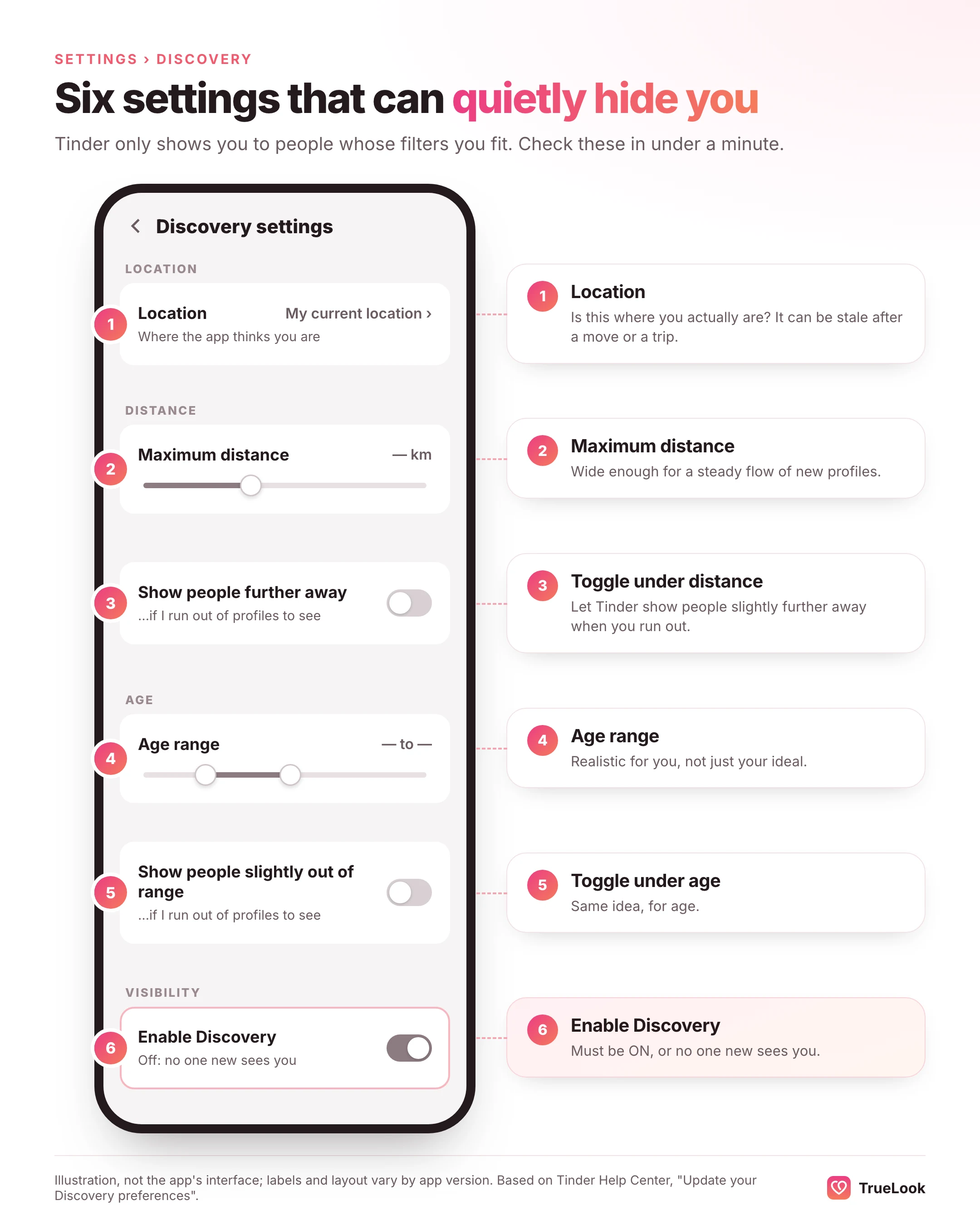
Quick test: open Settings, scroll to Discovery, and confirm Enable Discovery is on, your location is current, and your distance and age range would plausibly include a few thousand people where you live.
Fix: widen the radius and age range a notch, switch the dealbreaker toggles off unless you truly mean them, and see whether new profiles appear within a day. Tinder's own article on not seeing profiles in Discovery recommends the same first step.
5. Your swiping pattern works against you
Symptoms: you like hundreds of profiles a week and match with almost none, or you only like a very narrow group and hear nothing back.
Why it happens: there are two opposite traps. The first is indiscriminate swiping. In the SwipeStats data, men who swiped right on fewer than 30% of profiles had an average match rate of 6.84%, while men who swiped right on 90% or more averaged 2.19%; the most selective tenth, who liked about 4% of profiles, averaged 11.85%. This is correlation, not proof: selective swipers may also have better photos. But nothing in the data suggests that liking everyone helps, and Tinder says your likes and nopes shape what the system shows you.
| Share of profiles men swiped right on | Average match rate | Men in group |
|---|---|---|
| Under 30% | 6.84% | 2,920 |
| 30% to 50% | 4.00% | 1,522 |
| 50% to 70% | 3.57% | 1,028 |
| 70% to 90% | 4.49% | 537 |
| 90% or more | 2.19% | 203 |
The second trap is aiming only at the most sought-after profiles. A 2018 study in Science Advances by Elizabeth Bruch and Mark Newman, "Aspirational pursuit of mates in online dating markets", analysed messaging in four large US cities and found that men and women both contacted people who were, on average, about 25% more desirable than themselves by the study's measure, and that reply rates fell as that gap widened. Shooting high is human; shooting only high is a reliable way to collect silence.
Quick test: think about the last 50 profiles you liked. Would you genuinely have messaged most of them? And are they a fair mix, or only the profiles that look like they get the most attention?
Fix: like the people you would actually talk to, read profiles before swiping, and make sure your likes include people whose interests and lifestyle overlap with yours.
6. You are not active when other people are
Symptoms: you open the app once or twice a week for a long session and see little in return.
Why it happens: Tinder's matching explainer is direct about it: the system prioritises people who are active and active at the same time. A profile that appears in bursts once a week has fewer chances to be shown to people who are online, and fewer chances to catch a reply while interest is fresh.
Quick test: count the days you opened Tinder last week and the time of day you usually do.
Fix: short sessions on most days, including some evenings when other people in your area are likely to be online, and replies to matches within a day.
7. Something is wrong with the account or the app
Symptoms: a notice in the app, features greyed out, profiles that never load, or matches that disappear.
Why it happens: several account states stop you from being seen at all:
- Hidden for lack of a face photo. Tinder's help article "My profile is hidden" explains that in many regions profiles must include at least one photo where a face can be detected. If the system cannot detect one, the profile is hidden from others and you cannot use Likes, Super Likes or Boost. Tinder says the tool only roughly detects whether a face is present, so a dim, distant or partly covered face can trip it. The fix is a well-lit, clear photo of your full face.
- A formal action. Tinder can warn, suspend or ban accounts and remove content for breaking its Terms of Use or Community Guidelines. Its article on appealing a violation says eligible actions appear in an Appeals Center, and that actions older than six months, or already appealed, cannot be appealed there.
- A pending verification or review. If the app is asking you for a selfie check or says your account is under review, finish that first. If Photo Verification keeps failing, see our guide on what to do when Tinder photo verification fails.
- Technical trouble. For a blank card stack or profiles not loading, Tinder's help pages suggest a strong connection and deleting and reinstalling the app to get the latest version. Disappearing matches are usually people who unmatched or deleted their accounts, but logging out and back in rules out a display glitch.
Quick test: look for any banner or message in the app, check whether you can still send a Like, and confirm the app is up to date.
Fix: follow whatever the notice asks, add a clear face photo if your profile is hidden, and use the Appeals Center if you believe an action was a mistake.
The fifteen-minute diagnostic
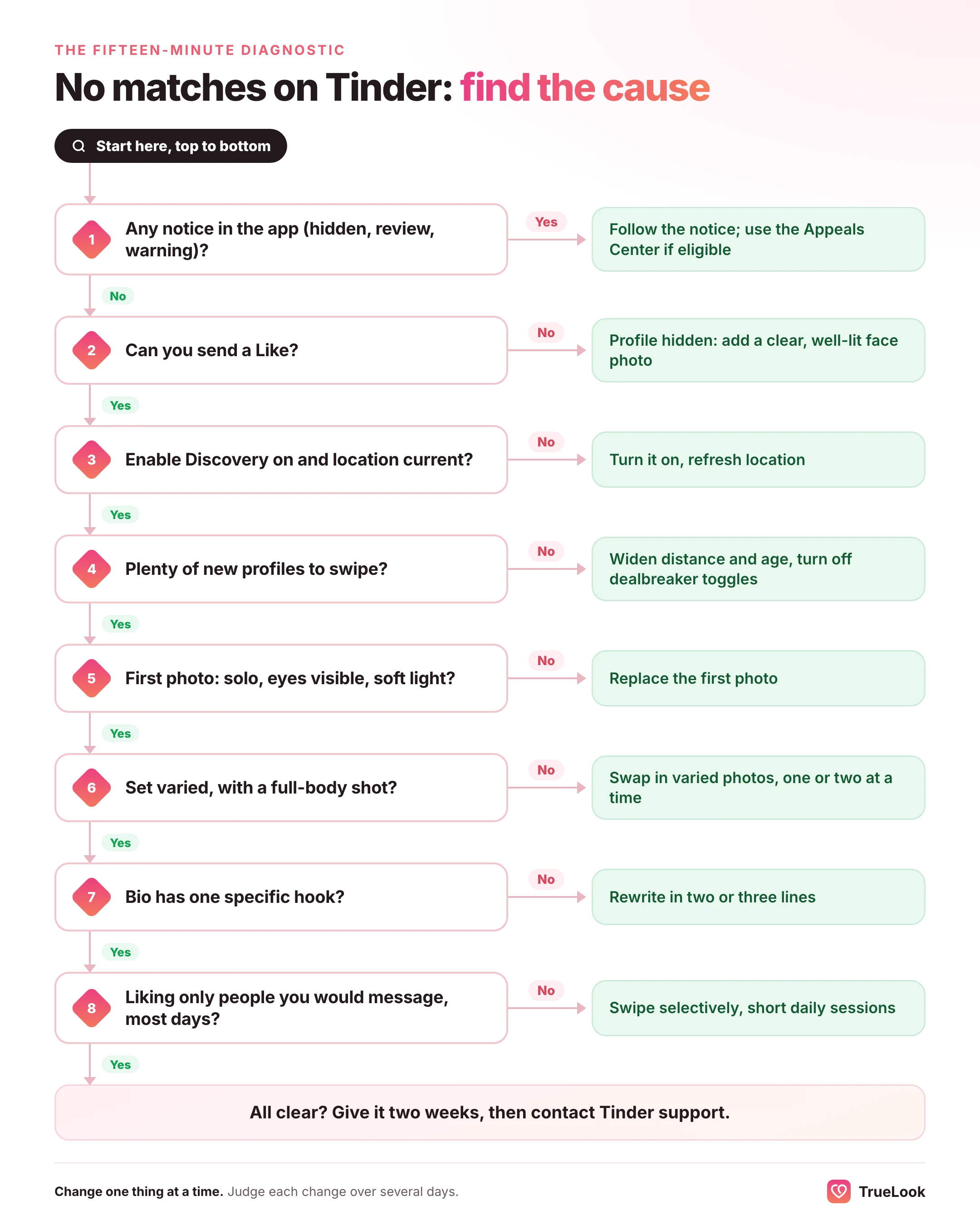
Work through these steps in order. Stop when you find something wrong, fix it, and give that one change several days before moving on.
- Update or reinstall the app. Rules out loading problems in two minutes.
- Look for notices. Any message about a hidden profile, a review, a warning or a verification prompt is your answer.
- Check that you can send a Like. If Likes are blocked, your profile is hidden; add a clear face photo.
- Open Discovery settings. Enable Discovery on, location current, distance and age range realistic, dealbreaker toggles off unless you mean them.
- Judge your first photo at arm's length for one second. Solo, eyes visible, soft light, face large enough to read.
- Scroll the whole set as a stranger. Variety of days and places, one full-body shot, you obvious in every photo.
- Read your bio aloud. One specific detail and something to reply to.
- Review last week's swiping. Were you liking nearly everyone, or only a narrow, high-demand slice?
- Review your activity. Most days, short sessions, some evenings, quick replies.
| If you find this | Do this | Judge it after |
|---|---|---|
| Hidden profile or Likes blocked | Add a well-lit, unobstructed face photo | Same day |
| Discovery off or stale location | Turn Discovery on, refresh location permission | One day |
| Few new profiles to swipe on | Widen distance or age range a notch, turn off dealbreaker toggles | One to two days |
| Weak first photo | Replace it with a clear daylight portrait taken by someone else | Four to seven days of normal use |
| Same-day or selfie-only set | Swap in varied photos, one or two at a time | A week per round |
| Empty or generic bio | Write two or three lines with one concrete hook | A week |
| Liking almost everyone | Like only people you would message | One to two weeks |
| Rare, long sessions | Short sessions on most days, including evenings | One to two weeks |
| Formal warning, suspension or ban | Read the notice and use the Appeals Center if eligible | As Tinder reviews it |
Is it a shadowban? A sober way to check
"Shadowban" is the most searched explanation for zero matches, and the least documented. Tinder's help centre describes several reasons a profile might not be shown: Discovery switched off, a hidden profile with no detectable face, and formal warnings, suspensions or bans that come with a notice and an appeal route. It does not describe a silent penalty that hides you while letting you swipe normally. That does not prove no such mechanism exists, but it does mean nobody outside Tinder can test for one with certainty, and confident "shadowban checkers" are guessing.
The popular "ask a friend to look for you" test is unreliable. Whether your profile appears in a friend's stack depends on their location, their filters, who they have already swiped on and what Tinder chooses to show them that day. Not seeing you proves very little.
A better test is controlled change. If your settings are correct, your profile is not hidden and you are active, replace only your first photo with a clearly stronger one and watch your like count for a week. If likes start to move, the problem was the photo. If you still see absolutely nothing for two weeks in a busy area after fixing photos and settings, contact Tinder support through the app, since a genuine account problem is something only they can see.
Should you delete and restart your account?
| What a reset does | What it does not do |
|---|---|
| Gives you a fresh profile and, many users report, a brief burst of attention | Fix a weak photo set, which will lose the swipe again once any early attention fades |
| Clears your swipe history | Keep your existing matches and conversations, which are lost |
| Feels like progress | Undo a ban; Tinder's documented route for formal actions is the Appeals Center |
A reset makes sense only after the photos, bio and settings are genuinely fixed, and only if you have no matches worth keeping. Repeatedly deleting and recreating accounts is not something Tinder recommends anywhere, and if your account was banned, starting over is not a documented option.
Mistakes that keep people stuck, and the fix for each
| Mistake | Why it backfires | Better move |
|---|---|---|
| Changing photos, bio and settings on the same day | You cannot tell what helped, so you cannot repeat it | One change at a time, several days each |
| Buying a Boost to "test" a struggling profile | Tinder says a Boost can raise profile views up to tenfold for 30 minutes, but its own help page notes it does not guarantee matches. More views of a weak profile mostly means more left swipes. | Fix the free basics first; boost only a profile that already earns likes |
| Picking your favourite photos yourself | Research suggests strangers choose more flattering images of you than you do | Ask friends to rank them, or test one opener against another |
| Liking everyone to "maximise chances" | Indiscriminate swipers match at lower rates in self-reported data | Like people you would message |
| Only liking the most popular profiles | Reply rates fall as the desirability gap widens | Include people whose lives genuinely overlap with yours |
| Hiding behind sunglasses, hats or filters | Faces drive first impressions, and Tinder may hide profiles without a detectable face | At least two photos with your full face clearly visible |
| Using someone else's photos or heavy edits | Breaks trust at the first date and can fail Photo Verification | Photos that look like you on a good day |
| Deciding after one evening | Swipe volume varies by day; one session is noise | Judge changes over a week of normal use |
Worked examples
The three profiles below are illustrative, built to show how the diagnosis works in practice. They are not real people.
Example profile: a 31-year-old analyst in a large city, zero likes in three weeks
Symptom row: zero likes and zero matches in a populated area. Step 3 of the diagnostic reveals he cannot send Likes. His first photo is a ski shot in goggles, his second a group photo, and the rest are scenery. Tinder cannot detect a face, so the profile is hidden. Adding a clear daylight portrait as the first photo unhides it the same day. Only after that does it make sense to judge anything else.
Example profile: a 44-year-old teacher in a mid-size town, a burst of matches then nothing
Symptom row: early matches, then silence. His settings show a 10-kilometre radius and an age range of 30 to 38, with both dealbreaker toggles on. He has swiped through almost everyone in that narrow pool. Widening to 40 kilometres and 34 to 50, closer to his own age, refills his stack. His photos are fine; the pool was the problem. If you are dating in your forties, our guide to the best dating apps for over 40 covers where your age group is most active.
Example profile: a 26-year-old nurse, plenty of likes, matches that never talk
Symptom row: matches, but no conversations. Her photos earn likes, but her bio is empty and she rarely opens the app on weeknights. Matches arrive while she is offline and go cold. Two lines about her actual weekend plus a habit of replying in the evening fixes the conversion problem. Her profile was never invisible; it was giving people nothing to say.
When photos turn out to be the problem
For most people who finish the diagnostic, the answer is the photo set. You have three realistic routes.
- A short shoot with a friend. Free and usually enough. Go out in the hour before sunset or on a bright overcast day, use the rear camera, have your friend stand a couple of metres back and zoom slightly, and change outfits and locations at least once.
- A photographer. Reliable lighting and direction, at a higher cost and with some scheduling. Our comparison of a dating photographer versus AI photos lays out the trade-offs.
- An AI tool that works from your own face. Useful when you have nobody to take photos or your camera roll is all selfies. TrueLook is one such tool: it turns four of your selfies into hyperrealistic photos of you in varied settings using its HyperReal™ method. You can see how it works on our page about AI Tinder photos made from your selfies.
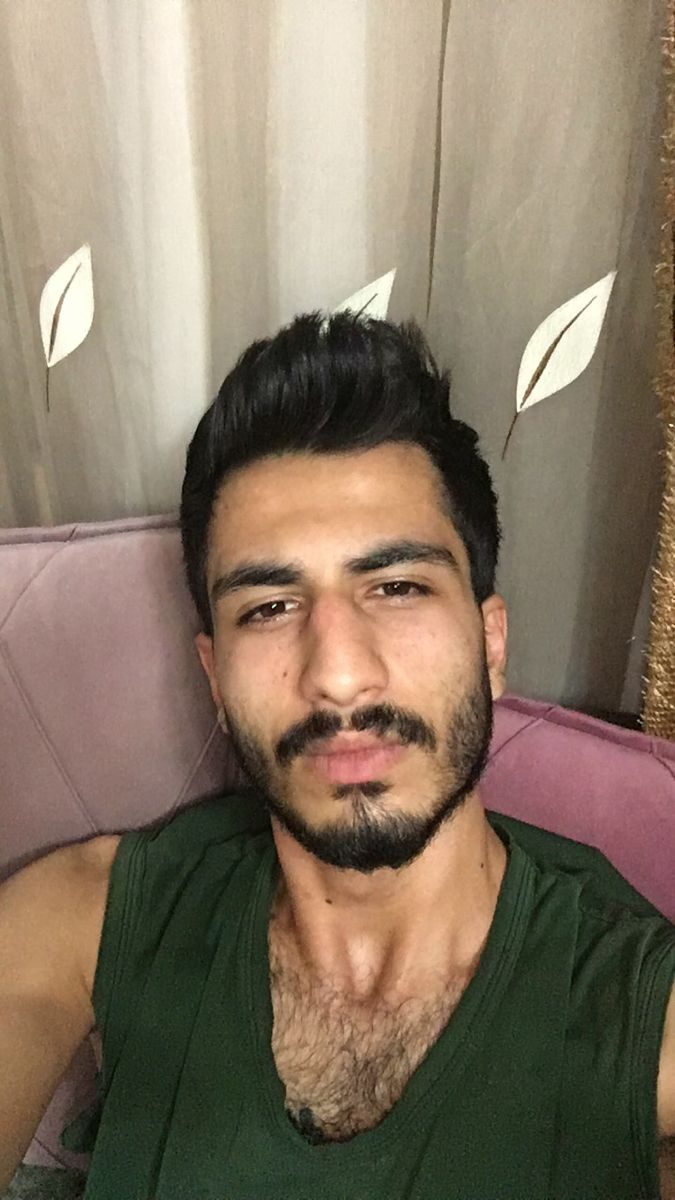
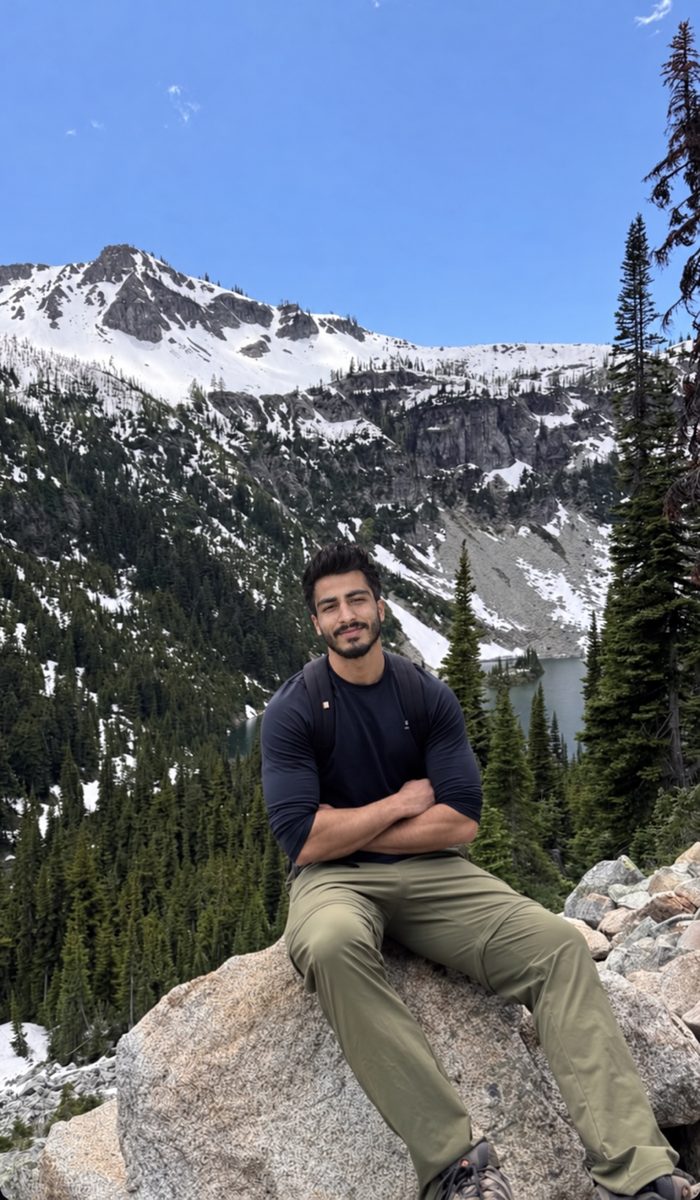
Whatever route you choose, keep two rules. The photos must look like you on a good day, because your matches will meet the real you. And verification decisions belong to Tinder: no photo, from any source, guarantees a pass or a match. If you are unsure where the apps draw the line, read our explainer on whether AI photos are allowed on dating apps.
When it is not your profile: the honest limits
Good diagnosis includes knowing when the fix is outside your profile.
- Small places have small pools. In a town of a few thousand people, a widened radius may still hold only a few hundred profiles in your age range. Low numbers there are about supply, not quality.
- The gender ratio is structural. Pew found men are somewhat more likely than women to have used dating apps (34% versus 27% of US adults), and the match-rate gap in every dataset above follows from that imbalance. A strong profile improves your odds; it does not abolish the ratio.
- Who you are aiming at matters. If your likes go almost entirely to the most in-demand profiles, the Bruch and Newman findings suggest silence is the expected outcome rather than a sign of a fault.
- Different apps reward different things. If you see the same pattern on several apps, the cause is likely your photos. If only Tinder is quiet, try an app where your age group and goals are better represented. Our diagnoses for no matches on Hinge and no Bumble matches explain what differs on each.
How long to wait before judging a change
| Change | First signal | Fair verdict |
|---|---|---|
| Unhiding a profile or turning Discovery on | Likes count moves within a day or two | Three days |
| New first photo | Likes count after a few active sessions | About a week of normal use |
| New photos further down the set | Subtle; watch matches more than likes | One to two weeks |
| New bio | More conversations and openers from matches | One to two weeks |
| Swiping and activity habits | Gradual change in match rate | Two weeks or more |
Keep a simple note of what you changed and when, alongside your like count. After a month you will know far more about what works for your profile than any general guide can tell you, including this one.
Frequently asked questions
Why am I not getting matches on Tinder?
The usual causes are a first photo that loses the swipe, a photo set that raises doubts, an empty or generic bio, settings that shrink who sees you, swiping on nearly everyone, and rare activity. Less often, the profile is hidden because Tinder cannot detect a face photo, or the account has a formal restriction. Check notices and settings first, then your photos.
Why am I getting no likes on Tinder?
If your like count stays at zero, people are either not seeing you or swiping left. Confirm that Enable Discovery is on, your location is current, your distance and age range are realistic, and you can still send Likes. If all of that is fine, replace your first photo with a clear, well-lit solo portrait and watch the count for a week.
Is it normal to get zero matches on Tinder?
A slow start is normal, especially for men: research and user data put typical male match rates between under 1% and about 2% of profiles liked. Zero likes for several weeks in a populated area is not normal, though, and usually points to a visibility setting, a hidden profile or a first photo that is not working.
How long does it take to get matches on Tinder?
With a working profile in a reasonably populated area, most people see some likes within the first few days of regular use. After changing your first photo, give it about a week of normal activity before judging it. Matches lag behind likes, so watch the like count first.
Am I shadowbanned on Tinder?
Tinder does not describe a shadowban feature. It documents hidden profiles when no face photo can be detected, Discovery being switched off, and formal warnings, suspensions and bans that come with a notice and an appeal route. Rule those out, then test a stronger first photo for a week; if nothing at all changes after fixing photos and settings, contact Tinder support.
Should I reset my Tinder account to get more matches?
Usually not. Deleting and recreating an account removes your matches and messages and does nothing for a weak photo set. It is only worth considering after your photos, bio and settings are genuinely fixed, and it is not a documented route back from a ban; for formal actions, Tinder points users to its Appeals Center.
Why did my Tinder matches suddenly stop?
A sudden stop often follows a change: a new first photo that performs worse, narrower settings, a long gap in activity, or a profile that has been hidden. Undo recent changes, check for notices, and make sure Discovery is on. A gradual decline over many months can also reflect a smaller local pool, since Tinder's monthly active users have been falling.
Why does Tinder say there is no one new around me?
Usually your distance or age range is too narrow for your area, or you have swiped through everyone who fits. Widen the ranges, turn off the dealbreaker toggles, and check that location access is allowed. If the stack is blank in a busy city, reinstall the app on a strong connection, as Tinder's help pages suggest.
Sources
- A First Look at User Activity on Tinder, Tyson, Perta, Haddadi and Seto, arXiv (2016). https://arxiv.org/abs/1607.01952
- Tinder Statistics 2020-2025: The Complete Data Analysis, SwipeStats (2025, updated 2026). https://www.swipestats.io/blog/tinder-statistics
- The Tinder 80/20 Rule: We Tested It With 294 Million Swipes, SwipeStats (2026). https://www.swipestats.io/blog/tinder-study-80-20
- Key findings about online dating in the U.S., Pew Research Center (2023). https://www.pewresearch.org/short-reads/2023/02/02/key-findings-about-online-dating-in-the-u-s/
- 10 facts about Americans and online dating, Pew Research Center (2020). https://www.pewresearch.org/short-reads/2020/02/06/10-facts-about-americans-and-online-dating/
- Second Quarter 2026 Shareholder Letter (Form 8-K exhibit), Match Group (2026). https://www.sec.gov/Archives/edgar/data/0000891103/000089110326000128/mtch8-k20260804ex992.htm
- Powering Tinder: The Method Behind Our Matching, Tinder Newsroom (2019, updated 2022). https://www.tinderpressroom.com/powering-tinder-r-the-method-behind-our-matching
- Tinder ditches its hidden desirability scores, Engadget (2019). https://www.engadget.com/2019-03-18-tinder-dumps-desirability-scores.html
- First impressions: making up your mind after a 100-ms exposure to a face, Willis and Todorov, Psychological Science (2006). https://pubmed.ncbi.nlm.nih.gov/16866745/
- How Tiny Differences Can Affect Photofeeler Scores, Photofeeler (2024). https://blog.photofeeler.com/how-tiny-differences-can-affect-photofeeler-scores/
- Nasal Distortion in Short-Distance Photographs: The Selfie Effect, Ward, Ward, Fried and Paskhover, JAMA Facial Plastic Surgery (2018). https://pubmed.ncbi.nlm.nih.gov/29494735/
- Do selfies make your nose look big? Rutgers study says yes, The Philadelphia Inquirer (2018). https://www.inquirer.com/philly/health/selfie-make-nose-look-bigger-rutgers-study-20180301.html
- Choosing face: The curse of self in profile image selection, White, Sutherland and Burton, Cognitive Research: Principles and Implications (2017). https://pubmed.ncbi.nlm.nih.gov/28470036/
- Aspirational pursuit of mates in online dating markets, Bruch and Newman, Science Advances (2018). https://pubmed.ncbi.nlm.nih.gov/30101188/
- Update your Discovery preferences, Tinder Help Center. https://www.help.tinder.com/hc/en-us/articles/115003340963-Discovery-Settings
- I'm not seeing profiles in Discovery, Tinder Help Center. https://www.help.tinder.com/hc/en-us/articles/115003496123-I-m-not-seeing-profiles-in-Discovery
- My profile is hidden, Tinder Help Center. https://www.help.tinder.com/hc/en-us/articles/26151863213837-My-profile-is-hidden
- Appealing a violation (ban, suspension, warning, content removal), Tinder Help Center. https://www.help.tinder.com/hc/en-us/articles/22257807219853-Appealing-a-violation-ban-suspension-warning-content-removal
- Used Boost or Super Boost, and didn't get any new matches, Tinder Help Center. https://www.help.tinder.com/hc/en-us/articles/115003638126-Used-Boost-or-Super-Boost-and-didn-t-get-any-new-matches
Get better dating photos from your own selfies
TrueLook’s HyperReal™ method turns 4 selfies into hyperrealistic photos of you for Tinder, Hinge and Bumble.
AI Tinder photos made from your selfies
Written by the TrueLook Team
TrueLook makes hyperrealistic dating photos from your own selfies. Our articles cover dating profile photos, the apps and how to get noticed.