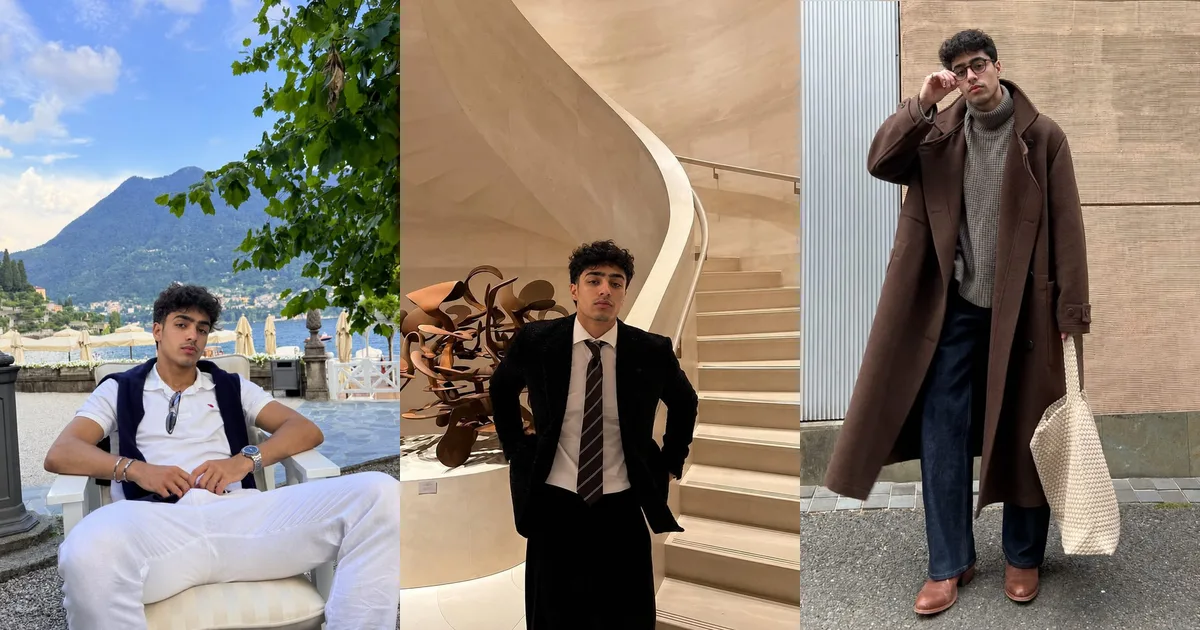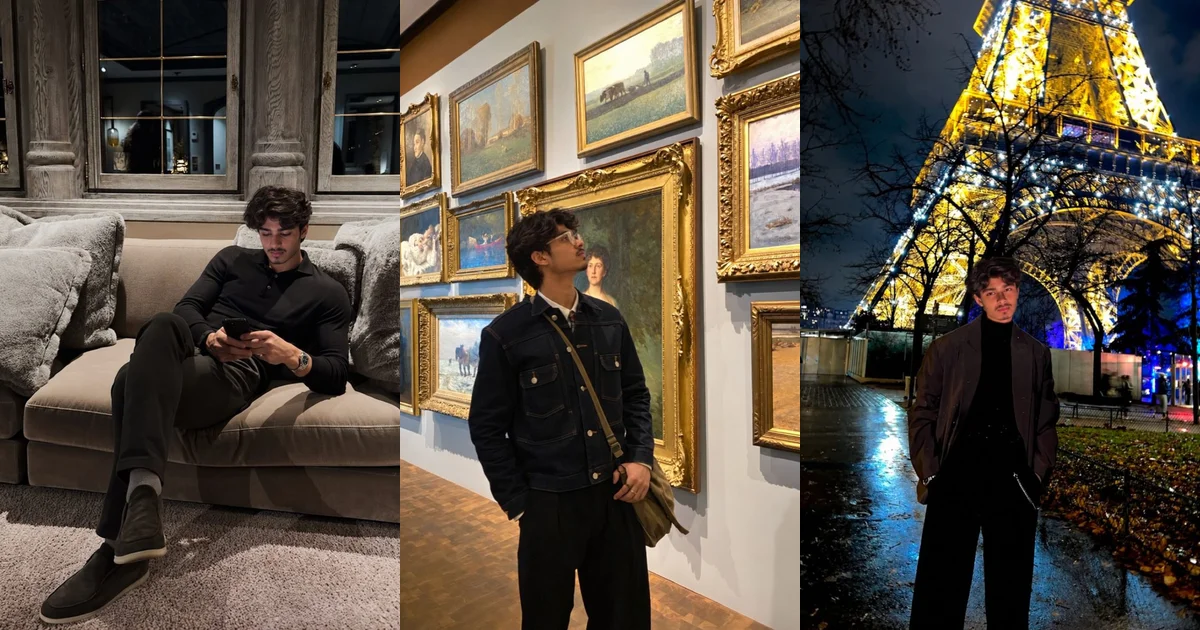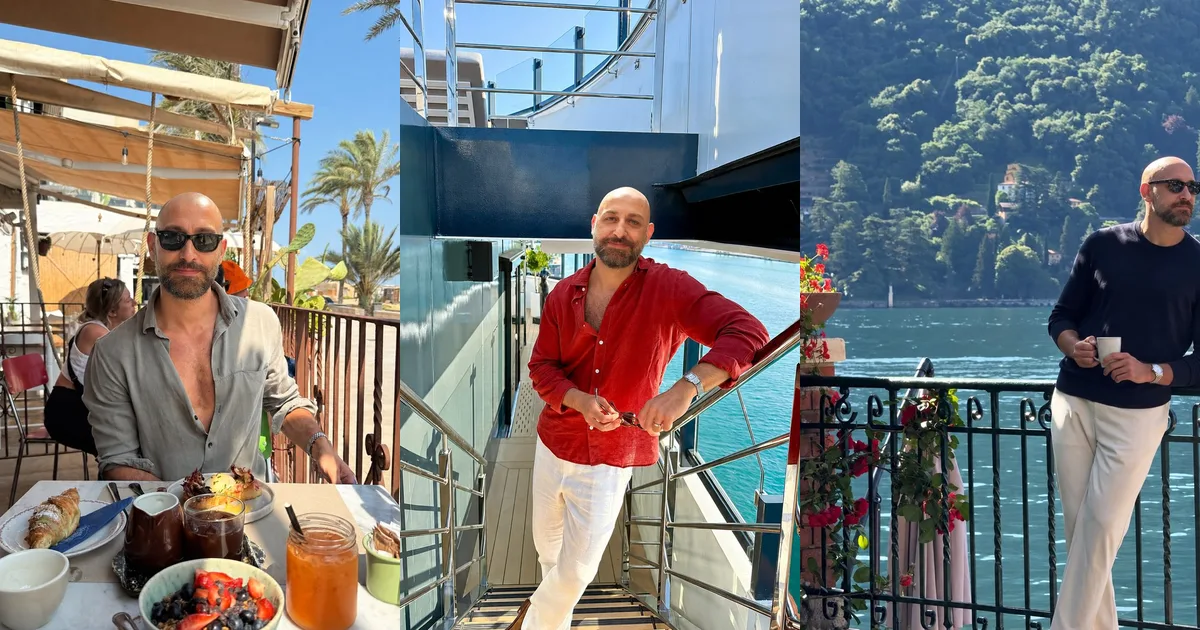
No likes on Hinge almost always has an ordinary cause: your profile is not being shown (paused, flagged content, or blocked by Your Turn Limits), your first photo makes people move on before they read anything, your prompts give nobody an easy reason to reply, or your filters and theirs leave too few people in your pool. Check visibility first, then fix the lead photo and prompts, then widen your preferences and change how you send likes. Give each change about a week before you judge it.
- Hinge only shows you to people whose preferences you fit and who fit yours, so your filters and theirs both shrink your audience. Marking key preferences as flexible is one of the few settings Hinge itself recommends for more visibility.
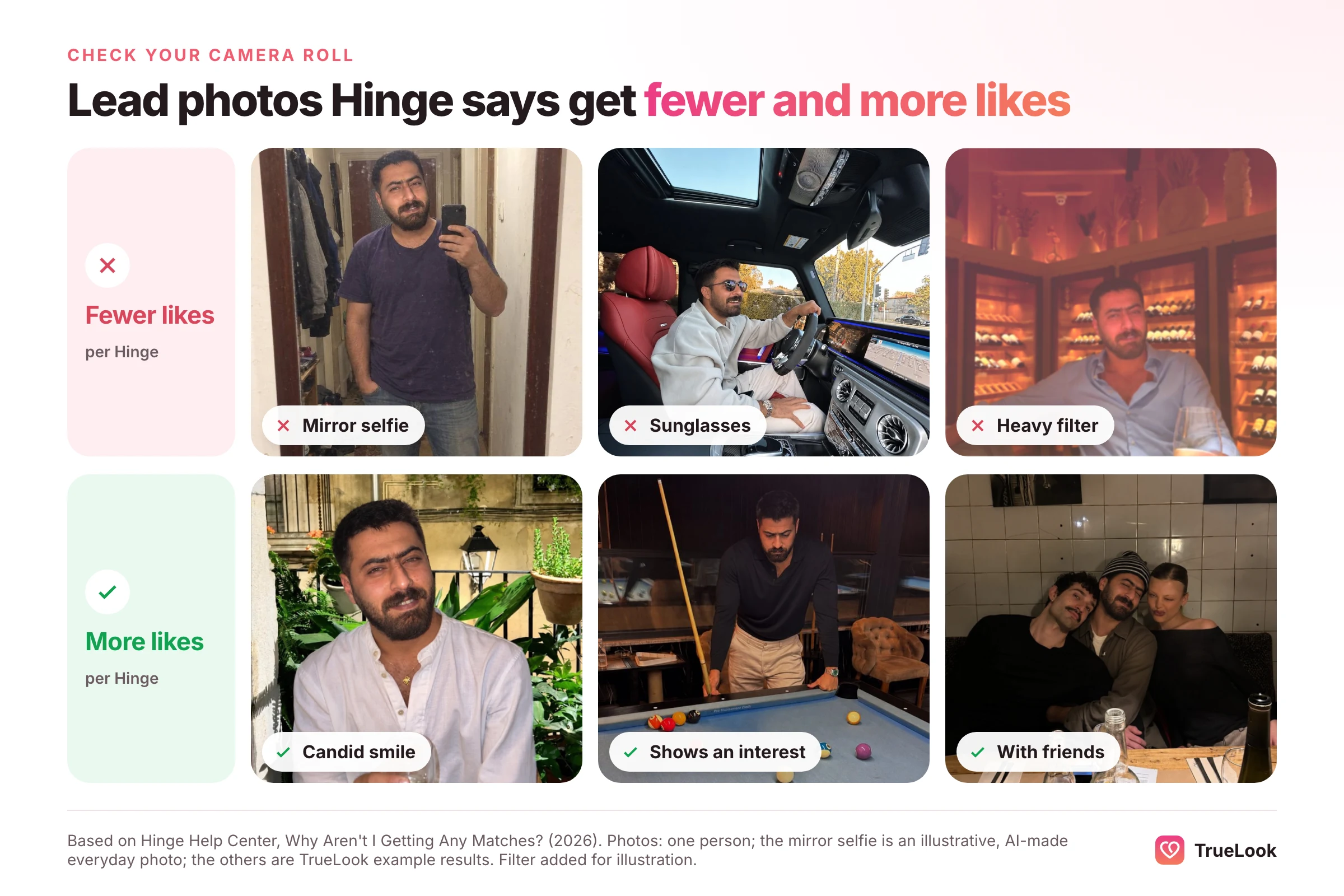
- Hinge's help centre lists the photo types that tend to get fewer likes: mirror selfies, posed shots, filters, black and white, sunglasses, and photos with a possible partner. Remove those from your first three slots before doing anything else.
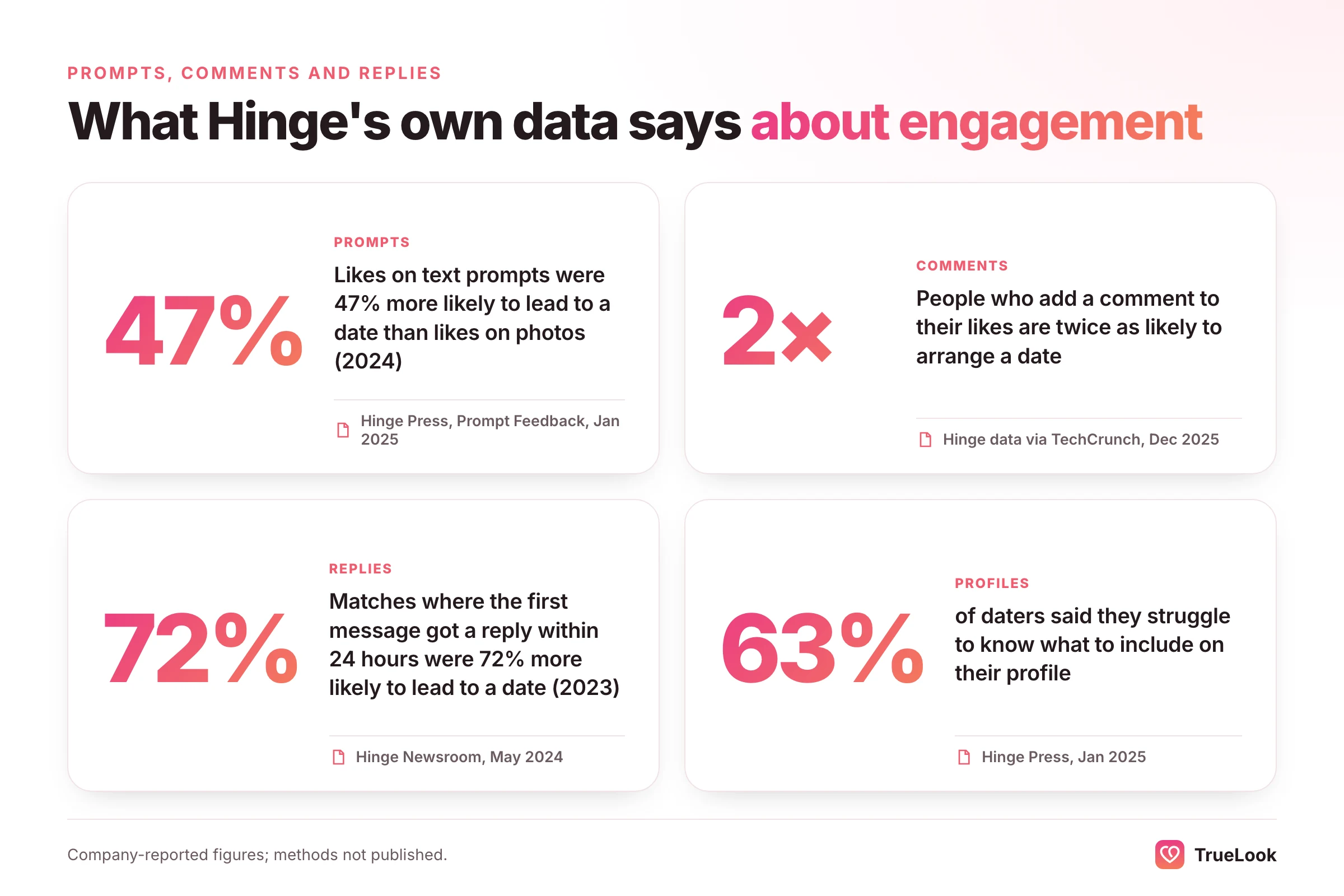
- Prompts are not filler. Hinge reported that in 2024 likes on text prompts were 47% more likely to lead to a date than likes on photos.
- How you behave shapes who you see. Hinge says its algorithm learns from who you like, skip and match, and its Signals badge rewards reading profiles before liking, commenting, and replying to matches.
- Ignoring matches can stop you cold. Under Your Turn Limits, people with too many conversations waiting on them cannot send or receive likes until they reply or close some.
- There is no public evidence of a fixed "tier" or Elo score on Hinge. What Hinge does publish (mutual preferences, Most Compatible, Standouts, Top Photo, Signals) is enough to explain most dry spells.
- Deleting and restarting is a last resort. It erases every match and conversation, and the same photos and prompts tend to get the same response.
No likes, no matches, no replies: name the problem first
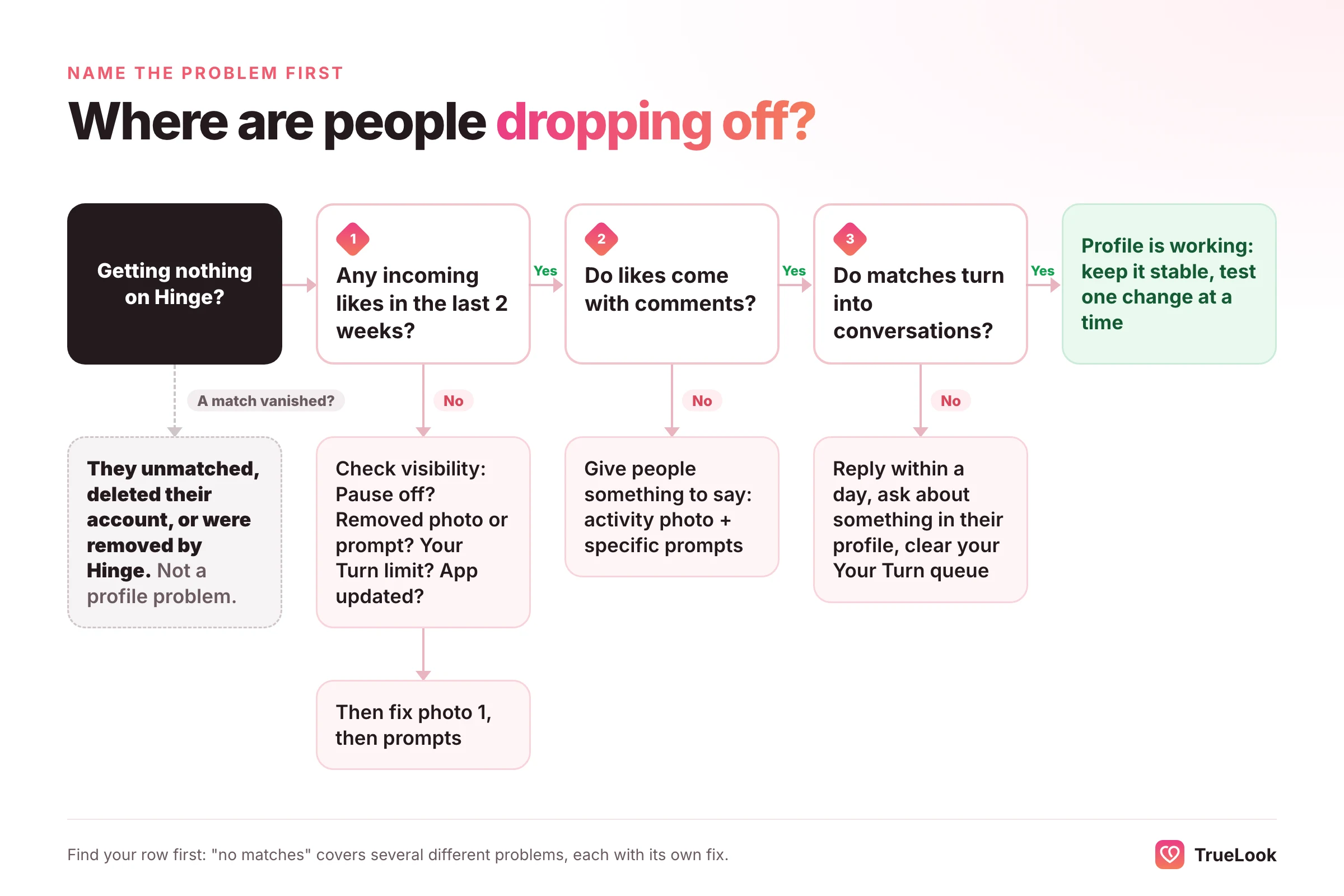
People use "no matches on Hinge" to describe four different situations, and each one has a different fix. Before you change a single photo, work out which one you are in. The question to ask is where people drop off: before they like you, after they like you, or after you match.
| What you see | Where the drop-off happens | Most likely cause | Start here |
|---|---|---|---|
| The Likes You tab has been empty for two weeks or more | Before anyone engages | Profile paused or held back from Discover, or a first photo that stops people early | Visibility checks, then photo 1 |
| A trickle of likes, but they are all "liked your photo" with no comment | At the moment of deciding | Nothing in the profile gives people something to say | Prompts and one activity photo |
| You send plenty of likes and almost nobody likes you back | Your outgoing likes | Plain likes to profiles that already get a lot of attention | Comment on one specific detail |
| You match, but chats die after a message or two | After the match | Openers, slow replies, or a profile that oversold | Conversation habits and Your Turn |
| Likes stopped after a decent first week | Over time | Novelty wore off; the profile itself is average | Refresh photos and prompts |
| A match vanished from your list | On their side | They unmatched, deleted their account, or were removed | See the section on disappearing matches |
The rest of this guide follows that order. If your problem is the last row, you can skip straight to why Hinge matches disappear; nothing about your photos will change that.
How the Hinge algorithm decides who sees you
Most advice about the Hinge algorithm repeats guesses as facts. It is more useful to start with what Hinge has actually put in writing, because those statements explain most of what people experience.
What Hinge says it uses
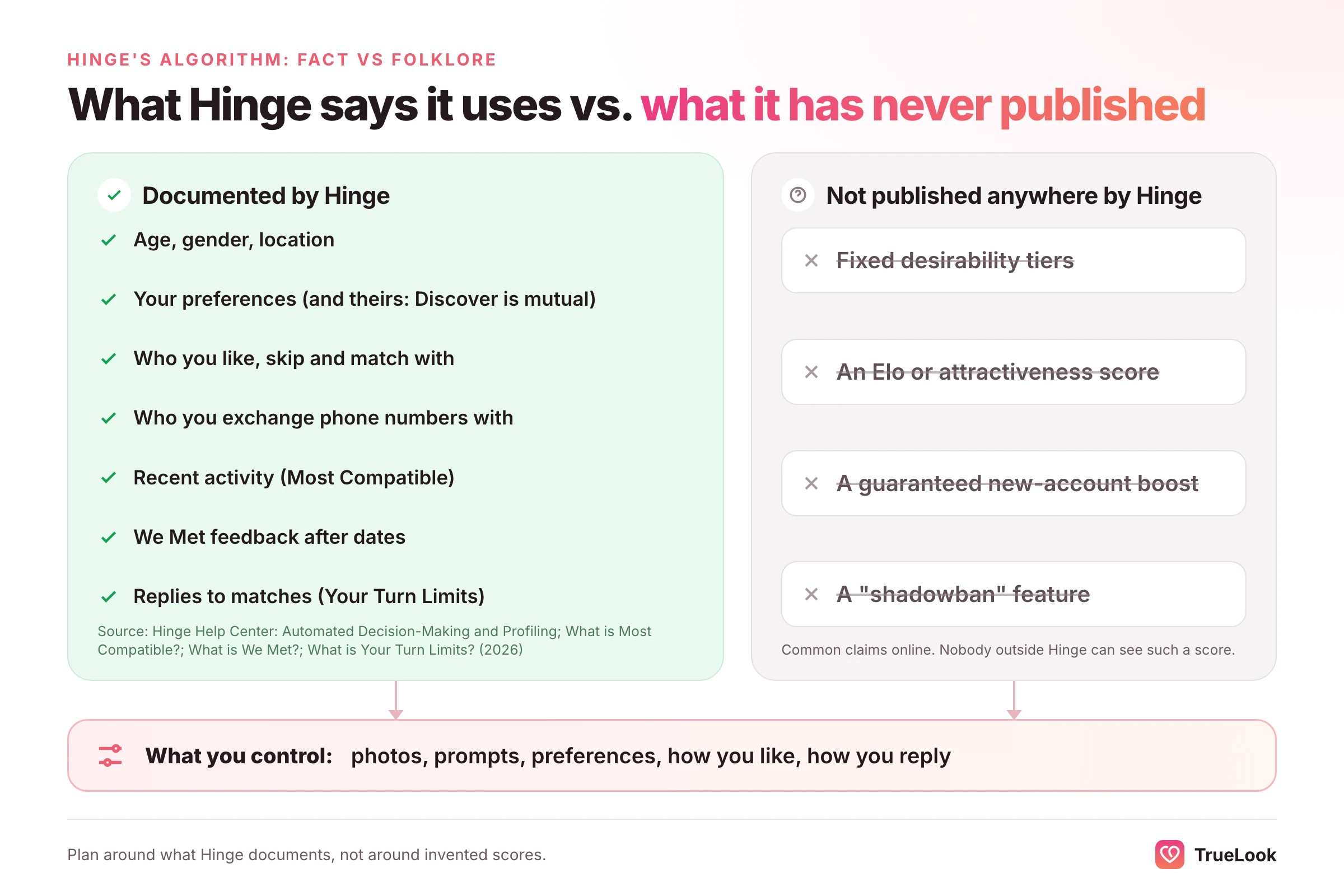
In its help article on automated decision-making and profiling, Hinge lists the information that powers its matching: age, gender, location, your preferences, who you might exchange phone numbers with, and who you like, skip or match with. It adds that the same process is used to recommend you to other people. In other words, the system that decides what you see is the same one that decides who sees you.
Three published features sit on top of that:
- Discover shows recommendations based on mutual interest: the people you see fit your preferences, and you fit theirs. If either side's filters exclude the other, neither appears.
- Most Compatible is one recommendation per day, placed at the top of Discover, which Hinge says is based on mutual preferences, recent activity and shared patterns in who you and others tend to like. Each one expires after 24 hours.
- Standouts is a daily feed of profiles that are catching the most attention, where you can only send Roses. Hinge openly says these profiles get a lot of interest, which is a quiet admission that attention on the app is uneven.
Where the "Nobel Prize algorithm" comes from
When Hinge launched Most Compatible in 2018, TechCrunch reported that it was built on the Gale-Shapley method, a matching procedure devised by David Gale and Lloyd Shapley in 1962 to pair two groups so that no two people would both prefer each other over the partner they were given. Hinge adapted it for a dating pool that is not split neatly into two sides. In early tests, Hinge said users were eight times more likely to go on a date with a Most Compatible suggestion than with its other recommendations, where a "date" meant swapping phone numbers. That is a company figure from 2018 with no published method, so treat it as a sign of what Hinge optimises for, not as a promise.
The practical lesson is the part people miss: a mutual-matching system cares about whether the other person is likely to like you back. Sending a like to someone who is very unlikely to return it does not cost you anything visible, but it also teaches the system nothing useful about who is a realistic fit.
Features that react to your behaviour
| Feature | What Hinge says it does | What it means if you get no likes |
|---|---|---|
| Top Photo | A machine learning model predicts which of your photos is most likely to get a like and moves it to the front. | Hinge agrees the first photo carries the profile. Turn it on if you are unsure which photo leads. |
| Signals | A badge for daters whose recent activity shows reading profiles before liking, adding comments, reviewing incoming likes, messaging matches and confirming dates. Selfie verification and a complete profile are required. | The behaviours Hinge chose to reward are a clear description of what it wants from you. |
| We Met | A few days after you swap numbers, Hinge asks whether you met and whether you would see the person again, and uses the answer in future recommendations. | Answer it. It is one of the few direct signals you can give about what works for you. |
| Your Turn Limits | People with too many matches waiting for a reply cannot send or receive new likes until they reply or end some chats. | If you collect matches and go quiet, incoming likes can stop entirely. |
| Boost and Superboost | Paid visibility: one hour for a Boost, 24 hours for a Superboost. | More people see the same profile. Useful after you fix it, wasteful before. |
What Hinge does not say: tiers, Elo and secret scores
You will read confident claims that Hinge sorts everyone into three desirability tiers, or keeps an Elo-style score that drops each time someone skips you. Hinge has never published anything like that, and nobody outside the company can see such a score. It is fair to assume that profiles getting a lot of attention are treated differently (Standouts exists for exactly that reason), but specific numbers like "the bottom tier gets 5% visibility" are invented. Plan around what is documented: preferences, photos, prompts, your liking pattern and how you treat matches. Those are all things you control.
There is also a broader, well-documented pattern behind the folklore. In a 2018 study of nearly 187,000 users of a US dating site, published in Science Advances by Elizabeth Bruch and Mark Newman, both men and women mostly wrote to people about 25% more desirable than themselves, measured by how much attention each person received. Reply rates fell as the gap widened, though aiming high still worked some of the time. Attention on any dating platform clusters around a minority of profiles. You do not need a secret tier to explain that; you need a profile that earns a second look from the people you are realistically likely to suit.
Step zero: confirm you are actually being shown
Before you rewrite anything, rule out the causes that make every other fix pointless. Each takes a minute.
- Pause is off. Pausing your account stops Hinge showing you to new people while you keep chatting with existing matches. It is a toggle in Settings, and it is easy to switch on during a busy month and forget. Hinge's pausing guide also notes that you can unpause straight from the Discover screen.
- No content has been removed. Hinge sometimes removes a single photo, video or prompt that breaks its guidelines without closing the account. According to its help article on removed content, you may need to replace that item before you reappear in Discover or Standouts. Look for an in-app message asking you to add new media or a new prompt.
- You have not hit Your Turn Limits. If too many people are waiting on your reply, you will see a pop-up and you cannot send or receive likes. A progress bar above your matches warns you as you approach the limit. When Hinge tested the feature in 2024, the cut-off was eight or more unanswered matches; the help centre now just says "too many".
- Your profile is complete. Fill all six photo slots and answer three prompts. Hinge's Signals badge, for one, will not appear on an incomplete profile.
- Your account is in good standing. If Hinge has banned an account, the person cannot create a new one, and Hinge often does not give a reason. Its ban policy lists user reports, moderator review and automated decisions as factors, and offers an appeal. Using autoswipers or other automation tools is explicitly grounds for a ban.
- The app is updated. Old versions sometimes fail to load likes or matches. Update, then log out and back in.
If all six check out, the problem is the profile, the pool, or your habits. Here is how to tell which.
Why you are not getting likes on Hinge: seven causes
These are ordered by how often they explain a profile that gets nothing, and by how cheap they are to fix. Work through them in order rather than changing everything at once.
1. Your first photo creates doubt
People decide quickly. In a 2006 study in Psychological Science, Janine Willis and Alexander Todorov found that judgments of traits such as trustworthiness and likeability made after seeing a face for one tenth of a second closely matched judgments made with no time limit. Longer viewing mostly made people more confident in what they had already decided. A dating feed is a stream of these split-second calls, and your first photo is the one that gets judged.
Hinge says the same thing in its own words: its Top Photo article explains that daters told the company the first profile photo is crucial to a good first impression, which is why it built a model to put your most-liked photo first.
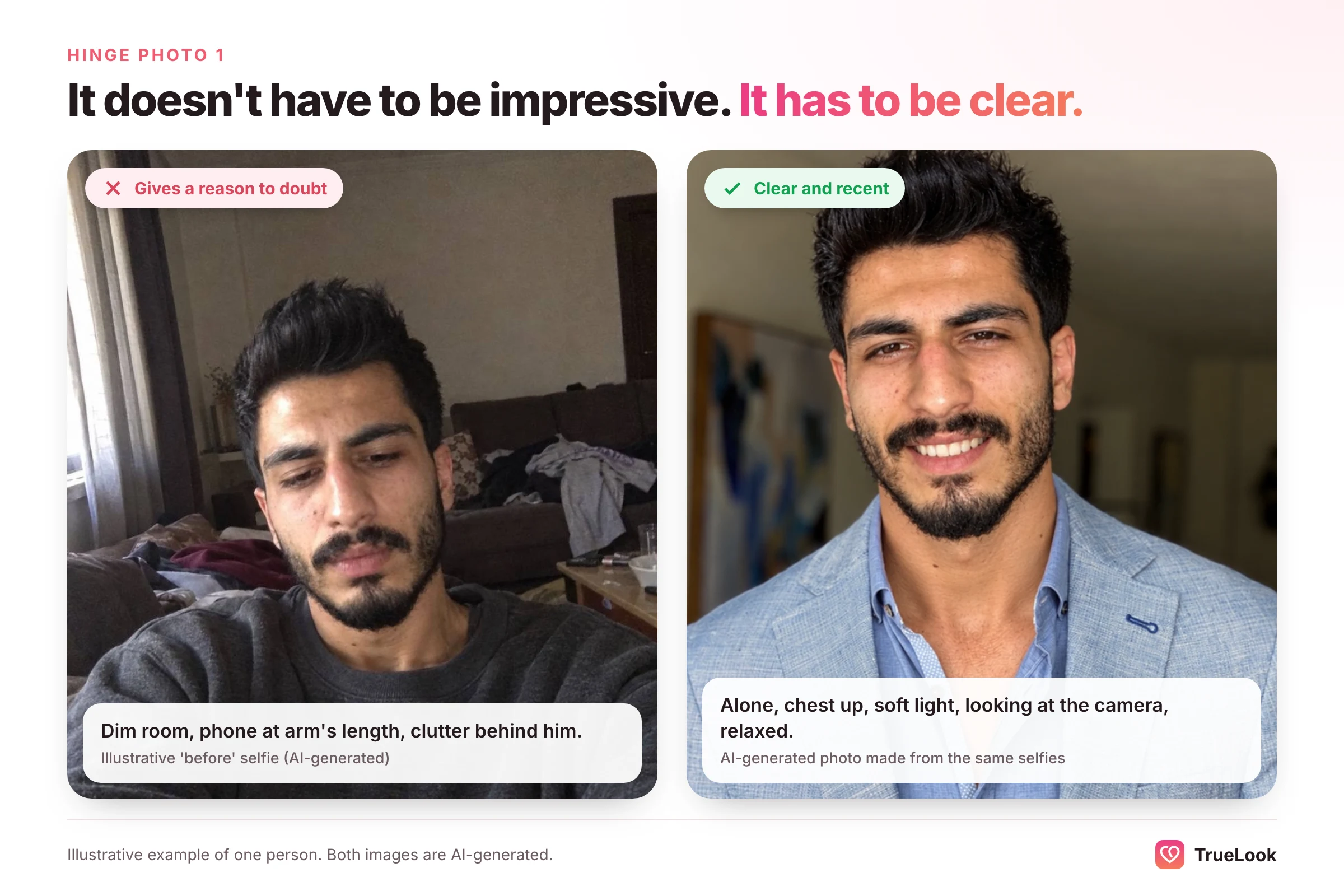
The most common lead-photo problems are dull and fixable: sunglasses or a cap shading the eyes, a group where nobody knows which person you are, a distant shot where your face is a few pixels wide, harsh overhead light, an obvious filter, or a photo that is several years old. Any one of them gives a viewer a reason to doubt, and doubt means a skip.
What to use instead: a recent, sharp photo of you alone, framed from the chest up, in soft daylight, looking at or near the camera with a relaxed expression. It does not have to be impressive. It has to be clear.
2. Your photos show you but say nothing
Hinge's help article "Why Aren't I Getting Any Matches?" is unusually direct. Based on its research, it lists the photos that tend to get more likes and the ones that tend to get fewer:
| Tend to get more likes (per Hinge) | Tend to get fewer likes (per Hinge) |
|---|---|
| Photos that show your interests | Selfies, especially bathroom or mirror selfies |
| Candid photos | Posed photos |
| Sports photos | Black and white photos |
| Smiles | Photos with filters |
| Photos with friends or pets | Beach photos |
| Sunglasses | |
| Photos with a potential significant other |
Read the left column again and notice what the items have in common: each one tells a stranger something about your life and hands them an obvious thing to say. That matters more on Hinge than elsewhere because a like is attached to a specific photo or prompt, not to the profile as a whole. Hinge's own mission page says its research found that liking specific pictures or prompts leads to better matches and more dates than liking a profile in general.
Six versions of the same selfie answer only one question: what do you look like? A good set answers several. A simple way to plan it is the one photo, one fact rule. Give every photo a job, and make sure no two photos do the same job:
- Face: the clear lead photo described above.
- Build: one full-length photo, standing or walking, so nobody has to guess.
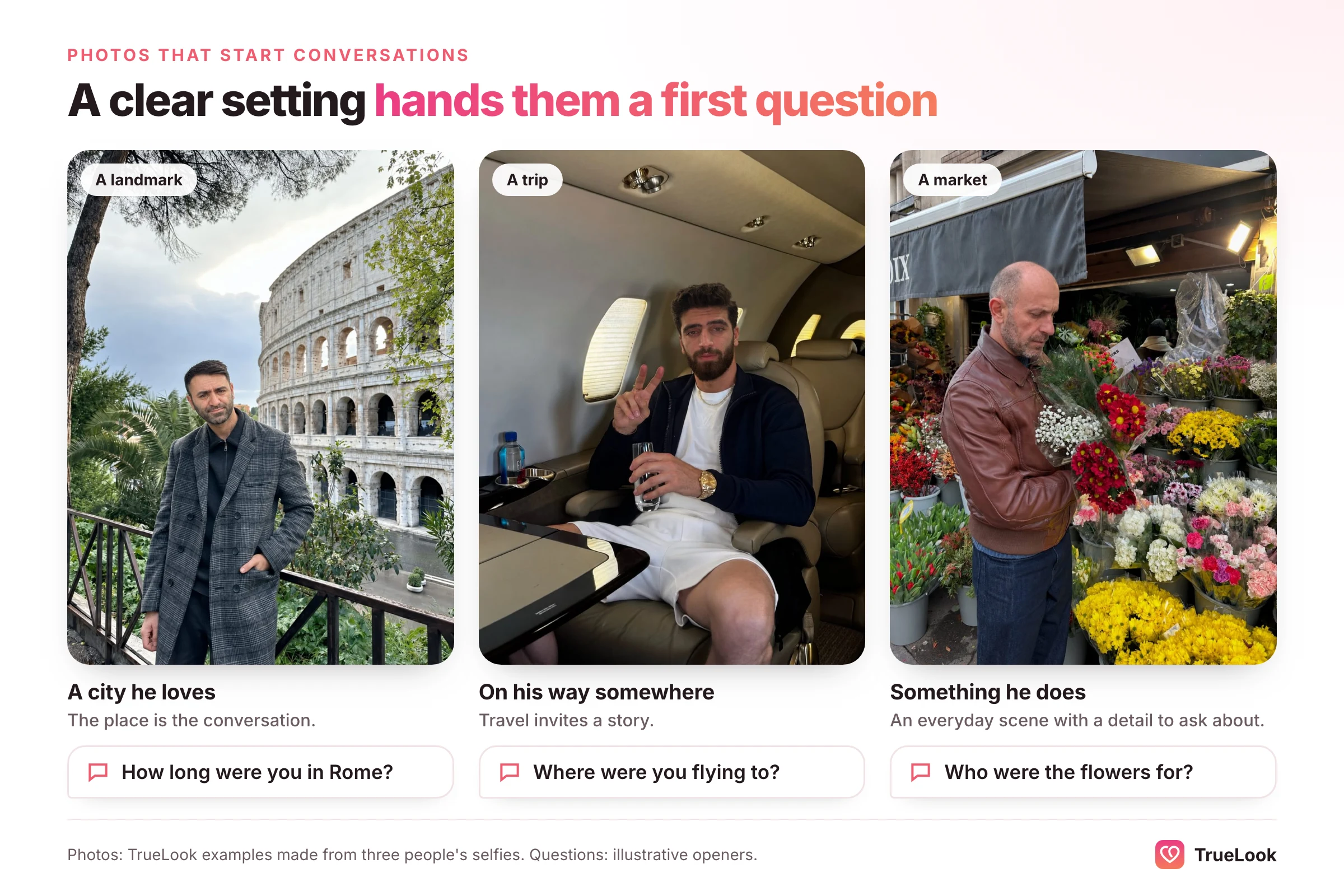
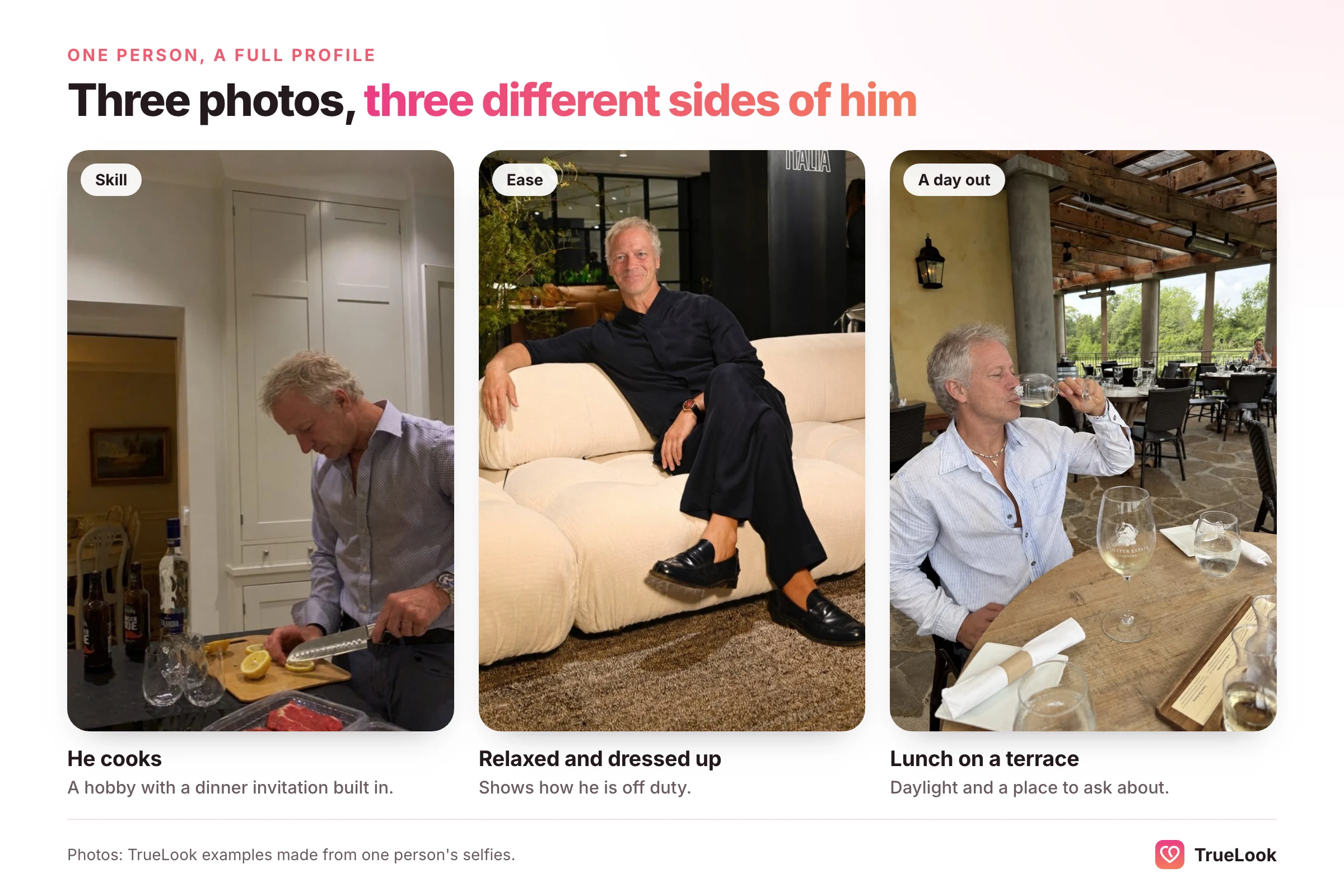
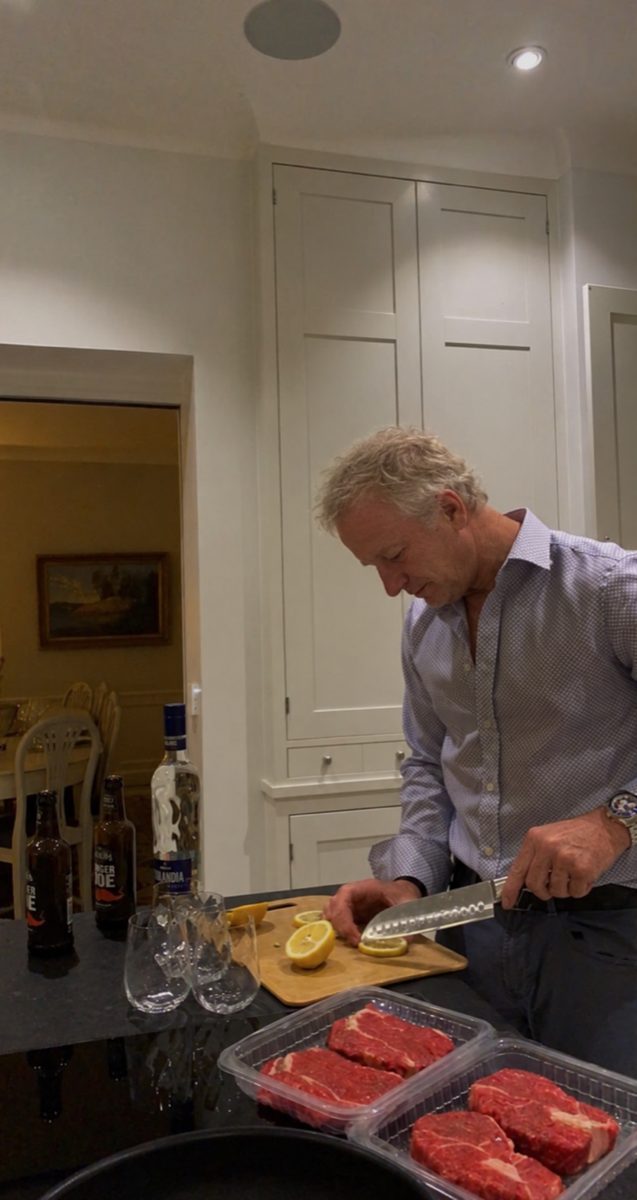
- Interest: you doing something you actually do, mid-activity, with enough of the scene visible to ask about.
- People: one photo with friends where you are easy to pick out, ideally not the first or second slot.
- Setting: a place that says something: a city you love, a trail, a kitchen, a market.
- Range: a dressed-up photo, or a pet, or a candid laugh, whatever shows a different side.
Our guide to the best Hinge profile pictures goes slot by slot through what to put where, with examples.
3. Your prompts could belong to anyone
Prompts are where many profiles quietly fail. When Hinge launched its AI-powered Prompt Feedback feature in January 2025, it reported two numbers worth knowing: in 2024, likes on text prompts were 47% more likely to lead to a date than likes on photos, and 63% of daters said they found it hard to know what to put on their profile. These are Hinge's own figures without a published method, but the direction is clear. A photo gets you noticed; a prompt gives someone a reason to start talking.
Research on older dating sites points the same way. A 2008 study by Andrew Fiore and colleagues, summarised in the Association for Psychological Science's Observer, found that photos were the strongest predictor of how attractive a whole profile seemed, but the free-text self-description also strongly affected ratings. Fixed fields such as smoking or wanting children barely moved attractiveness; people used them to screen out dealbreakers.
Generic answers fail for a simple reason: they give the reader nothing to react to. "I love travelling and trying new restaurants" is true of most people on the app. A strong answer is specific enough to belong only to you and leaves a small opening for the other person: an opinion they can argue with, a choice they can make, or a story with an obvious follow-up question.
| Prompt | Generic answer | Specific answer that invites a reply |
|---|---|---|
| My simple pleasures | Coffee, sunsets and good company | The first coffee on a Saturday before anyone else is awake, and a crossword I'm not allowed to look up answers for |
| I'm looking for | Someone kind, funny and adventurous | Someone who'll come to the 9am farmers' market and then argue with me about which stall had the best bread |
| Typical Sunday | Relaxing, gym, maybe brunch | Long run along the canal, then cooking something too ambitious for one person. Taste-testers welcome |
| Two truths and a lie | I'm tall, I love dogs, I hate travel | I've been stuck in a lift for three hours, I can name every Bond film in order, I've never seen snow |
| I'll fall for you if | You make me laugh | You have a strong opinion on where the best dumplings in town are and you're willing to defend it in person |
A useful structure for three prompts is one hook, one fact, one hint. The hook is the prompt most likely to get a comment: playful, opinionated or a small game. The fact shows something concrete about your life. The hint suggests what you want, without a shopping list. If Prompt Feedback is available to you, it will tell you whether an answer is a "Great Answer", needs "a Small Change" or should "Go a Little Deeper". Take the last two seriously. Our list of Hinge prompts for guys has more answers you can adapt.
4. Your preferences, and theirs, shrink the pool
Because Discover is based on mutual preferences, every filter you set removes people from your feed, and every filter other people set removes you from theirs. Stack a tight age range, a short distance and several dealbreakers, and the number of people who could ever see you can become very small, especially outside big cities.
Hinge's own advice is to loosen up. Under most preferences you can tick "Show profiles outside of this preference", which Hinge says lets you see more profiles and lets more people see you. Gender preferences stay strict, and subscriber-only filters (height, politics, family plans and so on) are worth questioning too: each one is a door you have closed.
Illustrative example, not real data: imagine 2,000 active profiles within 15 miles that match your gender preference. An age range of 29 to 33 might leave 500. Marking height as a dealbreaker might leave 300. Requiring a particular religion or education level could take you below 100. Now remember that each of those 100 people has filters too, and only some of them include you. A small pool means few chances to be seen, however good the profile is. Widening age by three years and distance by five miles can change that more than any photo swap.
A good rule: keep dealbreakers for things you would really end a relationship over, and make everything else flexible.
5. The way you like other people
Hinge is explicit that its "algorithm learns from your activity in the app" and suggests liking profiles you think would be a good match rather than liking a greater quantity. The reasons are easy to see. If you like everyone, the system learns nothing about who suits you, and many of your likes go to people who will never like you back.
There is also a human reason. In a speed-dating study by Paul Eastwick, Eli Finkel and colleagues, published in Psychological Science in 2007, people who felt romantic interest in almost everyone they met were less likely to be desired in return, while interest focused on one person was more likely to be reciprocated. Indiscriminate interest reads as low effort. A like that clearly comes from reading someone's profile reads as interest in them in particular.
The Signals badge turns this into a checklist. According to Hinge's Signals article, the activities it looks for include looking before liking (reading prompts and scrolling past the first photo), adding comments to likes, reviewing incoming likes rather than leaving them in limbo, messaging matches, and confirming dates. You do not need the badge, but those habits describe a careful dater, and a careful dater is easier to match.
Habits that work against you:
- Spending all your likes in one rushed session once a week, then disappearing
- Sending plain likes with no comment to profiles in Standouts that clearly get a lot of attention
- Leaving a queue of incoming likes unreviewed for days
- Only liking people at the very top of your filters, then wondering why nobody likes back
6. Going quiet after a match
Hinge has made responsiveness a core part of the product. When it announced the Your Turn Limits test, it said a Hinge study found 44% of daters named a lack of responsiveness as a top dating challenge, and that in 2023, matches where the first message got a reply within 24 hours were 72% more likely to lead to a date. After the global launch, Hinge says the limit applies to everyone, subscribers included, and that people who hit it cannot accept new likes until they reply or end a chat.
So if you collect matches and leave them waiting, two things happen. The conversations go cold, and once enough of them pile up, the app stops sending you new likes at all. That can look exactly like being invisible.
The fix is unglamorous: reply within a day, ask a question that refers to something in their profile, suggest meeting once a conversation has had a few good exchanges, and unmatch politely when you know it is not going anywhere. Hinge also offers a Hide option that tucks a chat out of view without unmatching, which helps if you want to come back later. And when Hinge asks whether you met, answer.
7. Your local market and timing
Some dry spells are about where you are, not who you are. In a small town, you may simply run out of new people within a few weeks. A recent move, a big age gap between you and your filters, or a demographic imbalance in your area all affect how many likes are possible.
Men in particular often get fewer incoming likes than women on the same apps. In Pew Research Center's 2023 survey, 64% of men who had used dating apps or sites in the past year said they had felt insecure about the lack of messages they received, compared with 40% of women. Women were more likely to say they felt overwhelmed by the number of messages. A slow week as a man is normal. Several weeks with nothing at all, after the visibility checks pass, almost always points back to the profile.
What the research says about profiles that get ignored
Dating studies are rarely about Hinge specifically, and companies publish only the numbers they like. Still, the evidence lines up on a few points, and they are worth keeping in mind when advice online contradicts itself.
- Snap judgments are stable. Impressions formed in a fraction of a second barely change with longer viewing (Willis and Todorov, 2006). Your first photo is doing most of the work for most viewers.
- Photos come first, words still count. Photo attractiveness was the strongest predictor of overall profile attractiveness, but written self-descriptions mattered too (Fiore and colleagues, 2008). Hinge's own 2024 figure about prompt likes leading to dates points the same way.
- Attention is concentrated. People mostly write to others somewhat more desirable than themselves, and reply rates drop as the gap grows (Bruch and Newman, 2018). Liking only the most popular profiles is a low-percentage strategy.
- Selectivity is attractive. Interest aimed at everyone is reciprocated less than interest aimed at one person (Eastwick and colleagues, 2007). A specific comment signals the right kind of selectivity.
- Responsiveness predicts dates. Hinge reports that a reply within 24 hours made a date 72% more likely in 2023, and that when it launched Your Turn Limits globally, the test had raised responsiveness on the app by 20%.
The honest limit of all this: none of it can tell you exactly why one particular person skipped you. It tells you which changes are most likely to shift the odds.
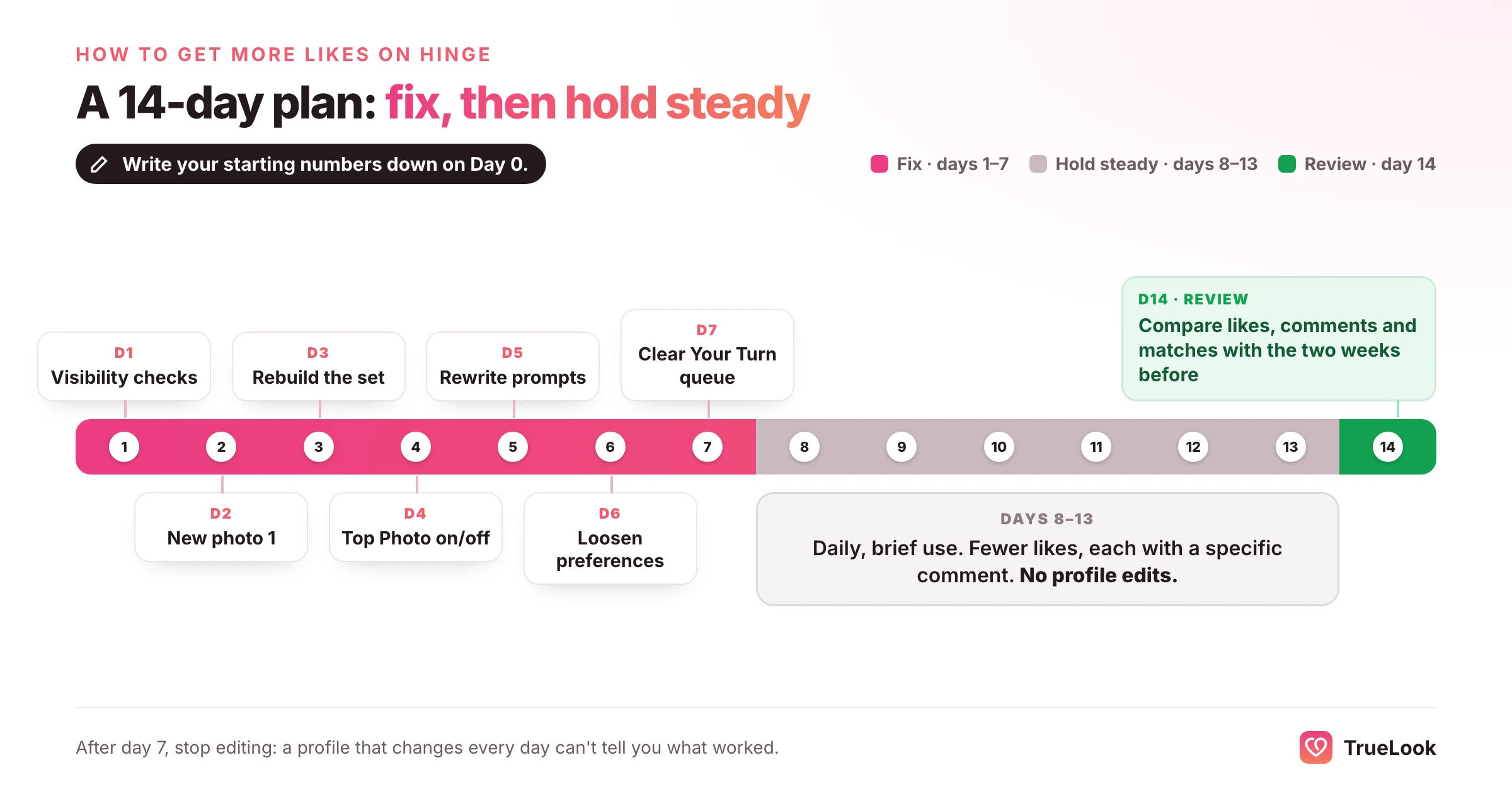
How to get more likes on Hinge: a 14-day plan
The biggest mistake people make when they get no likes is changing everything at once, every day. Then nothing can be measured. This plan changes one layer at a time and leaves room to see what helped.
| Day | Task | Done when |
|---|---|---|
| 1 | Visibility checks: pause off, no removed content, no Your Turn warning, app updated | You can see your own profile in preview and send a like |
| 2 | Replace photo 1 with a clear, recent solo shot; remove sunglasses, mirror selfies and filters from slots 1 to 3 | A stranger could recognise you in a café from photo 1 alone |
| 3 | Rebuild the set with the one photo, one fact rule; add a full-length and an activity photo; drop near-duplicates | No two photos do the same job |
| 4 | Turn on Top Photo, or decide the lead yourself and leave it fixed for the test | Choice made and written down |
| 5 | Rewrite all three prompts using hook, fact, hint; check them with Prompt Feedback if available | Each answer contains at least one detail only you could write |
| 6 | Loosen age and distance; mark non-essential preferences as flexible | Only true dealbreakers remain strict |
| 7 | Clear your Your Turn queue: reply, hide or unmatch; review every incoming like | Nobody has been waiting on you for more than a day |
| 8 to 13 | Use the app daily, briefly. Read full profiles, send fewer likes, add a short specific comment to most of them | Every like you send refers to something real in their profile |
| 14 | Review: count incoming likes, comments and matches against the two weeks before | You know which change moved the numbers |
Two rules make the plan work. First, write down your numbers before you start: incoming likes per week, comments, matches, and conversations that reached a date. Second, after day 7, stop editing. A profile that changes every day cannot tell you anything. If the numbers have not moved after the full two weeks, go back to the step that felt weakest, usually photo 1 or the prompts, and run another week with only that change.
How to like people so they like you back
Getting likes is partly about the profile and partly about what you send out, because the people you like see your profile first. Hinge pushes comments hard. Its help article on likes says adding a comment to a like makes it more likely to get a response, and when it launched Convo Starters in December 2025, TechCrunch reported Hinge's data that people who include a comment with their likes are twice as likely to arrange a date, and that 72% of daters are more likely to consider a match when the like comes with a message.
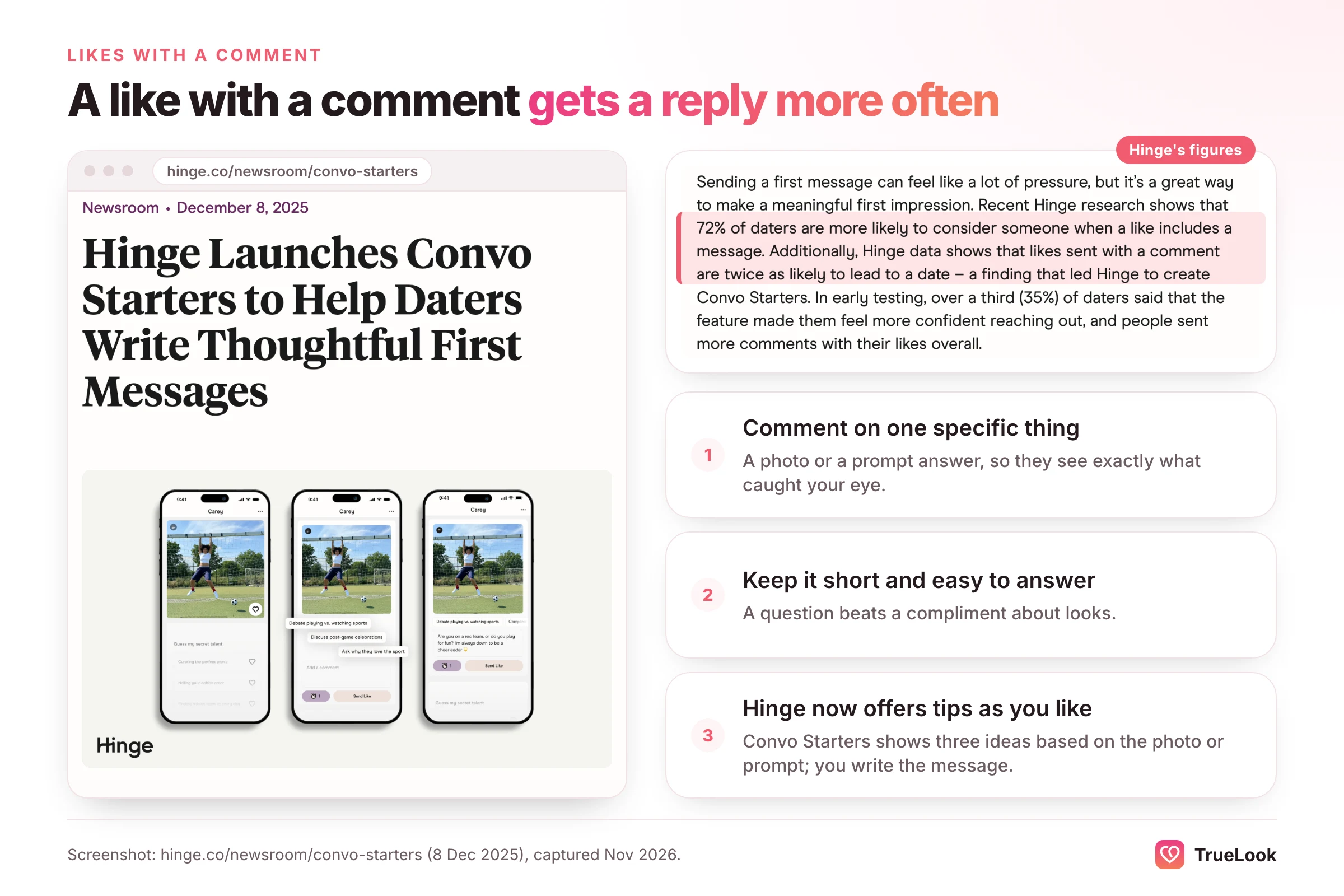
Good comments share three traits: they refer to one specific thing, they are short, and they are easy to answer. Compliments about looks are the weakest option, because they say nothing about the profile and give the other person nothing to reply to.
| Instead of | Try | Why it works |
|---|---|---|
| "Hey" | "Is that the trail up to the old fire lookout? I gave up halfway last year." | Shows you looked, shares something about you, invites a story |
| "You're gorgeous" | "Your bread opinion is wrong and I'm prepared to prove it with a tasting." | Playful disagreement with their prompt, implies a date idea |
| "Nice dog" | "Okay, I need the name and the backstory of that dog." | Specific, warm, easy to answer |
| "We have a lot in common" | "Two truths and a lie: I'm going with the lift one being the lie." | Plays their game instead of describing yourself |
Use Roses sparingly. Free members get one per week, which does not roll over, and a Rose puts you at the top of the other person's Likes You list. It is worth spending on someone whose profile you have actually read and have a real comment for, not on the most attractive face in Standouts.
Worked example: diagnosing a quiet profile
Example profile, illustrative only: a 34-year-old software engineer in a mid-sized city. Three weeks on Hinge, two incoming likes, both without comments. He sends his daily likes in one go on Sunday evenings.
What his profile looked like:
- Photo 1: a group shot at a wedding, four men in suits, him second from left
- Photo 2: a car selfie in sunglasses
- Photos 3 and 4: two near-identical bathroom mirror selfies
- Photo 5: a beach photo from four years ago
- Photo 6: a black and white portrait a friend took
- Prompts: "I'm looking for: someone genuine", "My simple pleasures: travel, food, music", "Two truths and a lie: I'm 6 foot, I love hiking, I hate pizza"
- Preferences: age 27 to 31, 10 miles, height and education as dealbreakers
Diagnosis: almost every photo falls into one of the "fewer likes" categories Hinge lists, and photo 1 makes viewers work out which person he is. The prompts are interchangeable with thousands of others. The preferences cut his pool hard, and the Sunday bursts mean he is barely active the rest of the week.
Changes, in order: a new lead photo taken by a friend in daylight on a walk; the wedding photo moved to slot 5 and cropped tighter; one photo bouldering at his climbing gym; one cooking at home; one full-length in a park; the mirror selfies, the car shot and the black and white photo removed. New prompts: "Typical Sunday: bouldering until my forearms give up, then a ramen place where they know my order", "I'm looking for: someone who'll try the weird item on the menu with me", and a Two truths and a lie with three oddly specific stories. Age widened to 27 to 36, distance to 20 miles, height and education made flexible. Ten minutes a day on the app, fewer likes, each with a comment.
What to expect: this guide cannot promise a number, and any site that does is making it up. What changes is the kind of attention: likes on the climbing photo and the ramen prompt, with comments, from people who share those interests. That is the sign the profile is now doing its job.
Common mistakes and the fix for each
| Mistake | Why it hurts | Fix |
|---|---|---|
| Group photo first | Viewers can't tell who you are and move on | Solo lead photo; group shot no higher than slot 4 |
| Sunglasses in the lead | Hides your eyes; Hinge lists sunglasses among lower-performing photos; also blocks selfie verification | Eyes visible in at least the first three photos |
| Six photos from one afternoon | Shows only one side of your life | One photo, one fact: vary place, outfit and activity |
| Photos from years ago | Creates a mismatch that shows up on the first date | Nothing older than about a year |
| Prompts that list adjectives | Nothing to react to | Specific details, an opinion or a small game |
| Every preference set to strict | Shrinks the mutual pool on both sides | Flexible on everything except true dealbreakers |
| Liking in weekly bursts | Rushed likes, long absences | A few minutes daily, fewer and better likes |
| Letting matches pile up | Can trigger Your Turn Limits and stop new likes | Reply, hide or unmatch within a day |
| Buying a Boost first | Shows a weak profile to more people for an hour | Fix photos and prompts, then decide if you need it |
| Deleting and restarting weekly | Loses every match and conversation; same profile gets the same response | Change the profile, not the account |
Why did my Hinge match disappear?
A match that vanishes is a different problem from getting no likes, and it is rarely about your profile. Hinge's unmatching article gives three possible reasons when someone you were talking to is no longer in your matches:
| What happened | Can it come back? | What to do |
|---|---|---|
| They unmatched you, on purpose or by accident | No. Hinge says unmatching is permanent and it cannot restore a match. | Nothing. If it happens after nearly every chat, look at your openers and pacing. |
| They deleted their Hinge account | No | Nothing; their matches all disappeared too. |
| Hinge removed their profile for breaking its terms | No | Nothing. It may have protected you. |
| All of your matches vanished at once | Usually yes | Hinge says matches can take a moment to re-sync after an update. Check your connection, log out and back in, or restart the phone. |
The same logic covers a like that appears in your Likes You tab and then disappears: Hinge's help centre says that means the person deleted their profile. If you notice unmatches happening right after you send a particular kind of message, such as a very forward opener, pushing to move to another app straight away, or a long gap before replying, change that habit. Otherwise, let it go. People unmatch for reasons that have nothing to do with you, including meeting someone else.
Shadowbans, resets and fresh starts
"Shadowban" is the word people reach for when the likes stop. Hinge does not describe any feature by that name. What it does document is more concrete: paused profiles are hidden from new people, profiles with removed content may be held out of Discover until the content is replaced, people over the Your Turn limit cannot send or receive likes, and banned accounts are closed. If none of those apply, a sudden drop is more likely to be a small pool, a stale profile or a change in your own activity.
| Myth | What is actually documented |
|---|---|
| "Hinge secretly shadowbans people who get skipped a lot." | Hinge publishes no such mechanism. It does use who you like, skip and match with in recommendations, which is why a profile people skip will be shown less effectively over time. |
| "Deleting and remaking your account gives you a guaranteed new-user boost." | Hinge has not published a fixed boost for new accounts. Deleting removes your photos, chats and matches permanently, and a banned user cannot create a new account at all. |
| "There is a hidden score you can raise by liking more." | Hinge advises the opposite: fewer, better-chosen likes, because the algorithm learns from your activity. |
| "Paying for HingeX fixes a profile nobody likes." | Paid tiers add visibility and filters. They do not change your photos or prompts. |
Should you ever reset? Only when the profile has been rebuilt and you have tested it for a few weeks with no change, and you are willing to lose every existing match. Before deleting, read Hinge's help pages on account deletion and cancel any subscription through the store you bought it from.
Boosts, Roses and subscriptions: when paying helps
Paid features change how many people see your profile and how prominently. They do not change what those people see. That makes them amplifiers, and an amplifier on a weak profile just gets you skipped faster.
| If this is true | Then |
|---|---|
| You get zero likes and haven't fixed photos or prompts | Don't pay for anything yet. Do the 14-day plan. |
| Your profile is fixed and you get some likes, but you live in a small market | A Boost at a busy time (an evening early in the week, for example) can help you reach more of a limited pool. Hinge says a Boost lasts one hour and a Superboost 24 hours. |
| You want to see everyone who has liked you at once | Hinge+ or HingeX shows all incoming likes together; free users see one at a time. |
| You keep liking the same type of person and getting nothing back | Paying won't fix that. Widen who you like and comment on specifics. |
| There is one profile you really want to reach | Use your free weekly Rose, with a real comment. |
If your camera roll is the problem
Many people with no likes have the same underlying issue: they simply do not have six recent, clear, varied photos of themselves. Selfies dominate their camera roll, and the good photos are old or crowded with other people. There are three honest ways out: a friend with a phone and an hour of daylight, a dating photographer, or an AI photo tool.
TrueLook is one of the AI options. It makes realistic dating photos from four of your own selfies, about a minute per photo, and the photos are never used to train AI. Whatever route you choose, the test is the same: the photos should look like you on a good, ordinary day. Hinge's photo guidance favours candid, interest-led photos, and its optional selfie verification compares a live video selfie with your profile photos, so heavy retouching backfires. Hinge decides for itself whether a profile passes. Our guide on whether AI photos are allowed on dating apps covers the rules app by app, and you can see how TrueLook approaches realistic Hinge photos made from your selfies.

If you use more than one app, the same diagnosis applies with different details. See our guides to getting no matches on Tinder and no matches on Bumble, and if you are weighing tools, our comparison of AI photo generators for Hinge.
Frequently asked questions
Why am I not getting any likes on Hinge?
Start by ruling out visibility: make sure your profile is not paused, no photo or prompt has been removed, and you have not hit Your Turn Limits. If all of that is fine, the usual causes are a lead photo that creates doubt (sunglasses, groups, distance, filters), photos that show nothing about your life, generic prompts, and preferences narrow enough to leave few people who can see you.
How does the Hinge algorithm work?
Hinge says it uses information such as your age, gender, location, preferences, and who you like, skip and match with to recommend people to you, and uses the same process to recommend you to others. Discover shows people whose preferences you fit and who fit yours. Most Compatible, a daily pick, is based on mutual preferences, recent activity and shared liking patterns. Hinge has not published any fixed tier system or score.
Does Hinge shadowban people?
Hinge does not describe a shadowban. It does document situations that look like one: a paused profile, removed content that must be replaced before you return to Discover, Your Turn Limits blocking new likes, and banned accounts. If none apply, a drop in likes usually comes from the profile, your pool or your own activity.
Why did my Hinge match disappear?
According to Hinge, the other person either unmatched you, deleted their account, or had their profile removed for breaking Hinge's terms. Unmatching is permanent and Hinge cannot restore it. If all your matches disappear at once, it is usually a temporary sync issue after an app update; logging out and back in normally fixes it.
How do I get more likes on Hinge?
Use a clear, recent solo photo first; give every other photo a different job, including a full-length and an activity shot; write prompts with specific details and a small opening for a reply; make non-essential preferences flexible; and send fewer likes, each with a short comment about something in the person's profile. Then leave the profile unchanged for a week so you can see what worked.
Is it normal to get no likes on Hinge as a guy?
Fewer likes than women is normal: in Pew Research Center's 2023 survey, 64% of recent male online daters said they had felt insecure about the lack of messages, compared with 40% of women. Zero likes for several weeks is not normal, though. Once visibility checks pass, it almost always points to the first photo, the prompts or very narrow preferences.
Should I delete and restart my Hinge account?
Rarely, and only as a last step. Deleting permanently removes your photos, matches and conversations, Hinge has not published any guaranteed boost for new accounts, and a banned user cannot create a new account. Rebuild the profile first and test it for at least two weeks.
Do Boosts help if I get no likes on Hinge?
Not until the profile is fixed. A Boost shows your profile to more people for one hour, and a Superboost for 24 hours, but they still see the same photos and prompts. Once the profile gets some likes on its own, a Boost can help you reach more of a small local pool.
Sources
- Why Aren't I Getting Any Matches?, Hinge Help Center (2026). https://help.hinge.co/hc/en-us/articles/360011321953-Why-Aren-t-I-Getting-Any-Matches
- Automated Decision-Making and Profiling at Hinge, Hinge Help Center (2026). https://help.hinge.co/hc/en-us/articles/360010956733-Automated-Decision-Making-and-Profiling-at-Hinge
- What is Most Compatible?, Hinge Help Center (2026). https://help.hinge.co/hc/en-us/articles/360011233073-What-is-Most-Compatible
- What is Top Photo?, Hinge Help Center (2026). https://help.hinge.co/hc/en-us/articles/26558052212627-What-is-Top-Photo
- What is Signals?, Hinge Help Center (2026). https://help.hinge.co/hc/en-us/articles/49858544145555-What-is-Signals
- What is "Your Turn Limits"?, Hinge Help Center (2026). https://help.hinge.co/hc/en-us/articles/31662181659027-What-is-Your-Turn-Limits
- Pausing, Hinge Help Center (2026). https://help.hinge.co/hc/en-us/articles/360012595653-Pausing
- What Happens When Content is Removed From My Profile?, Hinge Help Center (2026). https://help.hinge.co/hc/en-us/articles/43018068800531-What-Happens-When-Content-is-Removed-From-My-Profile
- Why was my account banned?, Hinge Help Center (2026). https://help.hinge.co/hc/en-us/articles/360038037334-Why-was-my-account-banned
- Unmatching, Hinge Help Center (2026). https://help.hinge.co/hc/en-us/articles/36311673303571-Unmatching
- Hinge Tests Your Turn Limits, Hinge Newsroom (2024). https://hinge.co/newsroom/your-turn-limits-test
- Hinge Launches Prompt Feedback to Help Daters Create Unique and Authentic Profiles, Hinge Press (2025). https://hinge.co/press/prompt-feedback
- Hinge Today (mission page), Hinge (2026). https://hinge.co/mission/
- Hinge employs new algorithm to find your "most compatible" match, TechCrunch (2018). https://techcrunch.com/2018/07/11/hinge-employs-new-algorithm-to-find-your-most-compatible-match-for-you/
- Hinge's new AI feature helps daters move beyond boring small talk, TechCrunch (2025). https://techcrunch.com/2025/12/08/hinges-new-ai-feature-helps-daters-start-better-convos-moving-beyond-boring-small-talk
- From Looking for Love to Swiping the Field: Online Dating in the U.S., Pew Research Center (2023). https://www.pewresearch.org/internet/2023/02/02/from-looking-for-love-to-swiping-the-field-online-dating-in-the-u-s/
- Willis, J. and Todorov, A. First impressions: making up your mind after a 100-ms exposure to a face, Psychological Science (2006), via PubMed. https://pubmed.ncbi.nlm.nih.gov/16866745/
- Speed Dating Study: Selectivity Is Ultimate Aphrodisiac (Eastwick, Finkel, Mochon and Ariely, Psychological Science), ScienceDaily (2007). https://www.sciencedaily.com/releases/2007/02/070206132059.htm
- In the game of online dating, men and women try to level up, study finds (Bruch and Newman, Science Advances), Medical Xpress (2018). https://medicalxpress.com/news/2018-08-game-online-dating-men-women.html
- Modern Love: Scientific Insights from 21st Century Dating, Association for Psychological Science Observer (2010). https://www.psychologicalscience.org/observer/modern-love-scientific-insights-from-21st-century-dating
- Hinge Launches Your Turn Limits Globally to Help Daters Focus on Current Matches and Conversations, Hinge Press (2024). https://hinge.co/press/your-turn-limits
- Likes, Hinge Help Center (2026). https://help.hinge.co/hc/en-us/articles/36311632894995-Likes
- What is Standouts?, Hinge Help Center (2026). https://help.hinge.co/hc/en-us/articles/360057625534-What-is-Standouts
- Roses, Hinge Help Center (2026). https://help.hinge.co/hc/en-us/articles/36311177115027-Roses
- What is Selfie Verification?, Hinge Help Center (2026). https://help.hinge.co/hc/en-us/articles/10303221435539-What-is-Selfie-Verification
Get better dating photos from your own selfies
TrueLook’s HyperReal™ method turns 4 selfies into hyperrealistic photos of you for Tinder, Hinge and Bumble.
AI Hinge photos made from your selfies
Written by the TrueLook Team
TrueLook makes hyperrealistic dating photos from your own selfies. Our articles cover dating profile photos, the apps and how to get noticed.